TheChirurgeon's event list leans toward painted Red Corsairs over Death Guard
Robert “TheChirurgeon” Jones turns a hobby log into a practical army-building lesson: the best-prepped Red Corsairs force is beating Death Guard on the road to the event.
Painting momentum matters more than theoretical perfection
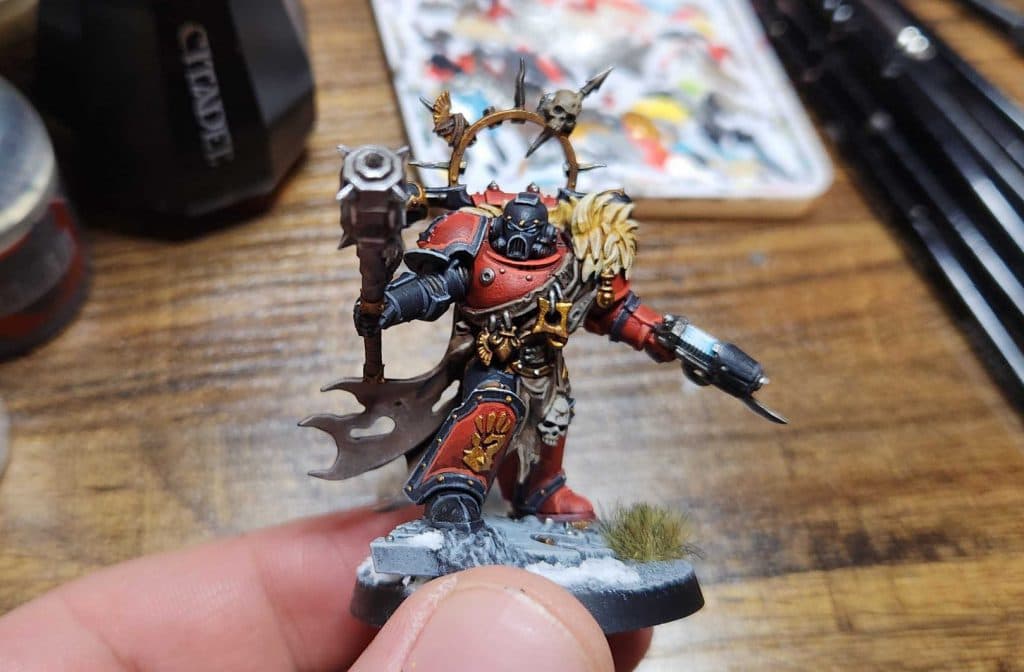
Robert “TheChirurgeon” Jones uses Part 20 of his Road Through 2026 series to make a point every Chaos player eventually learns: the army that is actually finished is often the army that gets taken. With hobby progress eating into gaming time, he is weighing Death Guard against Red Corsairs for an upcoming event, and the Red Corsairs are winning the argument because they are painted better.
That is the real lesson of this installment. It is not a polished showcase of an ideal list, and it is not a claim that the most competitive option always wins. It is a clear look at how long-term army plans get made in practice, under deadline pressure, with the paint queue and the event calendar both demanding attention.
Why Red Corsairs are winning the decision
The appeal of the Red Corsairs here is straightforward: they are the force that looks ready. Jones is explicit that they may not be the most optimized choice, but they are the better-painted army, and that matters when the goal is to put something on the table that feels finished rather than forced. That is especially true in a hobby project where visual coherence, momentum, and realism all pull in the same direction.
He also signals that some obvious Chaos toys are not pulling their weight emotionally. Defilers, for example, are not especially tempting in the current plan. That detail matters because it shows how list construction really works in a themed army: you are not only asking what is strong, but what fits the force you can realistically complete before you travel.
For anyone building a Chaos collection over months rather than weeks, this is the key takeaway. A force that is close to done can be more valuable than a theoretically stronger one that still lives in the pile of shame. The hobby win comes from converting progress into a playable army, not just collecting another promising spreadsheet.
The provisional list tells you what the army wants to do
The draft Red Corsairs list is broad, character-driven, and built to look like a force with a clear identity rather than a random pile of units. It includes Huron Blackheart, Fabius Bile, Cypher, and a Terminator Sorcerer, backed by Cultists, Rhinos, a Land Raider, a Vindicator, Masters of the Maelstrom, Chosen, Nemesis Claw, Red Corsairs Raiders, Chaos Bikers, Terminators, and a small allied Nurglings unit.
That mix gives you a useful template for your own themed list building. The characters anchor the army’s personality, while the transports and hard-hitting armor create the sense of a raiding host that can actually move and threaten space on the table. The infantry core then fills in the classic Chaos roles: cheap bodies, elite pressure, and enough mobility to make the force feel like a warband instead of a brick.
The allied Nurglings are a small but telling inclusion. Even in a list built around style and theme, there is room for utility pieces that help with board presence and scoring. That is a good reminder that “painted and playable” does not have to mean careless. You can still make functional choices, even when the main decision is being driven by the models that are complete.
What this says about building long-term Chaos armies
This is a useful guide for any Chaos player thinking beyond a single event. Jones is not treating army selection as a binary between fluff and efficiency. Instead, he is showing how those pressures merge once the event date gets close and you have to choose which project gets your final painting hours.
That approach works especially well for Chaos because the faction rewards personality. Red Corsairs, with their pirate raider identity, give you a natural framework for mixing named characters, transports, and fast pressure units. Death Guard, by contrast, may offer a different tabletop texture, but the article makes clear that the practical question is not abstract faction strength. It is which army can be made ready without losing the finish line to the hobby itself.
- Pick a visual identity that keeps you motivated through the slow middle stretch.
- Build around units you can finish, not just units you admire in theory.
- Leave room for utility pieces that support the army’s job on the table.
- Treat the event list as a reality check, not just a math exercise.
If you are mapping out your own long-term force, the lesson is simple:
That is why the piece lands as more than a diary entry. It shows how a themed army becomes a playable force when the last coats of paint matter as much as the datasheets.
Why the Red Corsairs still feel like a real Chaos option
The Red Corsairs are not just a hobby theme bolted onto a collection. Games Workshop has given them their own Legion rules in Codex: Chaos Space Marines, and they also have bespoke Crusade rules, including an Agenda, Requisition, Crusade Relic, and Battle Traits. That means they sit inside the setting as a properly supported warband, not just a color scheme with a name.
Huron Blackheart’s role reinforces that identity. Warhammer Community has highlighted him as the Red Corsairs’ leader, and that helps explain why the warband continues to resonate with players who want something that feels anchored in the wider Chaos narrative. When you build them, you are not just painting another marine force. You are leaning into one of 40k’s most recognizable renegade pirate factions.
That broader context is what makes Jones’s choice useful to copy. The Red Corsairs work because they give you a strong story, strong visual language, and enough official support to make the army feel legitimate on the table. If the project is painted first and optimized second, that is still a smart way to get a force into action.
Jones opens the door by admitting the best-painted army is not always the most optimized one, and the rest of the piece proves the point. The Red Corsairs are the army that is ready, and in Warhammer 40,000 that often matters more than the list you almost finished.
This article was produced by Prism’s automated news system from verified source data, official records, and press releases, then run through automated quality and moderation checks before publishing. The system is built and supervised by the people who set the standards it runs under. Read our full AI policy.
Did this article answer your question?