Warhammer 40,000 Dominatus deck turns campaigns into pick-up games
Dominatus trims campaign play down to something a club can finish in a weekend, with alliances, agenda cards, and battle rewards doing the bookkeeping for you.
A campaign you can actually finish
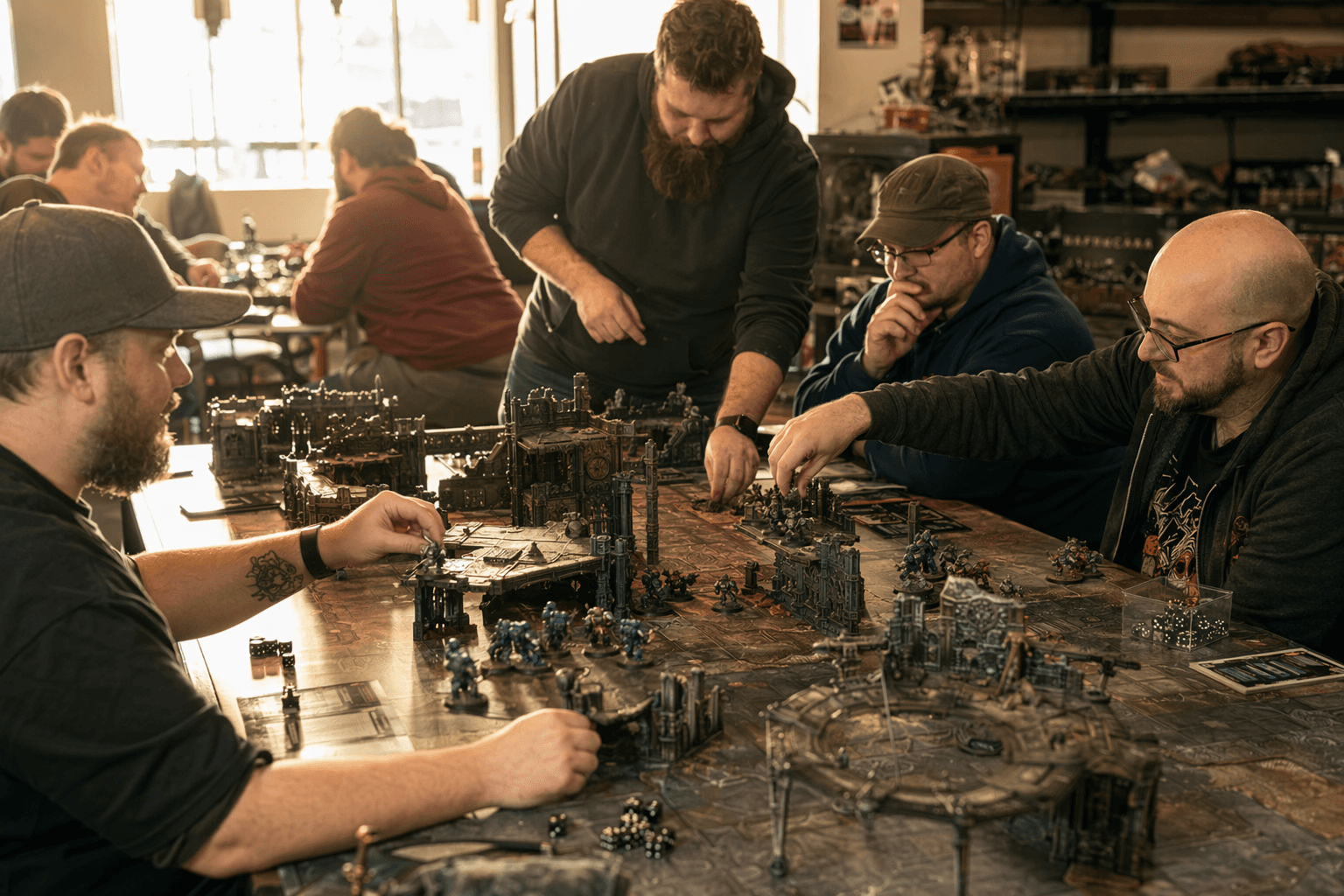
The Dominatus deck is built for the exact kind of group that wants a real Warhammer 40,000 campaign without the usual admin wall. Games Workshop is pitching it as a way to tie games together narratively while keeping bookkeeping to a minimum, which is a huge deal when you want continuity but not a month of planning before the first dice roll.
That is the real hook here: the deck turns a campaign from a long-term commitment into something you can run like a pick-up game. Instead of juggling a homemade system, you get a structured framework that keeps the story moving, gives each battle a purpose, and still leaves the group free to slot in whichever armies they want to play.
How the Dominatus structure works
The campaign is split into two or three alliances, with players taking sides as Liberators, Oppressors, and, if the group wants the extra layer, Raiders. Those alliances fight across three campaign phases before the whole event comes down to a final climactic battle, so the structure gives your weekend a clear beginning, middle, and finish.
Each phase starts with a D6 roll to determine which of three locations is in play. That single roll matters across the whole phase, because each location comes with its own bonus and war zone rules that apply to every battle fought in that section of the campaign. In practice, that means the battlefield mood changes without the organiser having to build a fresh rule set every round.
The deck also includes phase briefing cards, so every side gets a clear reminder of what kind of fights they are supposed to be leaning into. That makes it easier to keep larger groups moving and reduces the chance that a campaign stalls because someone forgets what the current phase is supposed to reward.
Why it feels lighter than a normal campaign
The biggest difference between Dominatus and a standard campaign framework is how little extra work it asks of the players. Rather than bolting narrative onto matched play, it replaces normal Primary Missions with Agendas, which are themed tasks tied to your alliance and your opponent’s force disposition.
That is the kind of design choice that makes a campaign easier to start and easier to finish. You are not building a story system from scratch, and you are not asking one person to act as permanent umpire. The deck gives the group a shared structure, then lets the game state itself carry the story forward battle by battle.
Success is tracked through Agenda Achieved cards, so progression is visible and immediate. Winning and losing a battle also matters beyond the result sheet, because players draw Battle Honour or Battle Skill cards that hand out bonuses such as improved Objective Control, weapon abilities, or redeployment tricks. Those rewards are not just flavor, they are a tangible way to make each game feed the next one.
Who this is for
Dominatus looks especially useful for clubs, narrative groups, and friend circles that want something bigger than a one-off game night but smaller than a full campaign project. If your usual problem is not lack of interest but lack of time, this deck removes a lot of friction: no custom campaign pack to write, no complicated scoring ledger to maintain, and no need to keep the entire group on the same page for weeks at a time.
It also makes sense for players coming in during a new edition launch, when everyone is trying to get games in quickly and with as little setup pain as possible. A campaign that can be started, advanced, and finished over a weekend is exactly the kind of format that helps a fresh rules cycle feel active instead of aspirational.
Armageddon is the launch-stage backdrop, not the only stage
The deck is rooted in the fighting on Armageddon, but Games Workshop is explicit that it can stand in for any campaign involving any factions you want to play. That flexibility is important, because it keeps the deck from being a one-planet novelty and turns it into a reusable campaign engine.
The wider launch context matters too. Warhammer 40,000: Armageddon has been presented as the new edition’s boxed-set launch and, according to Games Workshop, the biggest Warhammer 40,000 launch set yet. The story framing is pure 40k: Ghazghkull Thraka has returned to Armageddon, the Ork horde has swelled around him, and the Space Marines have launched Operation Imperator in an effort to stop Imperial resistance from collapsing.
That box is not thin on content. It contains 61 brand-new push-fit miniatures, split between 23 Space Marines and 38 Orks, alongside the updated Core Rules, the Armageddon lore book, the Chapter Approved 2026-27 Mission Deck, the new Dominatus campaign deck, and Armageddon datasheet cards. The datasheet cards matter in a very practical way, because each unit in the box comes with its rules on a card, which means the army is set up to get playing right out of the box.
Why Games Workshop is making this a core part of the edition
The way Games Workshop is packaging Dominatus tells you a lot about where it wants this edition to go. This is not being treated as a side activity for the few players who already build custom narratives. It is being placed in the same launch ecosystem as the core rules and mission material, which sends a clear message that campaign play belongs in the mainline 40k experience.
That is what makes the deck so well timed. A new edition always brings a burst of attention, but attention alone does not create games. What creates games is a format that lowers the organiser burden, gives players something to do between rounds, and makes the next session easy to schedule. Dominatus does exactly that by replacing campaign admin with cards, phases, and straightforward rewards.
The rollout itself also showed how central the launch box is to the whole reveal. Warhammer Community said the full contents of the Armageddon box would be shown in a live unboxing on 1 May 2026 at 7pm BST, putting the miniatures, books, cards, and campaign tools front and centre in the edition’s marketing.
That is the real shape of the story: not just another rules supplement, but a campaign deck built to make 40k feel fast to organise and hard to walk away from once the first phase begins.
This article was produced by Prism’s automated news system from verified source data, official records, and press releases, then run through automated quality and moderation checks before publishing. The system is built and supervised by the people who set the standards it runs under. Read our full AI policy.
Did this article answer your question?