Warhammer 40,000 unveils Armoured Gauntlet, vehicle-heavy battles on Armageddon
Armoured Gauntlet hands tank collectors the green light to field their shelves of armour in Armageddon, with 12 missions built for walkers, monsters, and brute-force survival.
Armageddon’s armour era begins
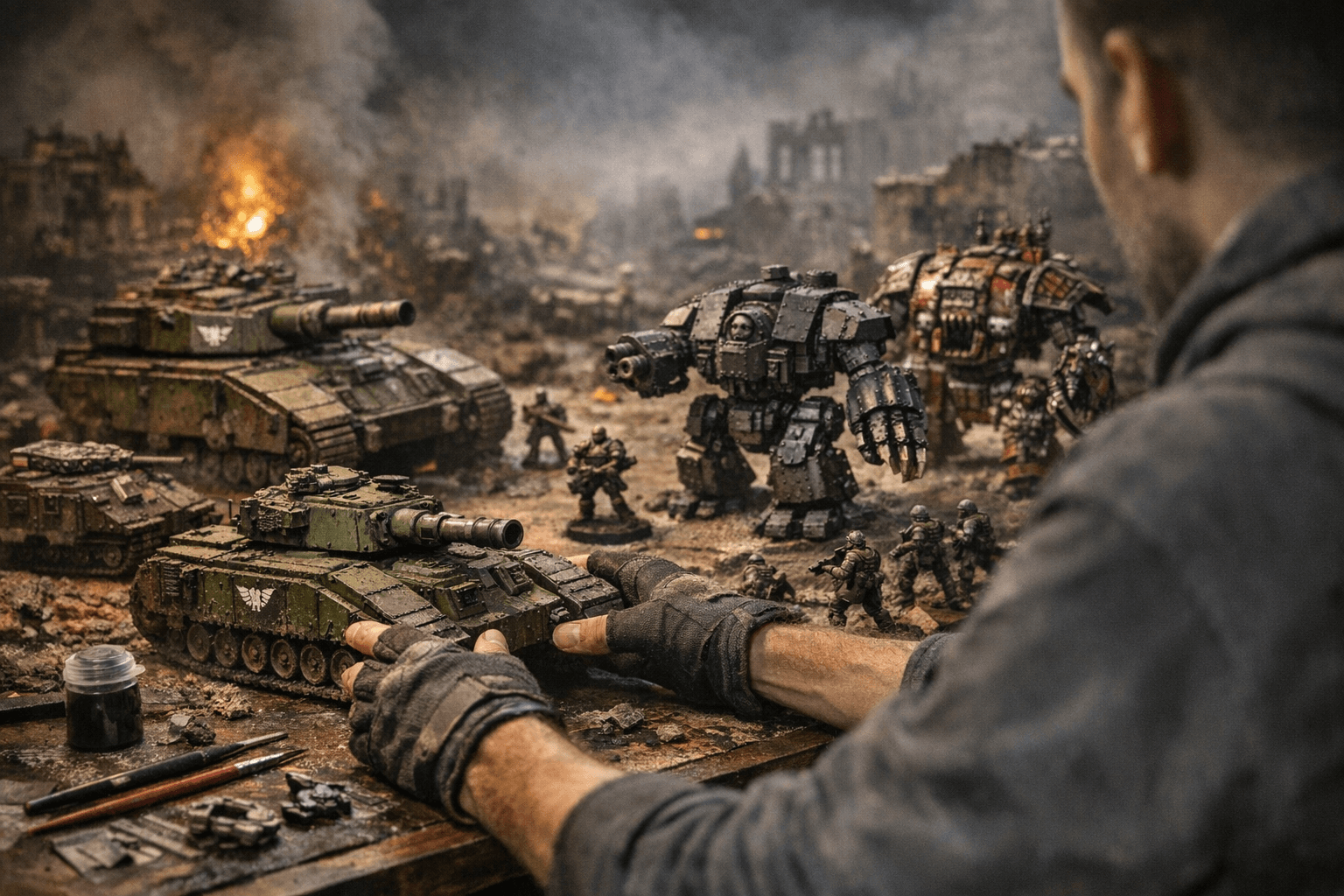
Armoured Gauntlet does something Warhammer 40,000 has been hinting at for a while: it turns the parked tank collection into the headline act. Set in the rad-choked wastes of Armageddon, the new format frames heavy armour not as a novelty, but as the only sane answer to a battlefield so lethal that commanders lean on tanks, walkers, monsters, and other hulking assets just to keep moving.
That is the appeal in one sentence. This is not a side rules tweak for a few datasheets. It is a permission slip for the exact kind of army many players already own, the shelves full of Leman Russes, Dreadnoughts, battle tanks, drift-heavy walkers, and oversized monsters that usually sit waiting for the right excuse to come out all at once.
Built for the collectors who own the big toys
Armoured Gauntlet is aimed squarely at Imperial Guard, Space Marine, and vehicle-first collectors, but the design goes wider than that. The mode is for anyone whose army concept starts with weight, plating, and the comforting sound of steel rolling forward under fire. It speaks directly to the player who has spent years painting hazard stripes on hulls, magnetizing weapon arms, or buying one more transport because it just looked too good to leave on the shelf.
The practical impact is immediate. Instead of asking whether a tank-heavy list can survive in a world built around combined arms, Armoured Gauntlet starts from the idea that the heavy stuff is the army. That shift matters for table identity as much as for rules. It changes what an opponent sees when they look across the board, and it changes what a collection feels like when it finally leaves display duty behind.
How SPEARHEAD defines the mode
The core of the system is the SPEARHEAD keyword, which is granted to eligible VEHICLE or MONSTER units with 10 or more wounds. There are limits, though, and they matter because they keep the mode focused on mass and impact rather than on every tough unit in the game. Aircraft and fortifications are out, and anything with Hover is excluded as well.
That filtering does a lot of work. It means Armoured Gauntlet is deliberately built around big, chunky models rather than skirmish pieces or borderline cases. If a unit is meant to dominate by being hard to kill, difficult to ignore, and visually unmistakable on the table, it belongs here. The result is a battlefield language that feels close to the Armageddon theme itself: not sleek precision, but brutal, rolling industrial force.
What counts on the tabletop
- Tanks and transports become the obvious headline pieces.
- Walkers and dreadnought-style models fit naturally into the format.
- Large monsters can take part as long as they meet the wound threshold and the other eligibility rules.
- Light aircraft, fortifications, and Hover units are left outside the core experience.
That makes the mode easy to understand at a glance even before the mission pack comes into view. If your army concept is built around things that can be seen from across the room, Armoured Gauntlet is speaking your language.
Tough, but not invincible
The most interesting design choice is that spearhead units are tougher than normal without becoming immortal. When one of these units takes its final unsaved wound, it does not simply vanish in the usual way. Instead, it rolls on a damage table, giving the battlefield one last moment of suspense before the model is removed or degraded by the result.
Damage Tokens make that more dangerous. The more pressure a unit has already taken, the worse those final rolls can become, which means battered armour feels increasingly unstable as a game goes on. That adds a very Warhammer kind of drama to the close of a fight: the tank does not just die, it catastrophically gives way under cumulative punishment.
Different tables handle different model types. Transports, monsters, and non-transport vehicles each get their own treatment, which keeps the system from flattening everything into one generic mechanic. That distinction matters because a cargo-hauler collapsing under fire should not feel the same as a bio-engine bellowing apart or a battle tank brewing its last internal fireball.
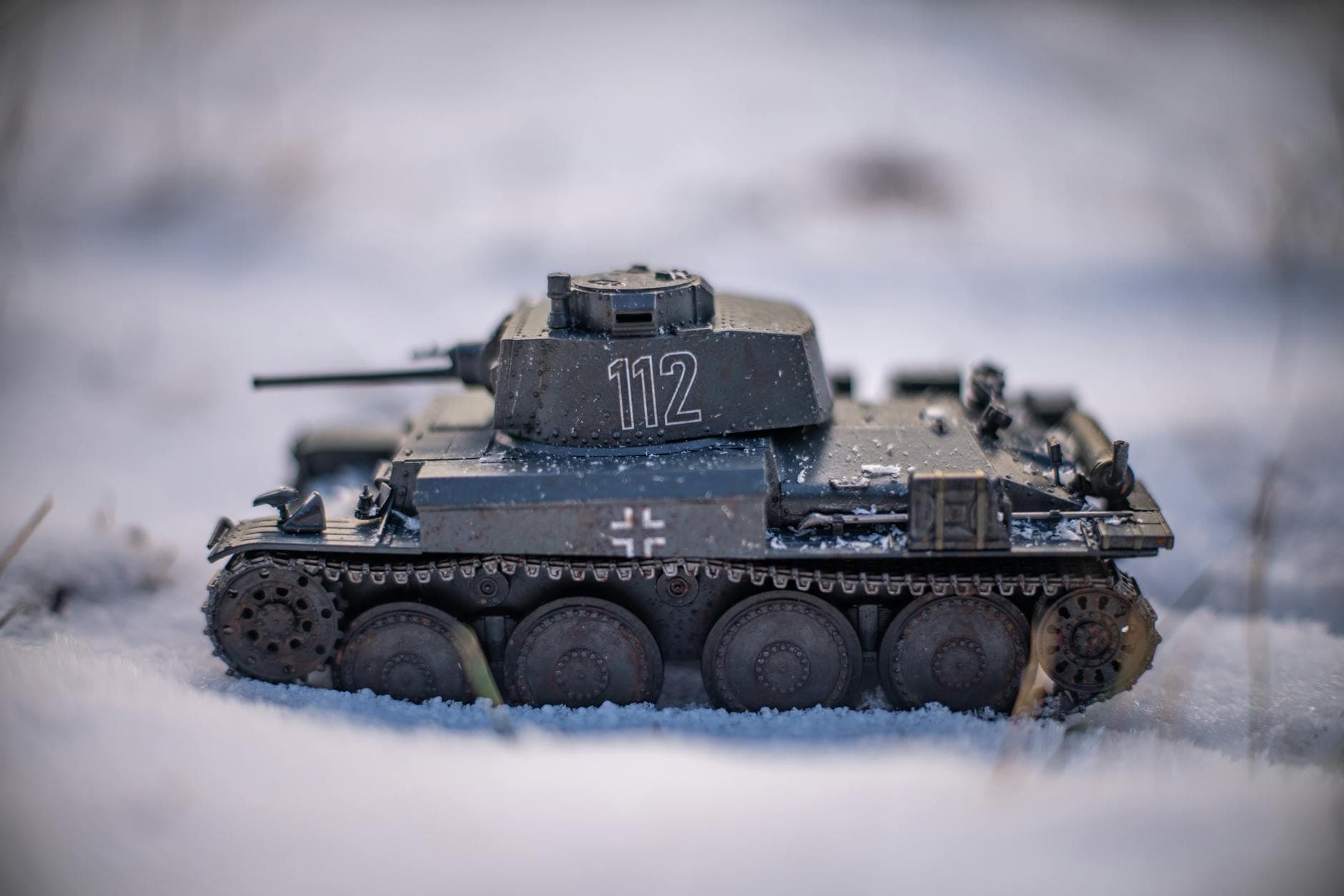
Faction examples show how broad the design really is
The article’s faction callouts make it clear that Armoured Gauntlet is not built for one style of army alone. Astra Militarum Tank Commanders can be injured and limited to a single Order per turn, which neatly captures the idea of command crews losing their ability to direct the battle once their vehicle starts taking serious punishment.
Drukhari Pain Engines bring a very different flavor. As their stimulant injectors are damaged, they may lose access to Feel No Pain, a detail that turns the loss of a single system into a visible battlefield deterioration. T’au Broadsides, meanwhile, may be forced to concentrate power into a single surviving gun, which is exactly the kind of last-breath fire discipline that makes a heavy-support platform feel both smart and desperate.
The faction hooks that matter most
- Astra Militarum: Tank Commanders can be injured and reduced to one Order per turn.
- Drukhari: Pain Engines risk losing Feel No Pain as injectors fail.
- T’au: Broadsides may have to pour power into one surviving weapon.
- Space Marines: Dreadnoughts can access Venerable Ancients upgrades.
- Orks: Kustom Mek Jobs promise improvised, characterful vehicle upgrades.
- Genestealer Cults: Goliaths can mount unstable explosive loadouts.
Those examples do the best kind of work a reveal can do. They prove the format is not a single-faction hobby toy, but a broad vehicle language that can be expressed through very different armies and battle styles.
The upgrade layer gives hobbyists room to personalize
The tease of faction-specific upgrades is where Armoured Gauntlet starts to feel like a hobby event as much as a rules one. Venerable Ancients for Space Marine Dreadnoughts suggest venerable, heavily personalized machines with a long service history. Kustom Mek Jobs for Orks promise exactly the sort of loud, unstable engineering that makes a vehicle feel like a moving workshop project as much as a war machine.
Then there are the unstable explosive loadouts for Genestealer Cults Goliaths, which add a dangerous edge to an already reckless vehicle family. These upgrades are important because they make the mode feel like it has an identity beyond durability. They let each faction’s engineering culture show through the hull plating, gun mounts, and last-ditch survival systems.
Twelve missions, split for balance and chaos
Armoured Gauntlet’s mission book contains 12 missions in total. Nine are balanced scenarios, which gives the mode the structure needed for repeat play and fair matched games. The other three are asymmetrical Challenge missions, which pushes the book into something more cinematic and more willing to lean into the uneven, desperate nature of armour warfare on Armageddon.
That split is a smart one. It gives players a reliable core for regular games while still reserving space for the sort of mission where a lone super-heavily armed spearhead or a battered convoy has to survive against a hostile setup. In practice, that means the book can support both tournament-minded repeat play and the narrative weekend that wants every table to feel like a last stand.
Why it matters to the 40k scene
Armoured Gauntlet is bigger than a rules packet because it validates a whole style of collection. It tells the player with three tanks, two walkers, and one deeply overbuilt centerpiece that the army concept is not only viable, it is being celebrated. On a hobby level, that is a powerful message: the models people already love are not being pushed aside by the latest trend, they are being put on a pedestal.
In a setting built on endless war, Armageddon has always made sense as a stage for this kind of fight. Armoured Gauntlet takes that idea and gives it structure, faction flavor, and a mission pack that turns steel, weight, and industrial brutality into the point of the game. For vehicle collectors, it is the rare reveal that feels less like permission to try something new and more like the studio finally admitting what the army pile has been waiting to do all along.
This article was produced by Prism’s automated news system from verified source data, official records, and press releases, then run through automated quality and moderation checks before publishing. The system is built and supervised by the people who set the standards it runs under. Read our full AI policy.
Did this article answer your question?