Your Complete Checklist for Transitioning From 40k 10th to 11th Edition
11th Edition arrives in June with over 70 new detachments and terrain-replacing objectives. Here's how to audit, budget, and paint your way to launch-day readiness without the chaos.
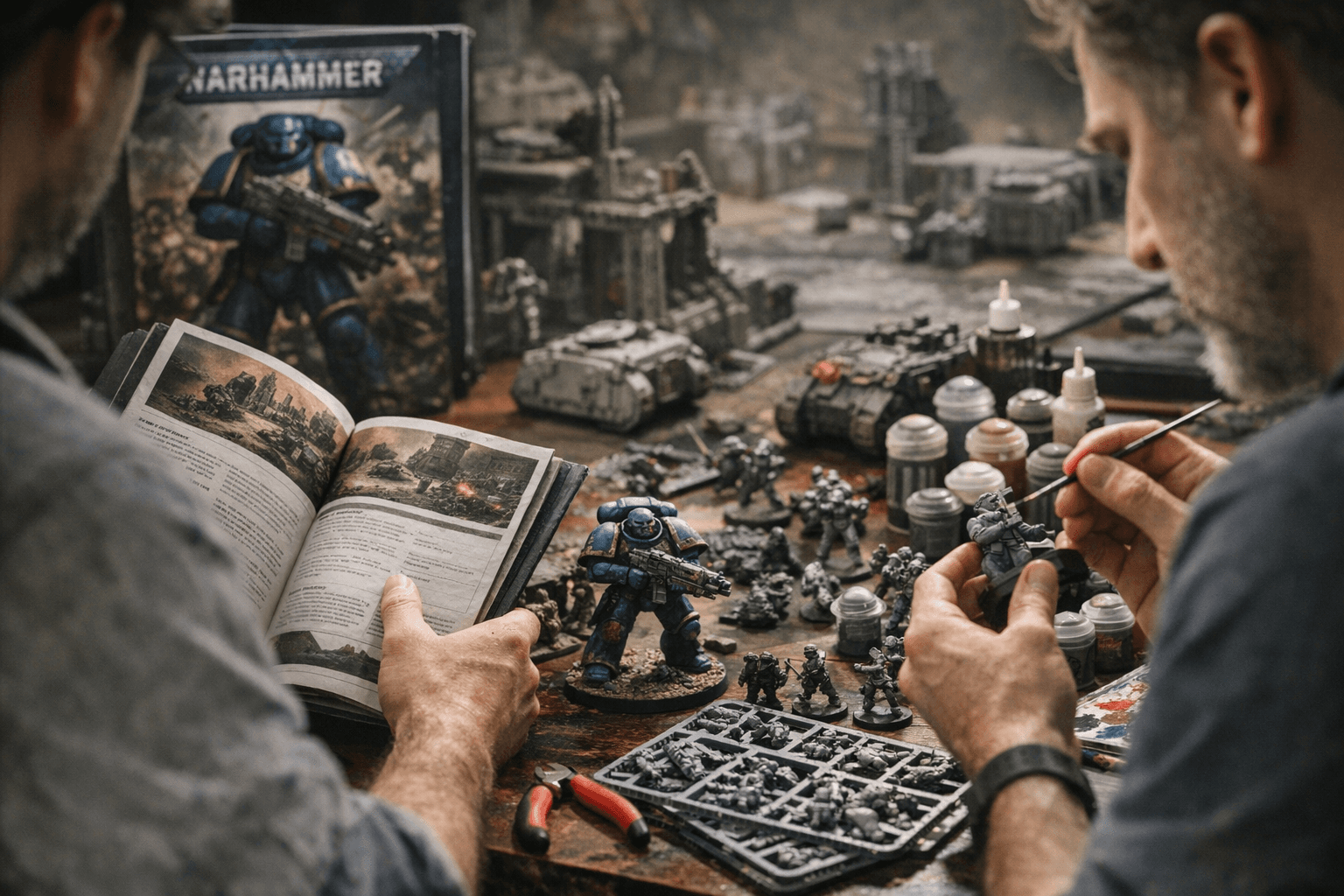
Games Workshop confirmed it at AdeptiCon 2026: Warhammer 40,000 11th Edition launches this June, anchored by the biggest starter set in the game's history. The Armageddon box pits Blood Angels against Orks in a conflict built around Commissar Yarrick and Wazdakka Gutsmek, and behind the cinematic spectacle sits a genuinely significant rules evolution. GW is framing 11th Edition as an evolution of the existing rules rather than a complete overhaul, promising changes that make every battle "more narrative" and "more balanced," with the stated goal of re-unifying narrative and tournament players. Your current codexes and faction rules will still be valid at launch, including rules in recent campaign supplements. But "valid" and "optimised" are two different things, and the gap between a smooth transition and a stressful one comes down entirely to how you prepare right now.
Start With What You Own: The Inventory Audit
Before you spend a single pound or dollar on 11th Edition releases, spend two to four hours doing a full physical catalogue of your collection. Pull everything out and sort models into three distinct piles: Ready-to-play (painted and based), Conversion or Update Required (models with swappable parts or rules-dependent poses that may need adjustment when new datasheets drop), and Display or Collector (pieces that won't hit a table regardless of edition). This triage is not pedantry; it is the single most efficient thing you can do before launch, because it tells you exactly where to direct your hobby hours and your money. Conversions and magnetised loadouts deserve special attention here, particularly given that 11th Edition is introducing over 70 new and updated detachments, with the system reworked to give players more flexibility in army building, including the ability to combine multiple detachments for a bespoke set of army abilities. Wargear options you locked in for a 10th Edition detachment may need revisiting.
Codex and FAQ Alignment
Keep digital copies of every codex, FAQ, and matched-play document you use regularly, and bookmark GW's official rules download pages now before the launch window creates a flood of updated documents. As preview articles roll out ahead of June, map which detachments and units in your roster are likely to see the biggest mechanical changes and start playtesting those in friendly games before the first competitive events under the new rules. One concrete area to watch: objectives are changing entirely in 11th Edition, with the familiar circles disappearing from the tabletop and fighting shifting to control of terrain instead. That is not a cosmetic change; it fundamentally alters which units hold value in a list and how you deploy objective-securing blocks. Any unit whose primary job in your current list was to camp a painted circle deserves immediate scrutiny.
Converting Your Army Lists
For each competitive list, identify the core units that define your strategy: the heavy-hitter vehicles, the synapse-dependent clusters, the objective-holding screens. Convert and finalise these units first, meaning paint, magnetise weapon options, and note any conversion parts that may need swapping when new datasheets or detachment rules arrive. Keep a dedicated "conversion kit" box of spare bits and magnets so you can swap loadouts quickly without returning to the sprue. The goal is not to rebuild your collection; it is to preserve the strategic role of each unit even as the rules around it shift. When a new datasheet drops, compare keywords and traits against your 10th Edition notes and look for tactical swaps, different wargear, a small composition change, that preserve your list's core behaviour rather than forcing you to start from scratch.
Phasing Your Budget
New editions spike demand sharply. The Armageddon launch box alone is being positioned as the biggest starter set in the game's history, and the detachment rework means early post-launch supplements are likely to include sought-after rules content that affects army building. Build a 60 to 90 day spend plan with three distinct tiers:
- Immediate buys: Pre-orders you have already decided on, including the launch box if it fits your faction.
- Near-term buys: Early post-launch releases like codex updates, detachment supplements, and faction-specific boxes.
- Wait-and-see buys: Everything else, held back until the first wave of balance updates clarifies which units and detachments are genuinely competitive.
That third category is where most panic buying happens. Sitting on it deliberately is not restraint for its own sake; it is the single most effective way to avoid spending money on units that drop out of the meta within the first month of events.
Painting and Hobby Time Management
Use a Kanban-style board for your hobby queue, with four columns: Backlog, In Progress, Final Touches, and Ready to Play. Prioritise units you expect to field in the first four weeks of 11th Edition events and move everything else to Backlog. For larger model-heavy lists, batch-spray and base in stages rather than trying to complete individual models linearly. Getting twenty infantry to a table-ready standard in a week is more valuable for playtesting and local events than finishing two showcase pieces. The goal heading into June is a complete core force, not a display cabinet.
Local Meta and Team Preparation
Communicate with your gaming group early, because many local metas deliberately delay adopting new editions or run hybrid tournament rules during the transition window. If you are targeting competitive events immediately after launch, form a small test cohort of three to five players and commit to playing at least 10 to 15 games under the new rules before those events. That number matters: it is enough games to get past the instinctive reactions and start genuinely understanding the new rhythm of play. The terrain-as-objective system in particular will reward players who put in those early reps.
Store-Level Coordination
For event organisers, clarity is everything during an edition transition. Publish a specific policy on when your event series adopts 11th Edition, for example "April events run 10th Edition rules; May onwards transitions to 11th," and back that up with a player FAQ covering list submission, datasheet validity, and detachment rules. A launch-day casual event with free learning sessions and demo tables, no competitive scoring, gives your community a low-pressure space to experiment with the new terrain objectives and modular detachment system before stakes are attached. Players who get that experience are far more likely to show up for your first ranked 11th Edition event ready to play.
The Right Mental Approach
The detachment system is getting a significant rework, with over 70 new and updated detachments and the ability to combine multiple detachments for a bespoke set of army abilities. That scope of change means some units you deprioritised in 10th Edition will suddenly become potent, and some current fixtures will quietly fade. Treat the first six to eight weeks post-launch as an experimentation period rather than a race to peak optimisation. Archived 10th Edition lists are not failures; they are reference documents for understanding which unit roles you value and how to find their equivalents in the new system.
A calm, phased transition saves money, reduces hobby stress, and lets you engage with the meta shift as the design challenge it is rather than a crisis to survive. Whether you are grinding ladder events or painting a shelf-worthy collection, June 2026 is a starting line, not a deadline.
This article was produced by Prism’s automated news system from verified source data, official records, and press releases, then run through automated quality and moderation checks before publishing. The system is built and supervised by the people who set the standards it runs under. Read our full AI policy.
Did this article answer your question?