AAW forum tackles sanding figured wood without tearout or ridges
A birch burl bowl sparked a useful fix list: stiffer pads, lighter pressure, cleaner cuts, and scraper prep all beat brute-force sanding.

A wavy birch burl bowl can humble a good turner fast. The problem on the AAW forum was not whether the surface could be sanded, but how to sand it without stripping the soft pockets, leaving ridges, or turning a promising blank into a washboard right before the finish goes on.
Why figured wood fights back
Mike Novak laid out the classic trap in his June 1, 2026 thread, “Sanding highly figured wood?” His bowl had hard and soft areas mixed through the figure, so every pass that erased tool marks also started eating the softer spots faster than the harder ones. That left high and low spots behind on a surface that needs to be dead smooth if the final finish is going to look right.
The outside of the bowl was easier because a hard backer on an inertial sander helps protect those softer pockets. The inside was the problem. A flat pad has edges, and in figured wood those edges can dig into the soft parts while the harder fibers stay proud. Novak tried a dome-shaped sanding block, but it was too rigid and would not conform well enough to the bowl’s curve.
That is the heart of the issue with figured wood: you are not sanding a uniform surface. The harder and softer fibers do not wear at the same rate, so “more sanding” often makes the geometry worse instead of better.
The first fix was not more pressure
John Lucas went straight to the practical answer: use a stiffer sanding pad, but keep the pressure light. That advice sounds simple, but it gets at the real mistake people make on figured bowls. When the surface is already uneven, leaning harder on a soft pad only lets the abrasive follow the hills and valleys instead of leveling them.
Lucas also pointed out something every experienced turner eventually learns the hard way: the cleaner the cut before sanding, the less abrasive work you need later. If the tool leaves a rough surface, sanding has to remove more material, and in figured wood that means more chances to hit soft spots first.
That is why the forum did not drift into generic sanding talk. The thread stayed focused on the surface you leave from the tool, because that is where the battle is usually won or lost.
Why the backer matters as much as the grit
Novak’s note about the outside of the bowl highlighted a detail that matters more than most people realize. A hard backer on an inertial sander can prevent the pad from collapsing into the softer figure. On the inside, though, the wrong pad shape can make the abrasive behave like a cutting edge at the rim of every ridge.
Chris Lawrence offered a commercial solution that fits that exact problem. He pointed to VincesWoodNWonders, which sells curved interface pads and oversized discs that wrap around them. The company says its interface pads are designed for concave and convex surfaces, and that they reduce swirl marks and uneven sanding. It also says it was the first to offer radius or tapered interface pads.
That matters for bowls, platters, and hollow forms because the shape of the pad has to match the geometry of the work. If the pad bridges the surface or loads up one edge, you are not finishing the bowl. You are sculpting new problems into it.
Scrapers belong in the conversation too
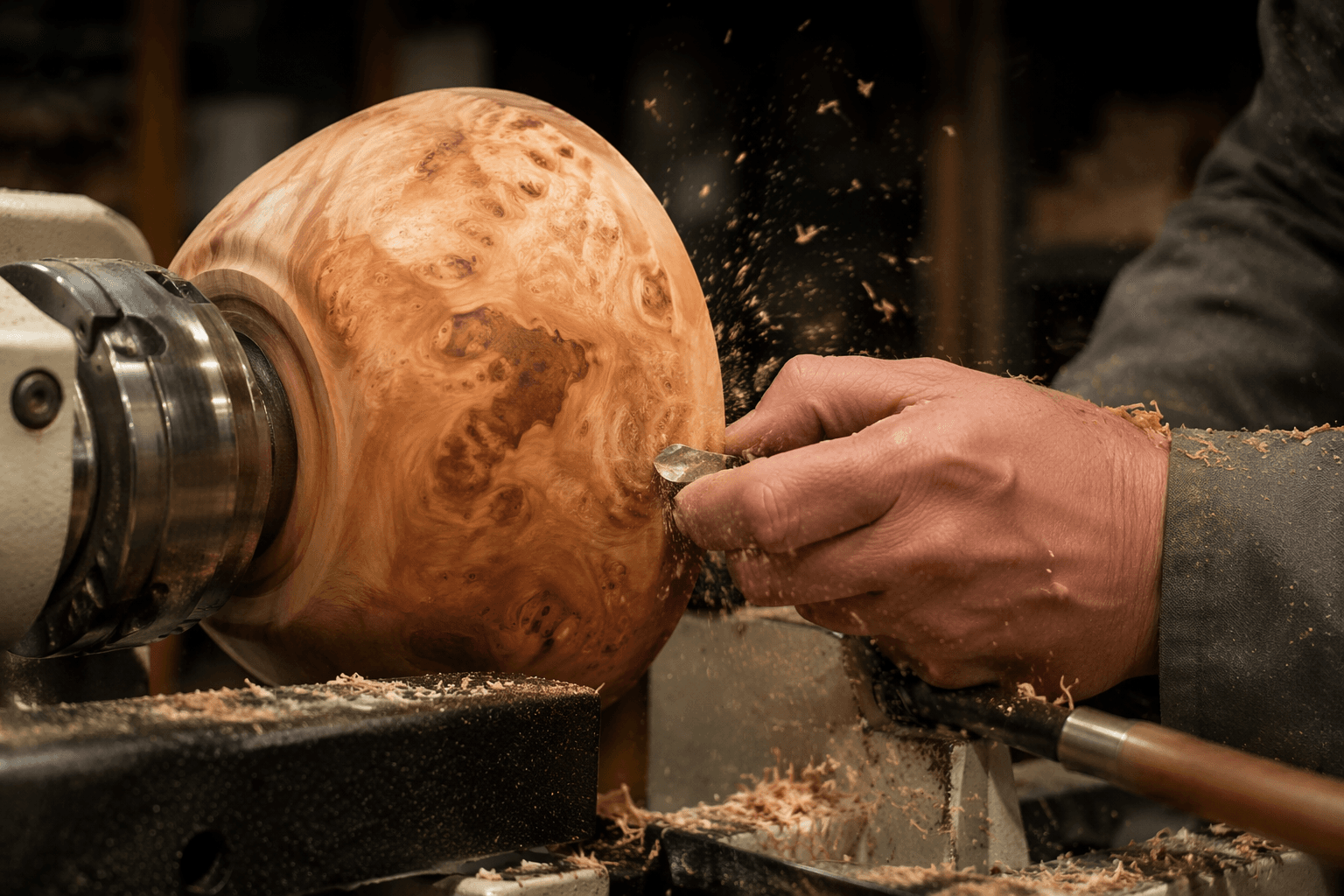
Steve Tiedman nudged the thread toward a different kind of solution: scraper-based prep. He mentioned John K. Jordan’s card-scraper approach as an alternative to relying entirely on abrasives, and that is a smart turn in a discussion like this. Once figured wood starts rippling under sandpaper, a scraper can often reset the surface before sanding begins.
That idea lines up closely with Tom Wirsing’s advice in an AAW article from January 17, 2024. Wirsing said highly figured wood tears out readily and ripples if sanded excessively. His explanation is the one that should stay in your head the next time a burl starts misbehaving: figured wood mixes sidegrain and endgrain in irregular patterns, so sanding can abrade the sidegrain much faster than the endgrain.
Wirsing’s two-step process is blunt and useful. First, gouges remove about 99 percent of the wood. Then a negative-rake scraper perfects the surface before sanding starts. He said a freshly sharpened negative-rake scraper can remove ripples, dimples, and tear-out even on highly figured hardwoods. That is not a miracle cure, but it is often the difference between sanding a surface and chasing it forever.
A cleaner cut beats a longer sanding session
The forum conversation and Wirsing’s guidance point to the same conclusion: if the surface shape is already unstable, abrasives are the wrong place to solve every problem. You need to control the cut, control the backer, and stop before the soft areas get sacrificed.
A companion handout from First State Woodturners made that philosophy even clearer. Wirsing described the surface as needing to be perfect before sanding begins. In other words, sanding is there to refine a good surface, not rescue a bad one. That is especially true on figured wood, where the first aggressive abrasive pass can create the very ridges you spend the next hour trying to remove.
Craft Supplies USA made a similar point in its 2014 shear-scraping article. It said torn grain is common in highly figured and soft-textured woods, and that traditional scraping can be too aggressive. Its answer was a shear-scraping cut at about 45 degrees, which can leave a much cleaner surface and reduce the amount of sanding needed. That older advice still fits the same problem Novak ran into on the inside of his bowl: if the surface is already fragile, the cut has to be cleaner before the abrasive ever touches it.
What to test on the next difficult blank
The practical takeaway from this thread is not one magic product or one perfect grit schedule. It is a way of thinking about figured wood that respects the shape and the grain at the same time.
- Start with the cleanest cut you can manage, because sanding cannot fix a rough surface without risking tearout.
- Try a stiffer backer with very light pressure before reaching for a softer pad that can follow the ridges.
- Match the pad shape to the inside or outside of the form instead of forcing a flat disc to do bowl work.
- If the figure is still fighting you, use a freshly sharpened scraper or a shear-scraping pass to flatten the surface before sanding.
- Treat the abrasive as the final refinement, not the main leveling tool.
That is why Novak’s birch burl problem drew so many replies so quickly. A figured bowl does not fail at the finish line because the turner sanded too little. It fails when the pad, the pressure, and the cut do not match the grain. The forum’s best answers all point the same way: solve the geometry first, and the glossy finish has a real chance to survive.
This article was produced by Prism’s automated news system from verified source data, official records, and press releases, then run through automated quality and moderation checks before publishing. The system is built and supervised by the people who set the standards it runs under. Read our full AI policy.
Know something we missed? Have a correction or additional information?
Submit a Tip