American Walnut and Maple Lamp Turns Woodturning Into Statement Decor
A tall walnut-and-maple lamp shows how contrast, scale, and a clean silhouette can turn a lathe project into functional decor. The real lesson is balance, not just shape.
Why the tall form earns attention
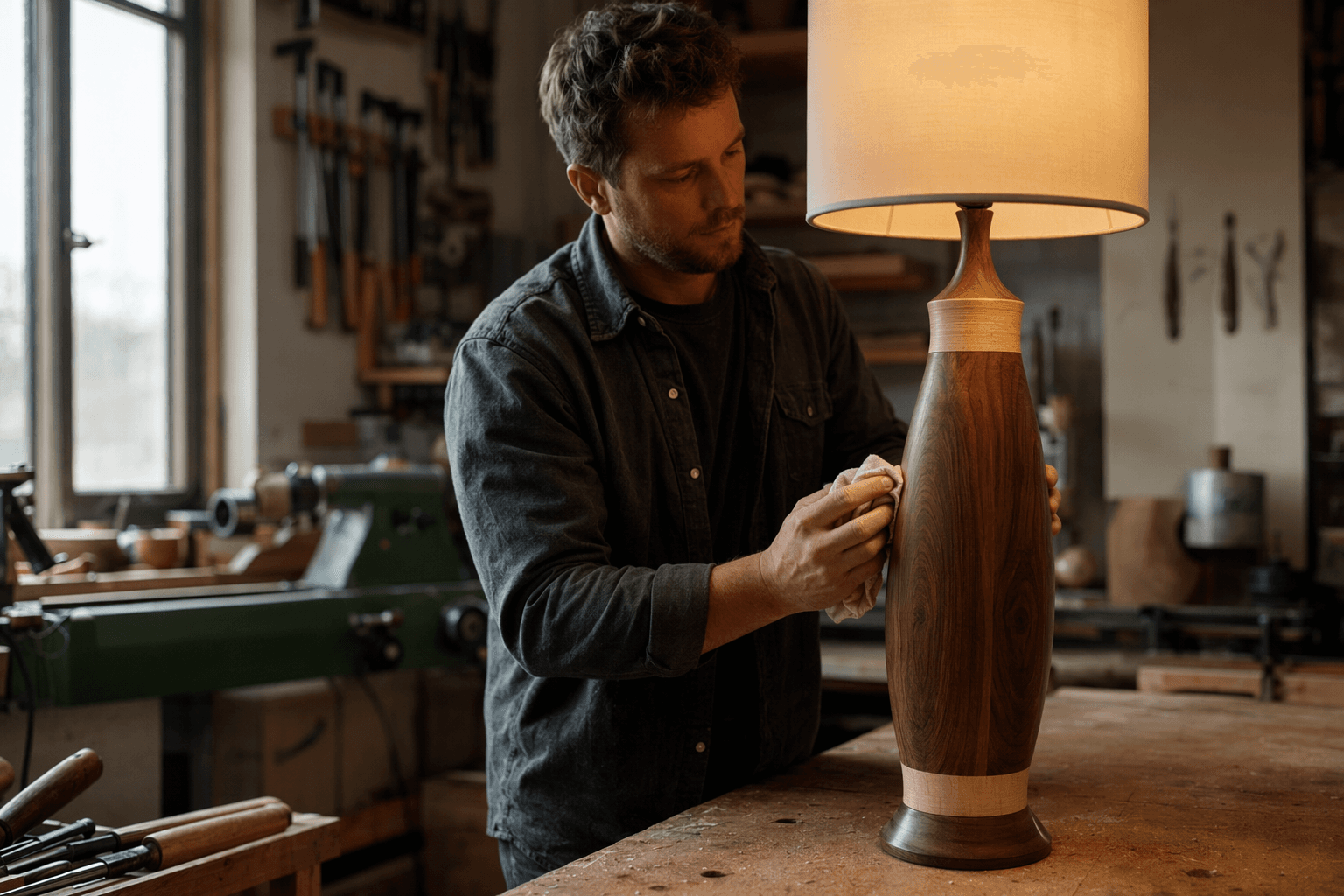
The first thing that grabs you is the height. An extra-tall lamp forces the eye to travel, so proportion matters in a way it rarely does on a bowl or a pen. That vertical read makes the piece feel like statement decor, not just another turned object, and it is exactly why the form is worth studying if you want to move beyond small projects.
The lamp also changes the turning problem itself. A body that has to hold a light source needs visual stability from top to bottom, which means the silhouette has to stay composed even before the switch is flipped. With this kind of project, the turning cuts matter, but so does the decision-making around scale, stance, and how the finished piece will live in a room rather than on a bench.
Walnut and maple do the design work
American walnut and maple are doing more than looking good together. Walnut gives the lamp a darker anchor, while maple lightens the form and keeps the overall shape readable at a distance. That contrast is a big reason the piece reads as a crafted lamp instead of a generic turned cylinder.
That pairing also fits a familiar lamp-building logic in the shop. A recent Woodcraft turned table lamp uses stack-laminated 3/4-inch maple pieces with 1/8-inch and 3/8-inch walnut layers sandwiched in between for contrast, and it leaves a center gap in the glue-up so the lamp wire and threaded pipe can run through the middle. The result is useful beyond the specific build: the wood species are not just decorative, they are part of the structure and the visual rhythm.
For a turner, that matters because segment transitions become part of the story. Clean lines between walnut and maple can define the form more clearly than curvature alone, especially on a tall piece where every change in tone gets stretched vertically. If the transitions are sloppy, the lamp looks busy; if they are crisp, the whole object feels intentional.
What the piece teaches about balance and proportion
A tall lamp lives or dies on balance. The base has to feel grounded enough to support the vertical lift, but the body still needs enough movement to keep the eye climbing. That is the main lesson hidden in a short clip like this one: the success of the project comes from controlled proportions, not from adding more decoration.
There is also a practical lesson in how the form shifts from raw stock to finished object. MSN has leaned on short woodturning clips that spotlight transformation, and this lamp fits that pattern neatly. You are not watching a lengthy build so much as seeing the reveal of what careful turning and material choice can do when they are aimed at a clear final silhouette.
If you want to adapt the look into your own shop without overcomplicating it, the smartest move is to let the contrast carry the design.
- Keep the base visually heavier than the upper body so the lamp does not feel top-heavy.
- Use walnut and maple in distinct bands or blocks so the transitions are deliberate, not accidental.
- Reserve the centerline early if you plan to run a cord and threaded pipe, because wiring has to be part of the form from the start.
That approach keeps the project shop-feasible. You do not need an elaborate segmented sculpture to get the effect. A simple stack-laminated blank, a clean center channel, and disciplined proportions can deliver the same sense of a finished statement piece without pushing the build beyond a practical turning session.
Lighting is part of the woodworking conversation
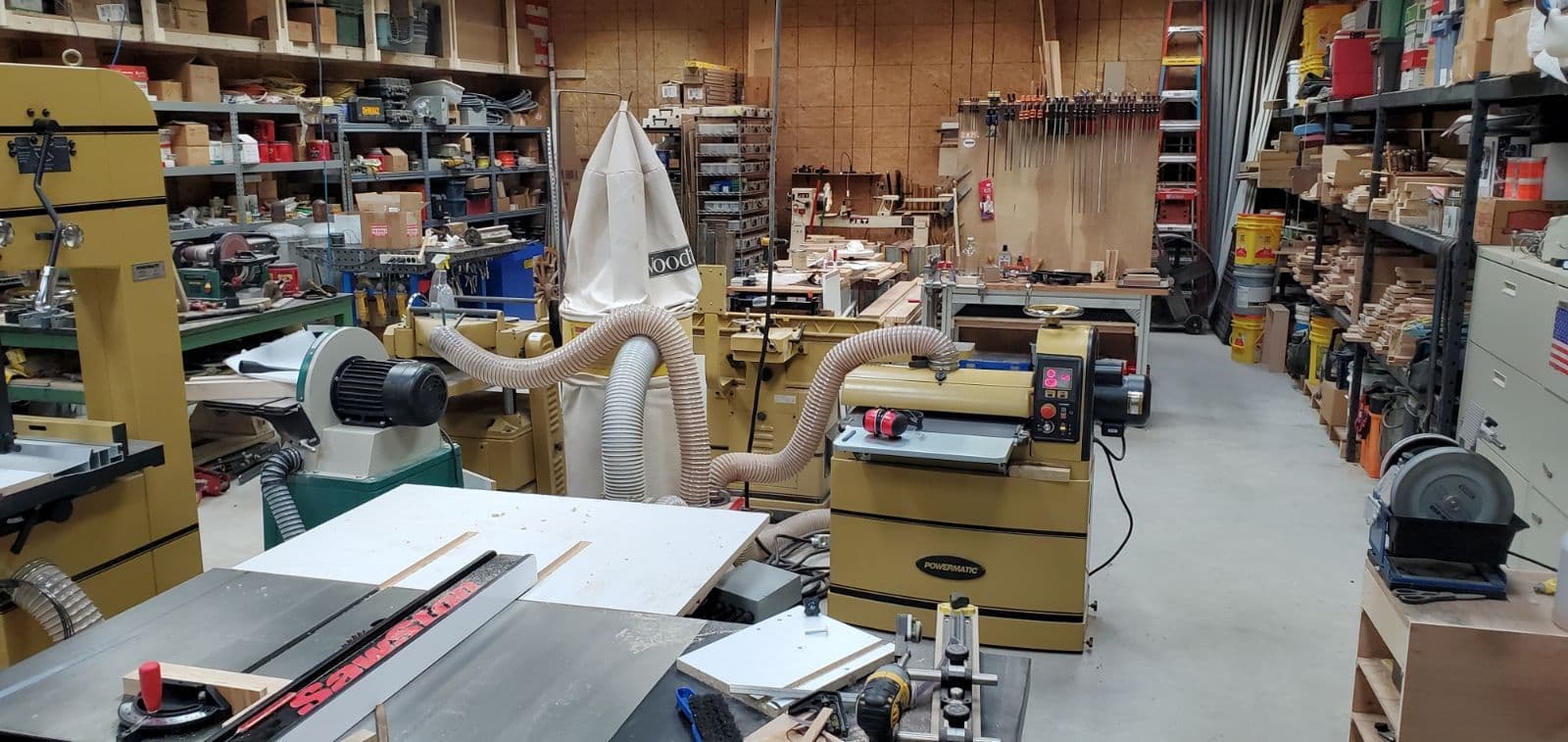
The lamp theme also reaches past the finished object and into the shop itself. OSHA says each work area and walkway must be adequately lighted whenever an employee is present, which makes lighting more than a design choice. In woodworking, good light affects layout, safety, sanding, and the ability to judge a turning’s surface before finish goes on.
That is one reason a lamp project resonates so strongly with turners. You are making an object that solves a real daily need, while also working inside the very conditions that make good woodworking possible. The subject is functional decor on the surface, but it also points back to the working environment that produced it.
Why short-form maker clips keep landing
The MSN clip sits inside a broader stream of brief woodturning videos that sell the appeal of a transformation in a matter of seconds. That format works because the payoff is immediate: rough material becomes a polished object with a clear use, and the viewer sees the whole idea without waiting through a long build sequence. In this case, the combination of LED lighting, American walnut, maple, and a tall silhouette gives the clip enough identity to stand out even in a short run time.
For turners, the value is in the takeaway. Tall forms reward discipline, contrasting species sharpen the read of the silhouette, and a lamp design forces you to think about both structure and presentation at once. That is what makes this kind of project more than decor: it turns the lathe into a way of building objects that shape a room, not just fill a shelf.
This article was produced by Prism’s automated news system from verified source data, official records, and press releases, then run through automated quality and moderation checks before publishing. The system is built and supervised by the people who set the standards it runs under. Read our full AI policy.
Did this article answer your question?