Charred Wildfire Wood Gets Second Life as Stunning Turned Art
A woodturner's reclamation approach to wildfire-charred timber produces striking art — and the techniques for working this unusual material are worth every turner's attention.
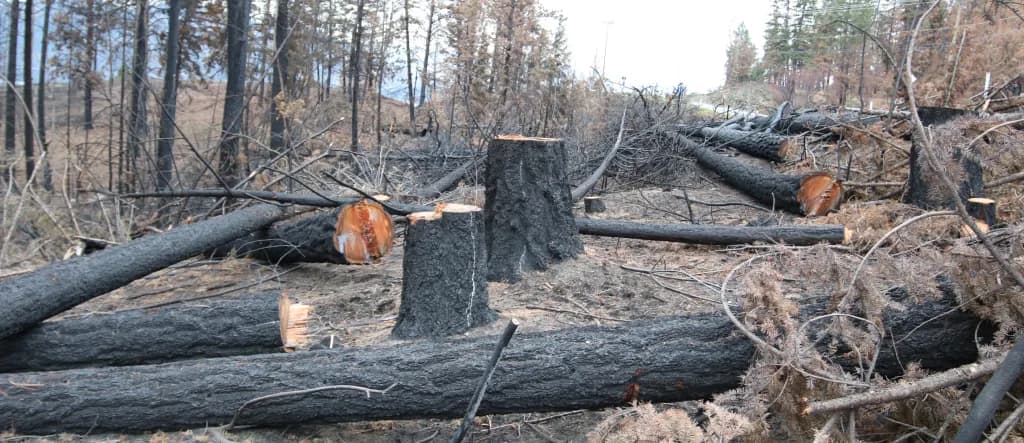
Put a log scorched black by wildfire on the lathe and something unexpected happens: the destruction becomes the design. That's the core idea behind a reclamation turning project documented this month, in which charred and wildfire-affected timber was rescued from the discard pile and shaped into a visually arresting finished piece. The approach raises a question every turner who lives near fire country has probably asked: can you actually work this material, and is the result worth the trouble?
The short answer, borne out by turners who have done it, is yes — but fire-damaged wood brings its own rules to the shop.
The char on wildfire timber typically doesn't penetrate very far into the log; the outside blackens but the underlying wood remains intact, and there's noticeably less moisture in the blank than you'd find in freshly felled green stock. That lower moisture content is actually useful: it shortens the drying wait before you mount a blank. The trade-off is that freshly burned wood from a wildfire tree is not truly dry wood either — it carries some residual moisture, just less than a domestically cut log would.
The visual payoff comes from a deliberate choice about how much char to keep. Leaving some of the black on the exterior of bowls is a decision owners of fire-salvaged timber tend to respond to strongly. The charred surface is velvety smooth and inviting to the touch, and when char is applied to only part of a piece, the matte black sections absorb light in a way that makes an unburned rim appear to float in space. That contrast between carbon-black and raw wood grain is the signature of this style, and it's not something you can fake with stain.
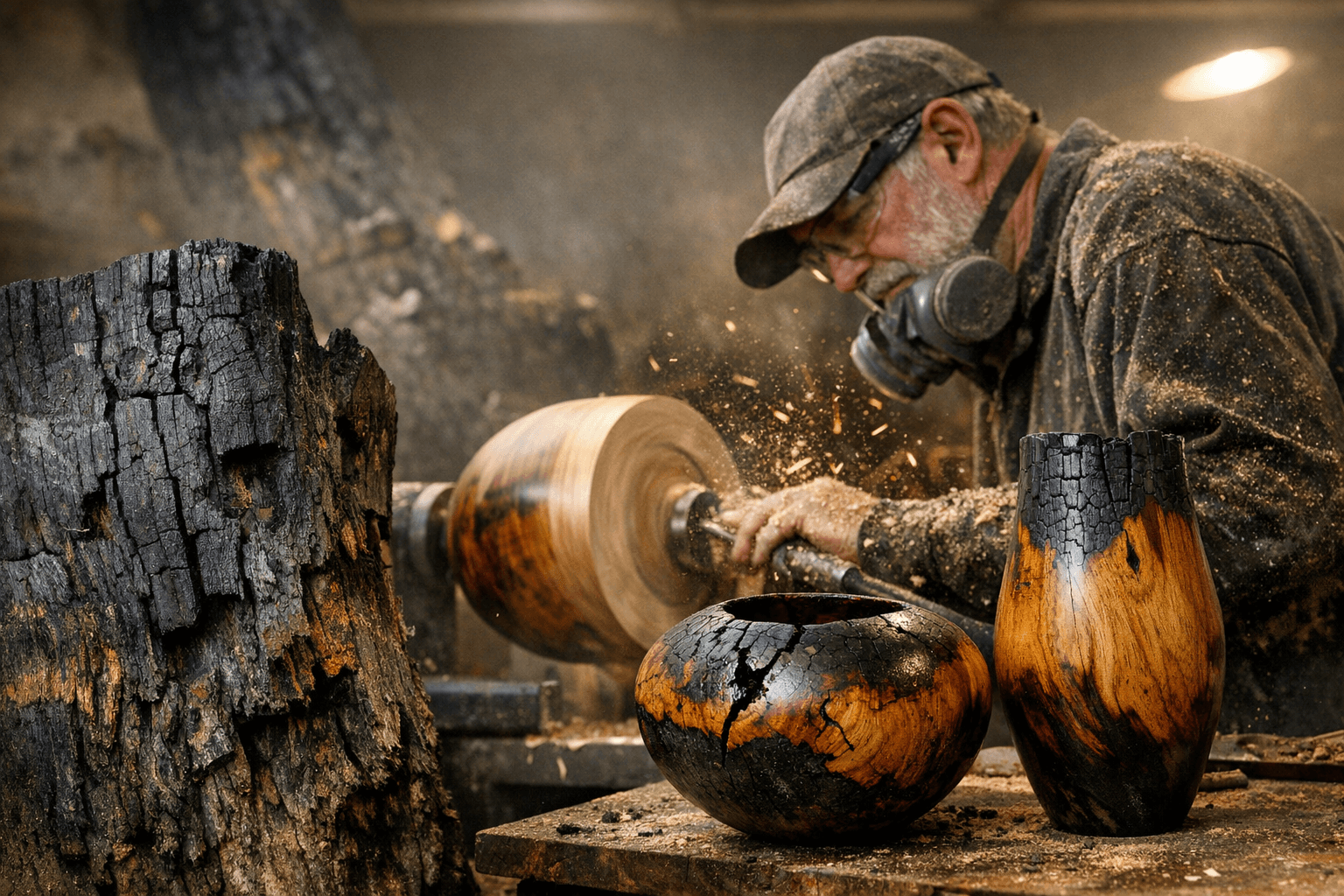
Finishing the charred surface is where most turners run into trouble. Sanding fire-damaged wood spreads the black soot everywhere, so sealing charred areas before sanding is the move that keeps the rest of the piece clean. After brushing to even out the color, a clear coat locks in the finish. For top coats over a fully charred surface, water-based products like Polycrylic from MinWax or the thicker Enduro-Var urethane from General Finishes perform well.
The tension between permanence and fragility in fire-treated wood is part of what makes it compelling as a material. The durability of charred wood is well-documented — in Japan, the scorching technique known as yakisugi has preserved wooden architecture for four hundred years. When scorched, the wood surface strengthens against decay sources ranging from moisture to fungal infestation. Turned art made from wildfire salvage carries that same paradox: the fire that destroyed the tree is also what makes the finished piece structurally and visually interesting.
For anyone sourcing fire-salvaged blanks, the practical advice from turners who have worked this material is to inspect carefully for deep checking, stabilize the most deeply charred areas if you want to keep burned wood on the rim of a vessel, and be honest with yourself about whether a given piece has enough structural integrity to survive roughing out. Some won't. The ones that do, though, carry a story no pristine cherry blank ever could.
This article was produced by Prism’s automated news system from verified source data, official records, and press releases, then run through automated quality and moderation checks before publishing. The system is built and supervised by the people who set the standards it runs under. Read our full AI policy.
Did this article answer your question?