Irish Woodturners’ Guild seminar shares natural-edge bowl techniques
A golden yew bowl with its bark edge intact became a lesson in why natural-edge turning draws new hands in fast: shape, timing, and tool control all matter.

Natural-edge turning gets personal when the bark stays on
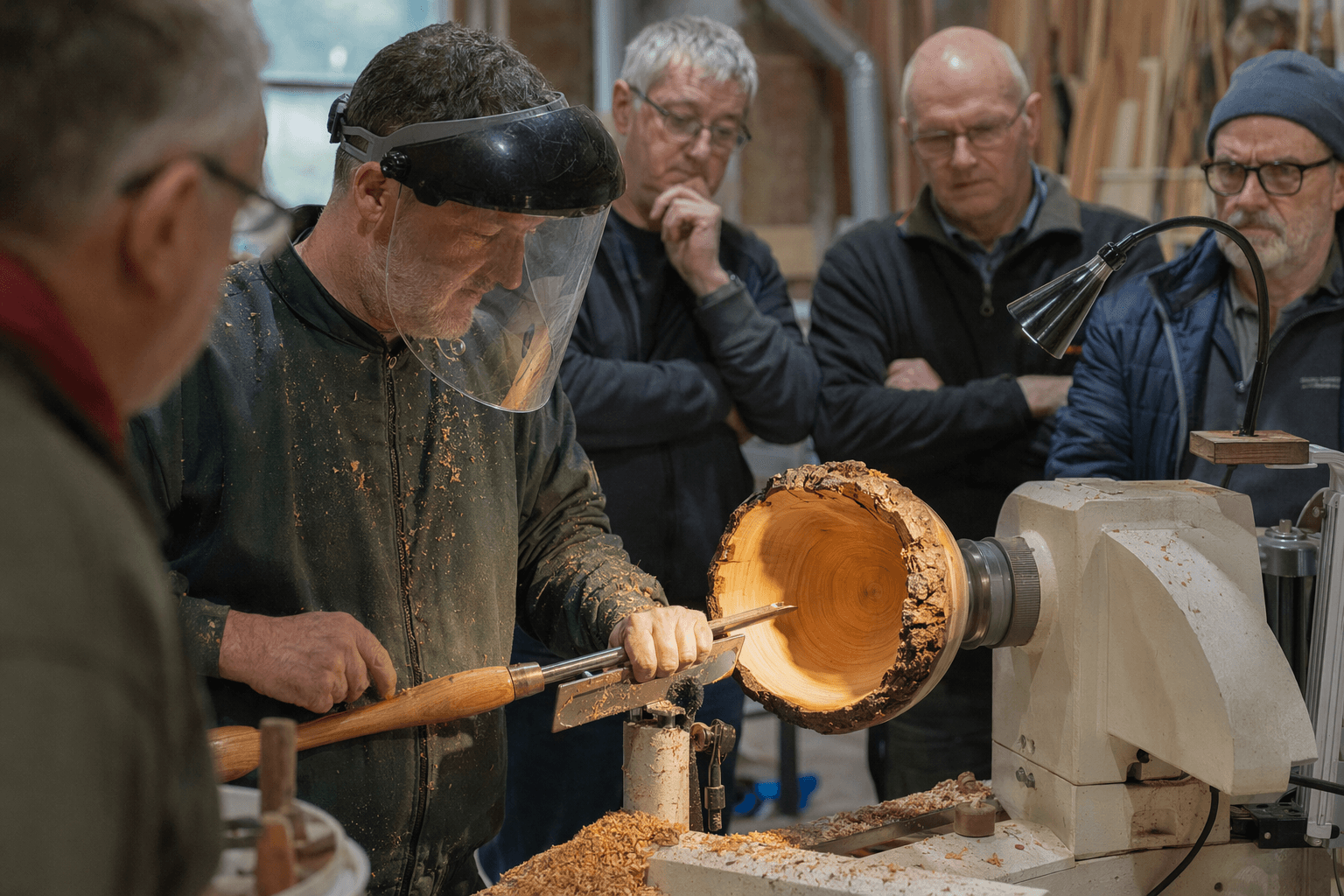
At a seminar in Beaumont, the most instructive object in the room was a bowl that still looked like a branch. Kieran Reynolds, a woodwork teacher by day, turned a natural-edge piece from golden yew and left the bark intact, giving the audience a clear view of what makes this style so compelling: the tree’s original edge is not erased, but brought forward into the finished form.
The setup made the lesson easy to follow. Four rows of seats faced a big lathe on wheels, with cameras and screens helping everyone see the cuts and the shape developing as Reynolds worked. The room was full of the kind of practical detail that turns a demo into a real teaching moment, especially for newer turners trying to understand how a natural-edge bowl holds together as a project, not just as a finished object.
What a natural-edge bowl really teaches
Natural-edge bowls are defined by the part that refuses to become fully regular: the original outer edge, often bark, remains visible in the finished piece. That gives the bowl its character, but it also makes the turning more demanding. The blank has to be chosen with the final form in mind, and the turner has to judge whether the bark will survive the process at all.
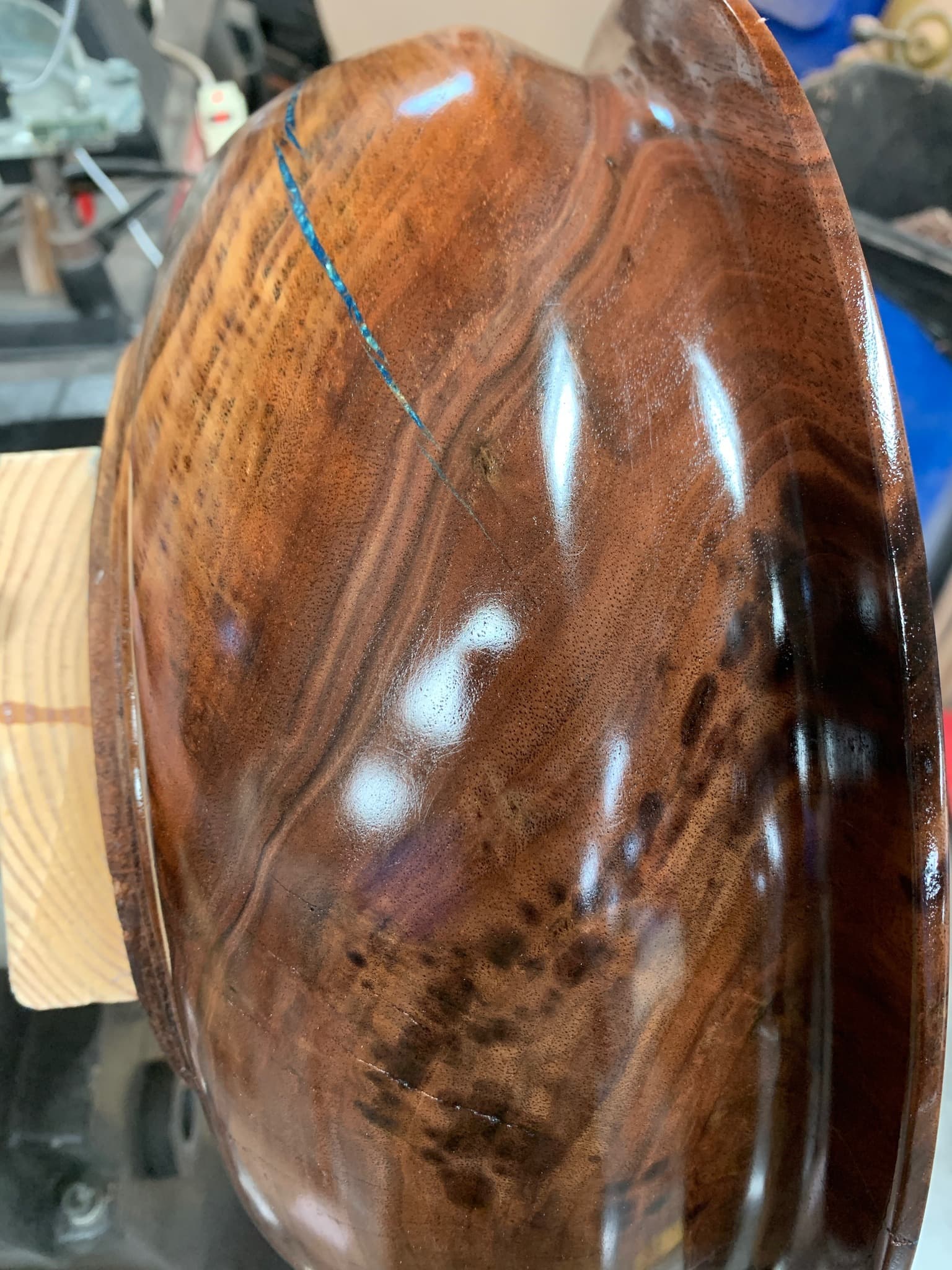
That is why Reynolds’ golden yew bowl works so well as a teaching piece. The bark edge was left intact, so the bowl kept the look of the branch it came from rather than being forced into a fully symmetrical shape. For anyone learning the form, that difference matters. It shows that the appeal of natural-edge turning is not only visual, but structural: the piece depends on respecting what the wood already wants to do.
The technical side starts before the tool touches the timber. Bark retention depends on the species, the way the blank is cut, and the time of year the tree was felled. Woodturning references also note that winter-felled wood often holds bark better than wood cut in warmer months. That makes natural-edge work feel like a conversation between material and timing as much as a matter of craft.
A seminar built around passing knowledge on
Cathal Ryan, the chapter chair, framed the seminar in the larger purpose of the Irish Woodturners’ Guild: sharing the craft and bringing scattered enthusiasts together. That idea ran through the whole room. Reynolds was not simply showing off a polished final result, but answering the same question that first caught his own attention when he saw a natural-edge bowl and wondered how it had been made.
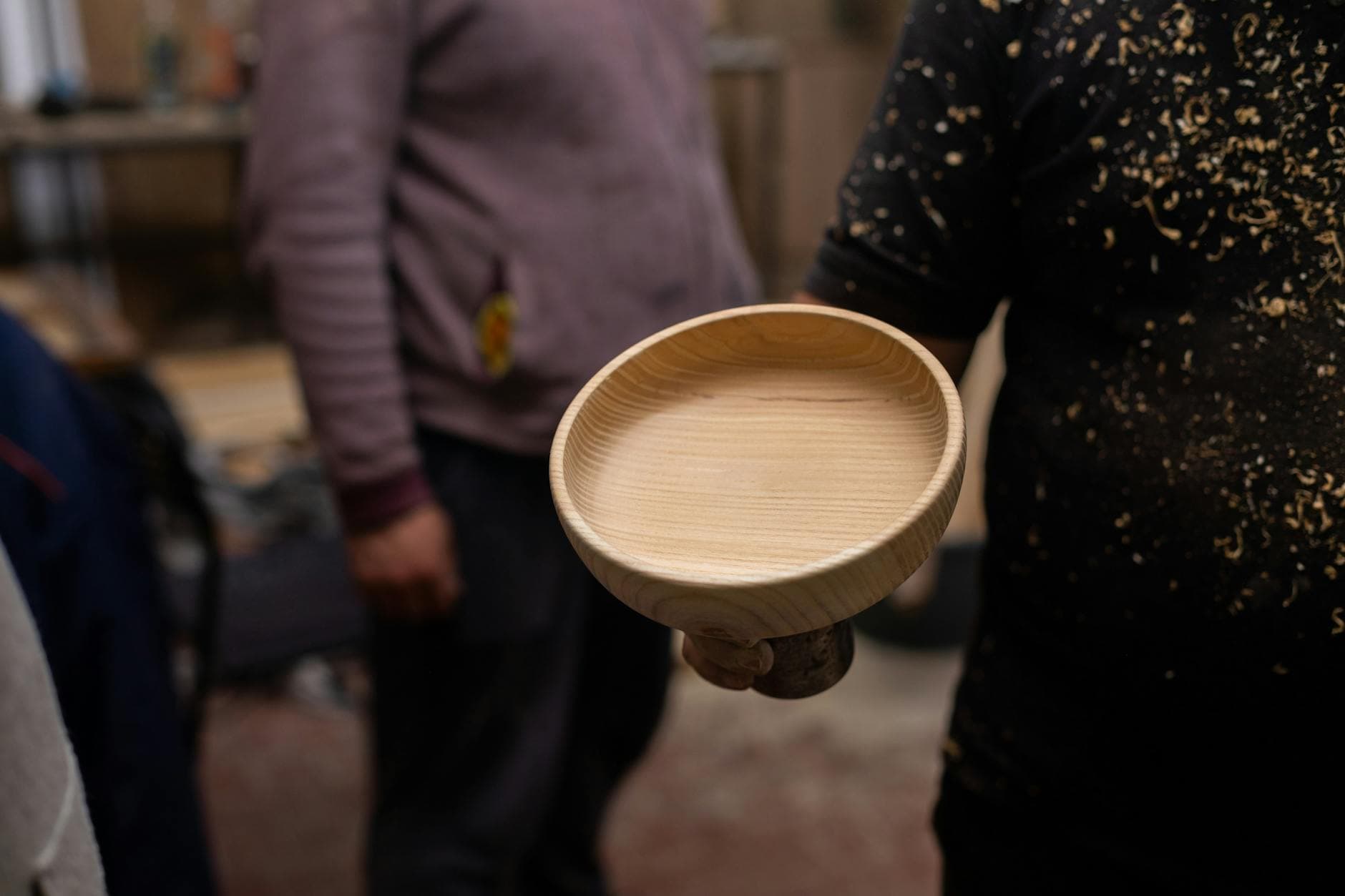
That kind of demonstration gives newer turners something concrete to take home. They can see how form, bark, sapwood, and finishing choices affect the final piece, and they can watch a demonstrator explain the process in real time. In a setting like this, the bowl can even be passed around the room, turning one project into a shared reference point rather than a private achievement.

That is exactly the kind of instructional culture the guild seems built to support. The organization says it was founded in 1983, now has more than 500 active members, and spans 18 chapters across the island of Ireland. Its chapters are often the first contact point for new members, and they meet monthly with live turning demonstrations. In practice, that means the craft does not sit behind a wall of expertise. It moves from lathe to audience, from one turner to the next.
How the chapter model keeps the craft accessible
The East Central Chapter’s monthly rhythm gives the guild’s mission a local shape. The chapter meets on the second Saturday of each month in the Scout Den, Lorcan Green, Santry, Dublin 9, giving members a fixed place to return to and newcomers a straightforward entry point. A setup like that matters because woodturning can look intimidating from a distance, especially when a piece like a natural-edge bowl depends on both timing and confidence.
The Beaumont seminar showed how the club format lowers that barrier. The cameras and screens made the lathe visible to the whole room, the wheel-mounted machine made the demo portable, and the seating kept everyone close enough to follow the cut. Instead of treating the finished bowl as a mystery object, the session treated it as a process that can be explained, repeated, and improved.
That is also why natural-edge turning makes such a strong first project for anyone drawn to the craft. It gives immediate visual payoff without hiding the work behind complexity. The bark edge, the sapwood, and the curve of the bowl all reveal choices that can be seen and discussed, which makes the learning feel alive in the room.
What Reynolds’ yew bowl leaves behind
Reynolds’ golden yew bowl did more than demonstrate a technique. It showed how a single piece can connect the appeal of the finished form with the practical questions that every turner eventually has to answer: which blank to choose, whether the bark will hold, how much symmetry to leave behind, and how to keep the piece honest to the wood it came from.
That is the real strength of the seminar model the Irish Woodturners’ Guild is using in Beaumont and beyond. A live demo, a shared hall, and a bowl that can be handled after the cut all turn natural-edge work from something mysterious into something approachable. The bark edge stays on the bowl, and the method stays in the room, ready for the next turner to pick up.
Know something we missed? Have a correction or additional information?
Submit a Tip