Purple Resin Turns Firewood Into a Decorative Bowl
A rough firewood log becomes a decorative bowl when purple resin turns cracks into the design. The payoff is real, but only if you accept the mess and extra work.
From firewood to shelf piece
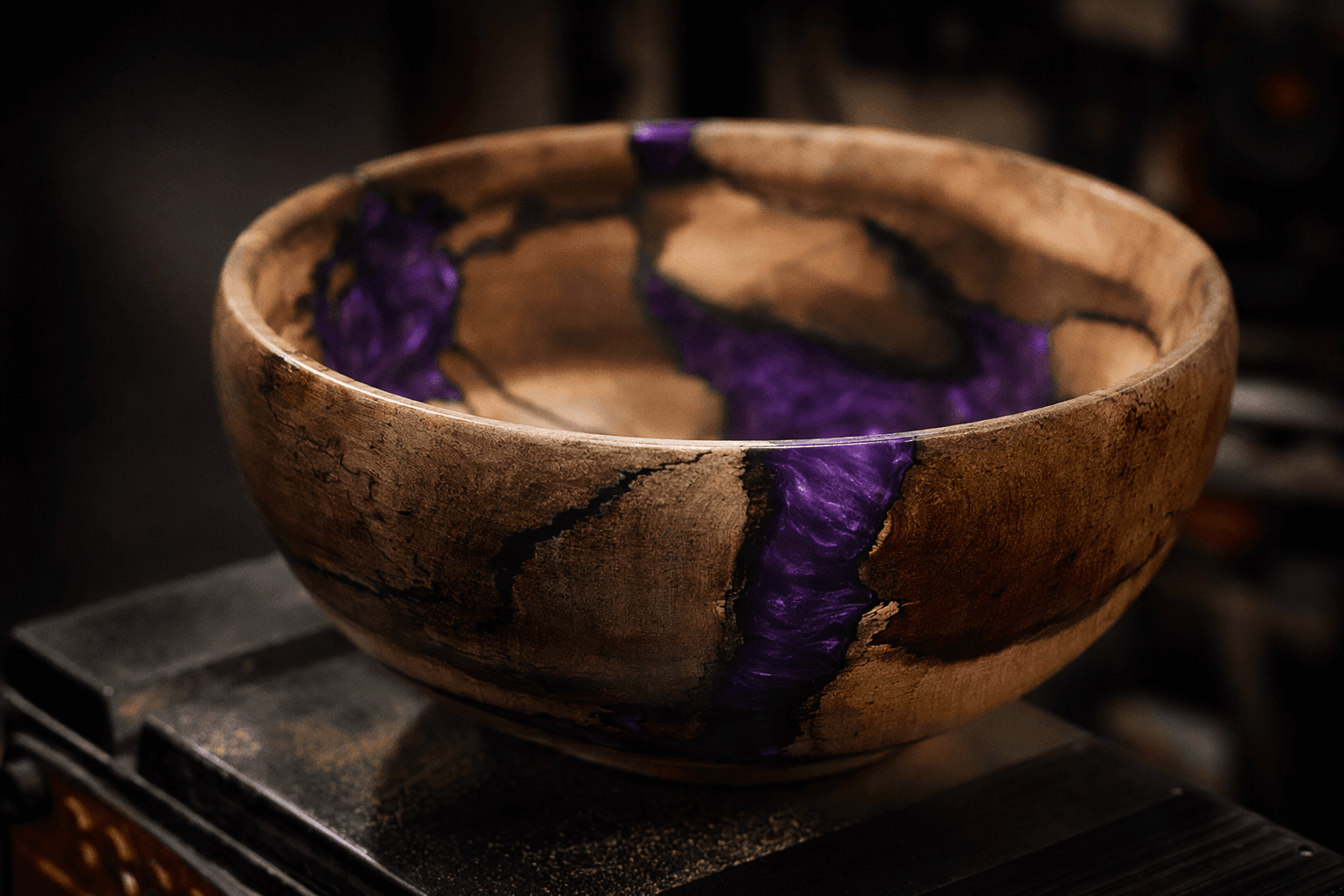
A log that looked destined for the stove pile ends up as a decorative bowl once purple resin cuts through the rough wood and gives the blank a clear visual purpose. The finish is Danish oil, and that matters because the final piece does not read like a repaired accident; it reads like a planned hybrid, with the resin carrying part of the design instead of quietly patching a flaw.
That is the real hook of this project. Firewood usually means irregular grain, cracking, and uncertainty. Purple resin flips that message on its head, turning the blemishes into the reason the bowl exists at all. The bowl may be simple in form, but it still looks interesting, which is exactly why this kind of salvage turn can feel more compelling than a flawless blank.
What the resin rescued
Resin solves the problems that would normally send a rough log back to the scrap heap. It can bridge voids, lock together broken sections, and give shape to a blank that would otherwise be too compromised for a clean natural-edge bowl. In this case, the resin is not an afterthought. It is part of the visual language, which is why the finished bowl reads as a deliberate object rather than a rescued one.
That distinction matters in the shop. If the wood has cracks that wander too far, resin can stabilize the overall look and make those openings feel intentional. If the grain is uneven or the log is oddly shaped, resin can help the eye move across the blank instead of getting stuck on the defects. In other words, the resin does not erase the wood’s history; it frames it.
For an ordinary turner, that is the attraction. You are not trying to pretend the log was perfect. You are deciding that the imperfections are the point, and then using color and translucence to make them part of the composition. That is why a purple pour can do more than a neutral filler ever could.
What it could not hide
The resin also has limits, and this is where the verdict gets more interesting. It can cover gaps, but it cannot make a weak blank structurally generous or magically elegant. A bad silhouette is still a bad silhouette. If the bowl profile is clumsy, the resin will not save it. If the wood is so far gone that the blank cannot hold shape, color alone will not rescue the project.
That is why this kind of turning works best when the wood still has enough structure to support the design. The resin should enhance the log, not replace it. The most successful mixed-material bowls let the wood stay in charge of the overall form while the resin acts like a bright seam, a bridge, or a deliberate interruption in the grain. The piece becomes more decorative because the flaws are visible, not because they vanish.
The final Danish oil finish helps here as well. It keeps the result grounded in the language of woodturning instead of pushing it into the look of a molded craft object. The oil gives the bowl a softer, more traditional feel, so the resin reads as an accent in a turned piece rather than the whole story.
Why turners keep coming back to this idea
This project sits in a wider trend that explains why it is so clickable. The American Association of Woodturners says casting wood or other materials in resin to make turning blanks has become a popular trend in recent years. With more than 360 chapters worldwide and an article archive that goes back to 1986, the organization has helped normalize the idea that a turning blank does not need to start as pristine lumber.
That is not a small shift in the culture of the craft. The lathe is one of the oldest and most important machine tools, and wood lathes were already in use in France as early as 1569. Turned wooden drinking bowls, known as mazer bowls, go back to the early 14th century, often made of spotted maple. The basic impulse has not changed much: take humble material, shape it carefully, and make it worth keeping.
Seen that way, the purple-resin bowl is not a novelty stunt. It is a modern version of an old turning instinct. The form is contemporary, but the idea is deeply traditional: elevate the ordinary by shaping it with enough care that the final piece looks intentional.

How to think about rough stock before you commit
If you want this sort of project to work in your own shop, the first decision is whether the blank has enough character to justify the resin. A rough firewood log can be beautiful, but it can also be a trap if the cracks are too extensive or the shape is too compromised. Resin is strongest when it highlights a story that is already there.
Natural-edge work offers a useful comparison. Woodworker’s Journal notes that, in northeastern Ohio, December through February are safe bets for harvesting barky bowl stock because bark is less likely to fall off. It also says thin cyanoacrylate glue can help hold bark in place while you turn. Those details underline the same principle at work in a resin bowl: unstable material needs support, timing, and a willingness to stabilize problems before they become failures.
In practical terms, that means making a few clear choices before you start cutting:
- Keep the resin visually secondary to the wood unless the blank is so damaged that the color needs to carry more of the design.
- Choose a form that can survive the blank, not a form you would use on perfect maple.
- Expect more time in prep, pouring, sanding, and cleanup than you would spend on a plain bowl.
- Use the finish, in this case Danish oil, to bring the whole surface back into one visual rhythm.
The safety and discipline behind the glamour
The pretty result should not distract from the realities of turning mixed-material blanks. The American Association of Woodturners publishes a safety guidebook and warns that lathe accidents can happen with suddenness, while respiratory problems can build over years. That warning matters even more when you are dealing with uneven stock, dust, and materials that may not behave like plain wood.
Resin-heavy work asks a lot from the turner. The blank can be unpredictable, the sanding can be tedious, and the cleanup can feel messier than a standard bowl job. That is the tradeoff behind the dramatic before-and-after: you get a distinctive object, but only by accepting that the process is less tidy than turning sound hardwood.
Verdict
For ordinary shop turners, the verdict is yes, but only selectively. Purple resin can absolutely turn firewood into something worth keeping, especially when the log has enough shape and grain to let the resin act as a design accent rather than a structural crutch. It is a strong idea when you want a bowl with personality, not just a bowl with a safe profile.
The extra mess, cost, and time are justified when the blank already has drama and the goal is a piece that looks unmistakably handmade. If you want efficient, predictable production, plain wood still wins. If you want a salvage experiment that turns waste into a conversation piece, this is exactly the kind of project that keeps woodturning feeling inventive.
This article was produced by Prism’s automated news system from verified source data, official records, and press releases, then run through automated quality and moderation checks before publishing. The system is built and supervised by the people who set the standards it runs under. Read our full AI policy.
Did this article answer your question?