Rotten-Smelling Log Transforms Into a Beautiful Turned Piece on the Lathe
That foul-smelling log in your pile might be hiding the best figure you've ever turned; here is the decision framework that separates rescuable blanks from true rot.
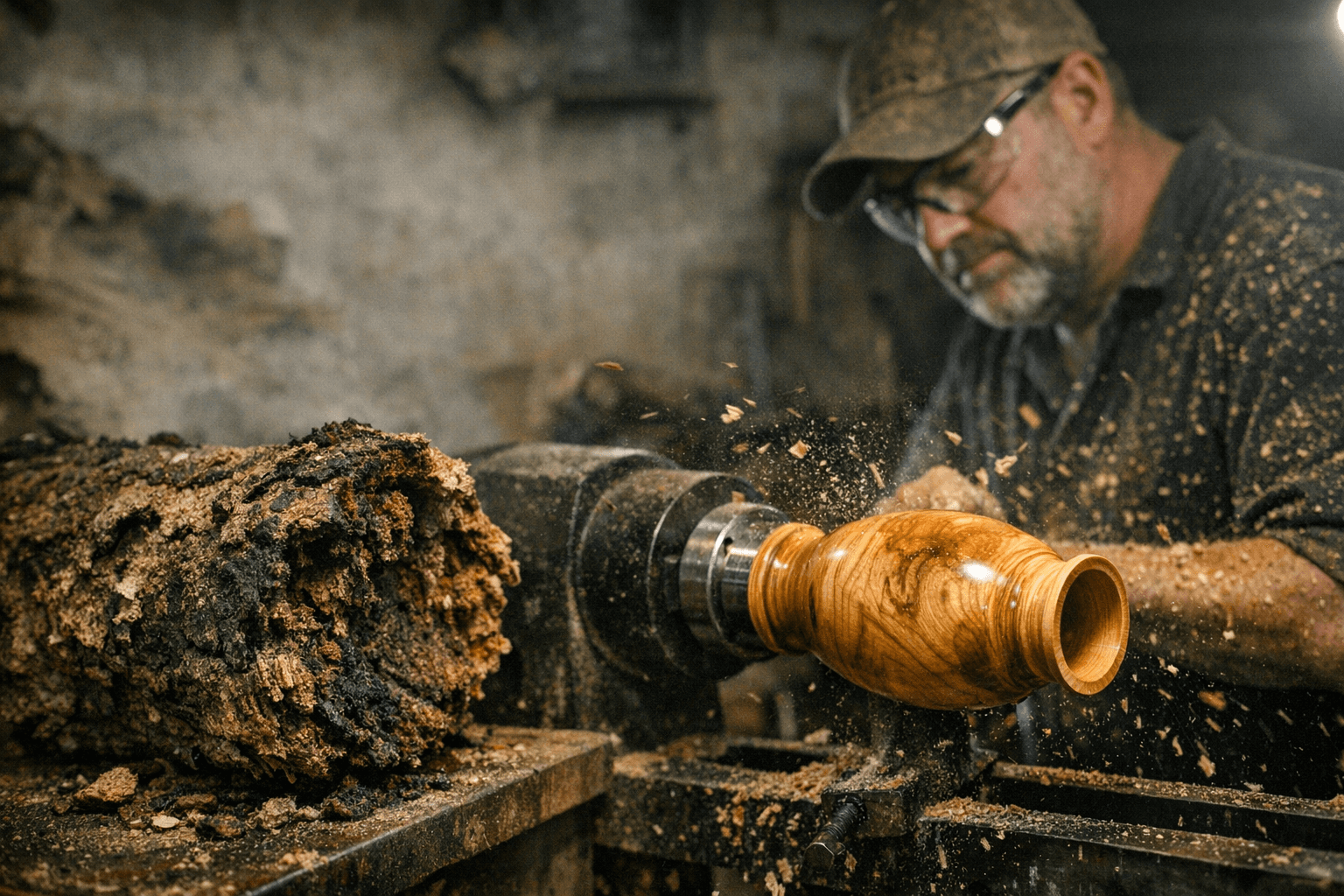
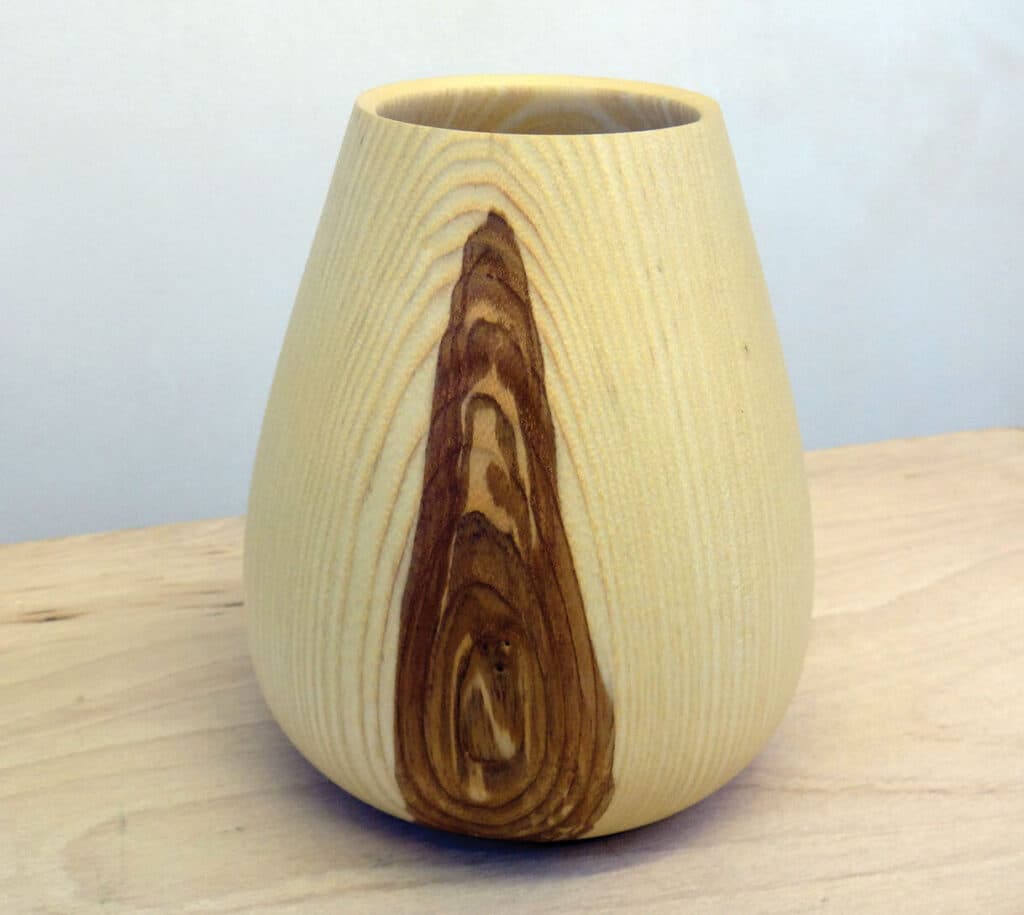
A log that reeks doesn't have to be firewood. That's the argument made convincingly by a short visual clip that's been circulating among turners, documenting the full arc of a salvage turn: a blank that smelled and looked rotten on the outside, carefully brought to the lathe, its unstable outer layers removed, its hidden interior revealed as something worth displaying. The transformation is satisfying to watch, but the more useful takeaway is the decision framework behind it, because the same judgment call happens in every shop with a seasoned wood pile.
Surface Funk vs. Structural Rot: Making the Call
The single most important distinction in salvage turning is understanding which kind of decay you're actually dealing with. Smell, surface mold, weather checking, and discoloration are frequently confined to the sapwood. Heartwood, particularly in dense species and in crotch and burl sections where grain complexity resists deep fungal penetration, often remains structurally sound long after the outer layers have started to deteriorate. What looks alarming from the outside is sometimes no more than a few millimeters of compromised material separating you from clean, highly figured wood.
The standard field test is the pick test: probe the suspect area with a screwdriver or the tip of a turning skew. Sound wood resists, springs back, and if it breaks it does so with a sharp, splintery snap. Wood in advanced structural decay compresses under modest pressure, crumbles, or breaks in a clean, brash fracture with no fibrous resistance. If the softness runs deep toward the pith or follows radial checks inward rather than staying on the outer shell, you are looking at structural rot, not surface funk, and the salvage calculus changes substantially.
Moisture Checks Add an Objective Layer
A pin-type moisture meter is a fast, inexpensive confirmation of what the pick test suggests. The critical threshold is 20% moisture content: above that level, fungal activity remains viable and the wood's internal condition may still be changing. In a log with active localized rot, the affected area can read as high as 28-30% MC while the adjacent heartwood reads 15-16%, a spread that tells you exactly where the decay boundary sits and whether the sound core is actually dry and stable. If the entire blank reads uniformly high, let it dry in a covered but ventilated space before committing lathe time.
Punky-Wood Stabilization Options
When the probe test and moisture reading confirm that decay is minor and localized rather than structural and pervasive, stabilization before or during turning is a practical next step. Thin CA glue is the most accessible option in most shops: it wicks into soft, punky fibers by capillary action and cures hard, giving the tool a surface it can actually cut cleanly. Apply it to the soft area, let it cure fully, then return with a light pass. Thinned lacquer or penetrating sanding sealer works on a similar principle and is the favored approach among turners working with spalted material such as box elder, spalted maple, and hackberry, where the softness is often widespread but shallow.
For more severely compromised sections, commercial wood hardeners designed for architectural repair soak deep into deteriorated fibers and cure to a hard, sandable solid. They work, but they dull tools fast and produce aggressive fumes, so ventilation is non-negotiable and respiratory protection is mandatory. The most complete stabilization method is vacuum-impregnated catalyzed resin, which polymerizes inside the cell structure and can raise effective Janka hardness from around 200 to over 3,000 lbf in severely punky material. Small commercial stabilization services now cater directly to the pen-turning market, making this option more accessible than it once was.
Safety: Respirator, Face Shield, and the Shrapnel Risk
Structurally compromised wood is not forgiving at lathe speed. A section that passes the pick test but still has hidden soft pockets can delaminate under tool pressure, and the ejection risk from an unbalanced or partially punky blank spinning at even moderate RPM is serious. The standard protocol before mounting any suspect blank:
- Start well below the recommended RPM for that diameter and check for vibration before bringing the tool in
- Use drive center and tailstock support wherever geometry allows; avoid face-plate mounting alone on large or heavy salvage blanks
- Set the tool rest as close to the work as safely possible to reduce lever arm on any catch
- Use a bowl gouge in a pulling cut rather than a scraper for initial stock removal; scrapers amplify the forces that cause catches
The dust hazard is equally significant. Punky and spalted wood releases fungal spores during turning that are fine enough to reach the lung's alveoli and, with repeated exposure, can trigger hypersensitivity pneumonitis. A dust mask is not sufficient: a P100-rated respirator is the minimum for this work. Face protection should be a full shield rated to Z87+ or EN166-B impact standards, not safety glasses alone, because a fragment from an unstable spinning blank can arrive from any angle.
Why the Transformation Story Has Real Value
Pieces turned from salvage blanks carry narrative weight that straight-grained kiln-dried stock simply doesn't. Gallery buyers and collectors respond to the story of a log that smelled rotten and became something worth displaying. Club demonstrators who walk members through this entire sequence, from the malodorous blank on the bench through moisture check, pick test, selective stabilization, and final form at the lathe, cover blank selection, safe handling, and finishing in a single session that newer turners remember long after the chips are swept up.
The Rescued Wood Challenge
Every club has a log pile, a storm pile, or a curbside score that someone almost dismissed. Post your own before-and-after salvage turn using the hashtag #RescuedWood and tag your club in the caption. The best transformations aren't just good turning; they're proof that the judgment call between a punky exterior and a sound core is a skill worth developing, one smelly blank at a time.
Here is the full formatted response:
A log that reeks doesn't have to be firewood. That's the argument made convincingly by a short visual clip circulating among turners, documenting the full arc of a salvage turn: a blank that smelled and looked rotten on the outside, carefully brought to the lathe, its unstable outer layers removed, its hidden interior revealed as something worth displaying. The transformation is satisfying to watch, but the more useful takeaway is the decision framework behind it, because the same judgment call happens in every shop with a seasoned wood pile.
Surface Funk vs. Structural Rot: Making the Call
The single most important distinction in salvage turning is understanding which kind of decay you're actually dealing with. Smell, surface mold, weather checking, and discoloration are frequently confined to the sapwood. Heartwood, particularly in dense species and in crotch and burl sections where grain complexity resists deep fungal penetration, often remains structurally sound long after the outer layers have started to deteriorate. What looks alarming from the outside is sometimes only a few millimeters of compromised material separating you from clean, highly figured wood.
The standard field test is the pick test: probe the suspect area with a screwdriver or the tip of a turning skew. Sound wood resists, springs back, and if it breaks it does so with a sharp, splintery snap. Wood in advanced structural decay compresses under modest pressure, crumbles, or breaks in a clean, brash fracture with no fibrous resistance. If the softness runs deep toward the pith or follows radial checks inward rather than staying on the outer shell, you are looking at structural rot, not surface funk, and the salvage calculus changes substantially.
Moisture Checks Add an Objective Layer
A pin-type moisture meter is a fast, inexpensive confirmation of what the pick test suggests. The critical threshold is 20% moisture content: above that level, fungal activity remains viable and the wood's internal condition may still be changing. In a log with active localized rot, the affected area can read as high as 28 to 30% MC while the adjacent heartwood reads 15 to 16%, a spread that tells you exactly where the decay boundary sits and whether the sound core is actually dry and stable. If the entire blank reads uniformly high, let it dry in a covered but ventilated space before committing lathe time.
Punky-Wood Stabilization Options
When the probe test and moisture reading confirm that decay is minor and localized rather than structural and pervasive, stabilization before or during turning is a practical next step. Thin CA glue is the most accessible option in most shops: it wicks into soft, punky fibers by capillary action and cures hard, giving the tool a surface it can actually cut cleanly. Apply it to the soft area, let it cure fully, then return with a light pass. Thinned lacquer or penetrating sanding sealer works on a similar principle and is the favored approach among turners working with spalted material such as box elder, spalted maple, and hackberry, where the softness is often widespread but shallow.
For more severely compromised sections, commercial wood hardeners designed for architectural repair soak deep into deteriorated fibers and cure to a hard, sandable solid. They work, but they dull tools fast and produce aggressive fumes, so ventilation is non-negotiable and respiratory protection is mandatory. The most complete stabilization method is vacuum-impregnated catalyzed resin, which polymerizes inside the cell structure and can raise effective Janka hardness from around 200 to over 3,000 lbf in severely punky material. Small commercial stabilization services now cater directly to the pen-turning market, making this option more accessible than it once was.
Safety: Respirator, Face Shield, and the Shrapnel Risk
Structurally compromised wood is not forgiving at lathe speed. A section that passes the pick test but still has hidden soft pockets can delaminate under tool pressure, and the ejection risk from an unbalanced or partially punky blank spinning at even moderate RPM is serious. The standard protocol before mounting any suspect blank:
- Start well below the recommended RPM for that diameter and check for vibration before bringing the tool in
- Use drive center and tailstock support wherever geometry allows; avoid faceplate mounting alone on large or heavy salvage blanks
- Set the tool rest as close to the work as safely possible to reduce lever arm on any catch
- Use a bowl gouge in a pulling cut rather than a scraper for initial stock removal; scrapers amplify the forces that cause catches
The dust hazard is equally significant. Punky and spalted wood releases fungal spores during turning that are fine enough to reach the alveoli, and repeated exposure can trigger hypersensitivity pneumonitis. A dust mask is not sufficient: a P100-rated respirator is the minimum for this work. Face protection should be a full shield rated to Z87+ or EN166-B impact standards, not safety glasses alone, because a fragment from an unstable spinning blank can arrive from any angle.
Why the Transformation Story Has Real Value
Pieces turned from salvage blanks carry narrative weight that straight-grained kiln-dried stock simply doesn't. Gallery buyers and collectors respond to the story of a log that smelled rotten and became something worth displaying. Club demonstrators who walk members through this entire sequence, from the malodorous blank on the bench through moisture check, pick test, selective stabilization, and final form at the lathe, cover blank selection, safe handling, and finishing in a single session that newer turners remember long after the chips are swept up. For newer members who first encountered the craft through short social media clips, watching that transformation narrative play out live at a club meeting is often the moment it stops being a hobby they watch and becomes one they pursue.
The Rescued Wood Challenge
Every club has a log pile, a storm pile, or a curbside score that someone nearly dismissed. Post your own before-and-after salvage turn with the hashtag #RescuedWood and tag your club in the caption. The best transformations are not just good turning; they are proof that the judgment call between a punky exterior and a sound core is a skill worth developing, one smelly blank at a time.
This article was produced by Prism’s automated news system from verified source data, official records, and press releases, then run through automated quality and moderation checks before publishing. The system is built and supervised by the people who set the standards it runs under. Read our full AI policy.
Did this article answer your question?