Turners debate a simple bucket kiln for drying small pieces
A five-gallon bucket on a sunny deck sounds clever, but the forum quickly steered it toward airflow, dew point, and cracking control.
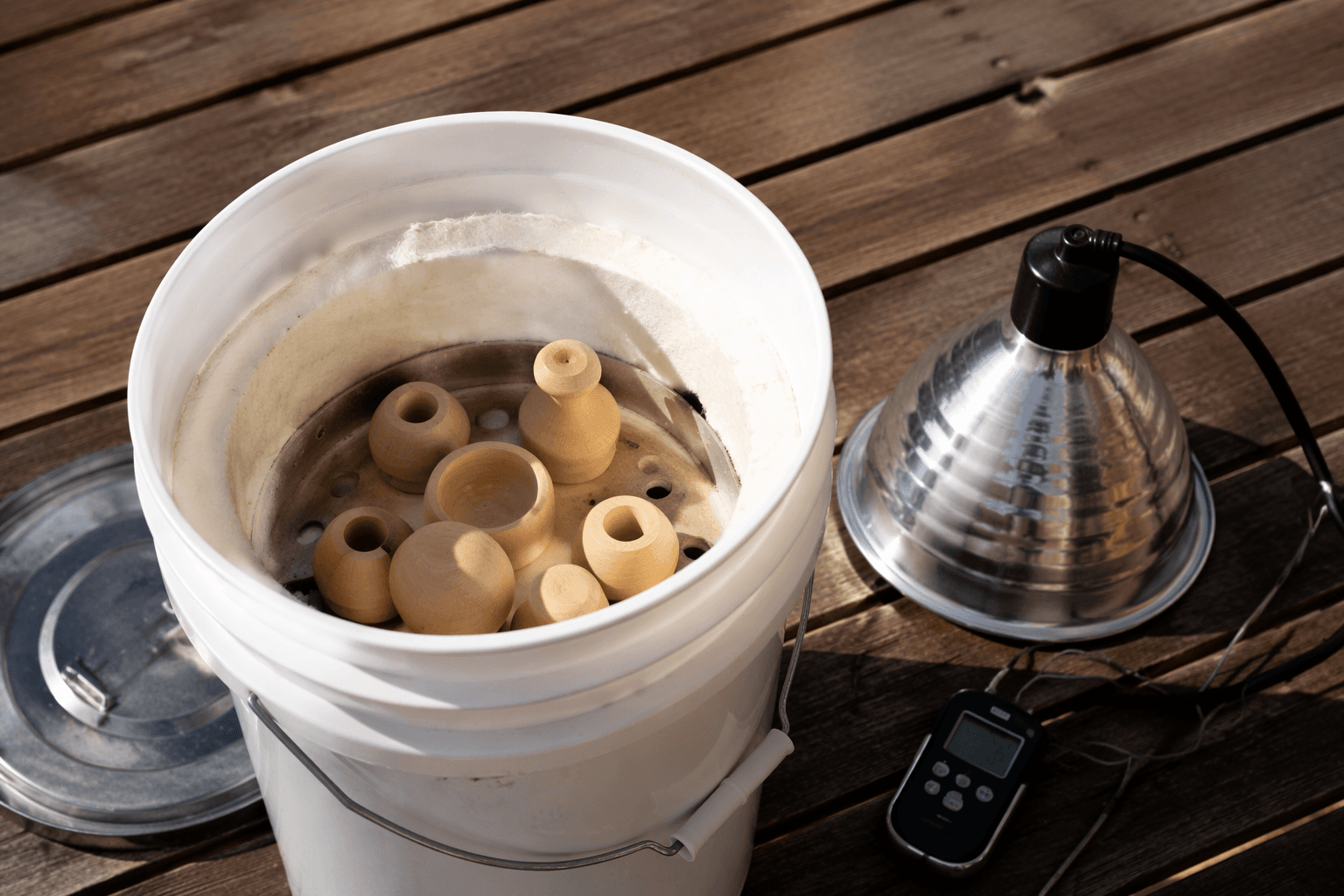
John Torchick’s five-gallon black bucket idea has the kind of shop appeal turners recognize instantly: it is cheap, compact, and just plausible enough to try on a sunny deck. He said he has a pile of small pieces sealed with Anchorseal and wants to pull their moisture content down from about 20 percent to at least 10 percent. The American Association of Woodturners forum did what the best turning communities do, turning one maker’s experiment into a live shop-floor debate about what actually dries wood and what just makes a container hot.
A bucket that acts more like a test than a solution
The attraction is obvious if you rough-turn bowls, hollow forms, or small spindle pieces and then wait on drying. A black bucket in the sun promises a tiny, low-cost kiln without the expense or footprint of commercial equipment. But the thread quickly showed that the real question is not whether the bucket warms up, it is whether it moves moisture out of the wood in a controlled way.
Tom Rice pushed the discussion in that direction right away. He said the setup would work better as a larger airflow chamber, not as a true bucket solution, with a cooling fan as exhaust, holes low on one side, and a baffle to direct airflow. The goal, in his view, is to let dry air move through the wood instead of trapping hot, damp air around it.
Why heat alone is not enough
Rice’s warning is the one that matters most for anyone tempted to park a sealed blank in direct sun and hope for the best. He pointed out that a bucket could get too hot, move air poorly, and create condensation. That is the core failure mode for a small enclosed dryer: if warm air cannot escape and fresh air cannot enter, the system starts working against itself.
Webb Willmott offered a more offhand alternative, but it fit the same logic. Why not use an attic? The suggestion lands because it gets past the novelty of the bucket and back to the basic requirement for drying wood: a place that is warm enough to encourage moisture movement, but open enough that the moisture can actually leave.
Wood science backs up that instinct. Wood is hygroscopic, which means it gains or loses moisture based on the air around it. Its equilibrium moisture content changes with relative humidity and temperature, so a small, sealed container can swing from useful to risky depending on the weather, the sun, and how much air is moving through the space. Penn State Extension also notes that when air cools, relative humidity rises until saturation is reached, and condensation forms when surfaces drop to that dew point or below.
What the drying numbers mean in the shop
The moisture targets in Torchick’s post are not random. Oklahoma State University Extension says air-dried lumber is typically left until it reaches about 20 percent moisture content, which lines up with where Torchick says his pieces already are. That makes his goal of getting closer to 10 percent feel less like a general wish and more like a second-stage drying problem, the kind turners face when they want rough-turned stock ready for finish turning.
Penn State Extension describes air drying as the simplest and least expensive drying method, but also the slowest. It also notes that drying time varies with species, thickness, density, ambient conditions, and processing techniques. That matters in the turning shop because a thin spindle blank, a small bowl blank, and a hollow form wall do not behave the same way, even if they started out under the same seal coat.
In practical terms, the discussion points to a few conditions that would make a bucket-style test more believable:
- Small pieces only, especially blanks already sealed to slow end-grain loss.
- Real airflow, not just trapped heat.
- A way to exhaust warm, moist air and pull in fresh air from low openings.
- Careful watching for condensation, especially on humid days or when the sun fades.
- A setting where temperatures stay warm without turning the bucket into a heat trap.
That is where Rice’s larger-enclosure idea makes more sense than the bucket itself. The black bucket may be the starting point, but the forum’s logic says the drying chamber needs breathing room, a path for air, and enough volume that the wood is being dried, not baked.
A familiar AAW kind of problem solving
The thread also fits a long-running pattern in the AAW forum. Turners have been debating Anchorseal, moisture percentages, and the point at which wood is dry enough to finish turn for years, because the process always looks simple until the first batch of blanks starts checking, case hardening, or just refusing to drop moisture fast enough. Torchick’s question is fresh, but the underlying problem is the same one that keeps coming back to the bench: how do you get from rough-turned and sealed to stable and ready without spending more than the project is worth?
That is why the bucket idea is worth following even before anyone declares it a success. It is not really a story about a clever container. It is a reminder that drying small turnings comes down to the quiet partnership of heat, airflow, humidity, and time, and that the cheapest shop hacks only work when all four are allowed to do their job.
This article was produced by Prism’s automated news system from verified source data, official records, and press releases, then run through automated quality and moderation checks before publishing. The system is built and supervised by the people who set the standards it runs under. Read our full AI policy.
Know something we missed? Have a correction or additional information?
Submit a Tip