Angely Martinez’s birthstone rings spotlight emerald, peridot, moonstone and amethyst
Angely Martinez turns the promise ring into a birthstone-led keepsake, with 12 months of stones, made-to-order gold, and a May emerald at the center.
Angely Martinez’s promise rings recast a familiar jewelry format as something more personal, more seasonal and far less diamond-dependent. Instead of asking one stone to carry the whole emotional burden, the collection gives each month its own color and character, from emerald and peridot to moonstone and amethyst. The effect is intimate and wearable, with the kind of symbolism that makes a ring feel chosen for a life, not just a look.
A promise ring that follows the calendar
The collection now spans all 12 birthstones of the year, plus one one-of-a-kind ring, which is exactly why it reads less like a single product drop and more like a system of personal meaning. Digital artist Mariah C. Watts designed the astrological calendar that organizes the line, giving the rings a month-by-month structure that makes them easy to navigate and even easier to gift.
That matters because birthstone jewelry has always lived at the intersection of sentiment and style. Jewelers of America traces the official U.S. birthstone list to 1912, when it was established by the American National Retail Jewelers Association, and that long-running framework still gives the category its clarity. In Martinez’s hands, the promise ring becomes a contemporary version of that code: legible, customizable and far more expressive than a one-size-fits-all diamond band.
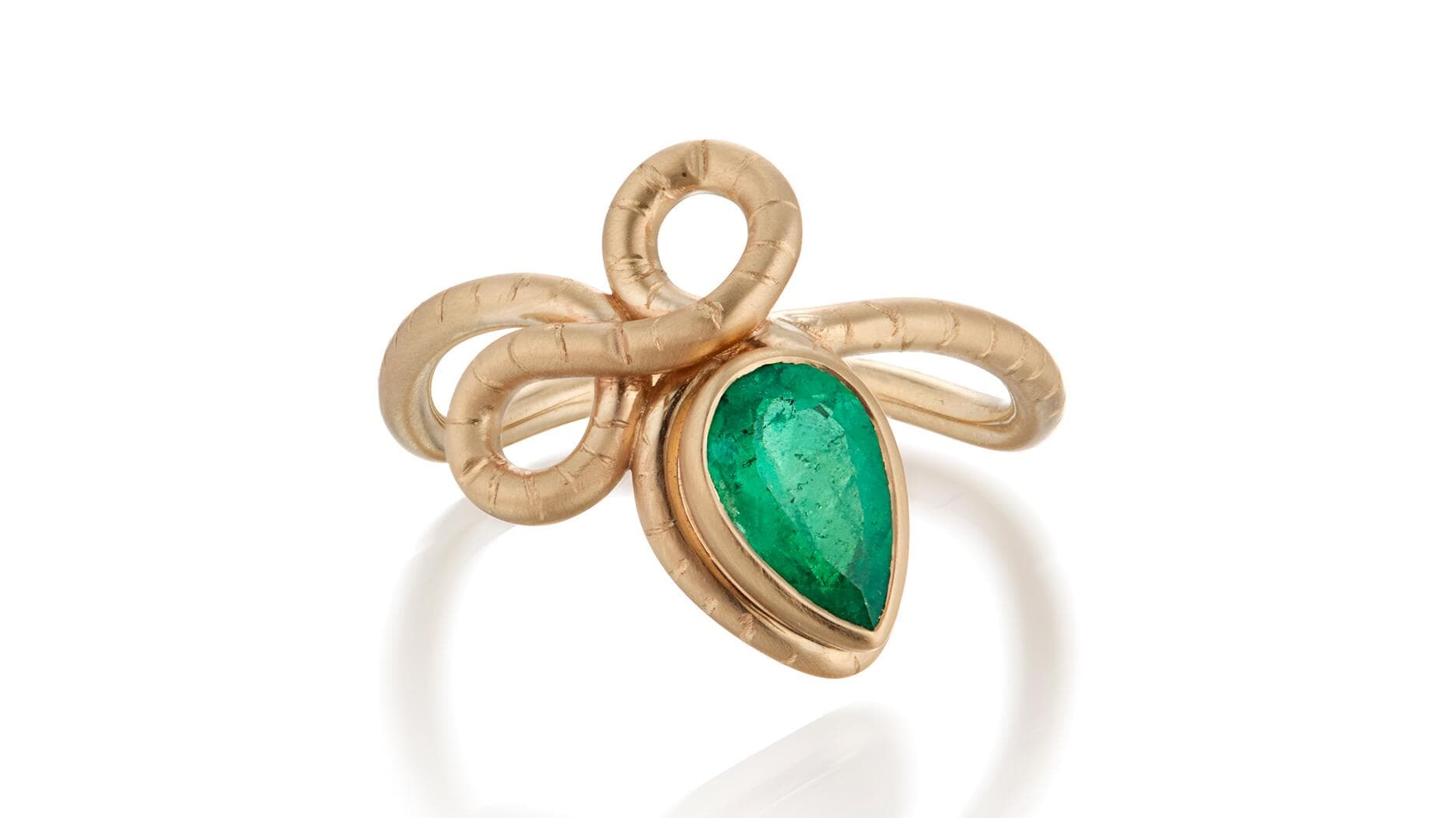
The brand describes the form as a looping shape that wraps around the finger while framing the gemstone, a silhouette that gives the stone the center stage instead of burying it in metal. That visual choice is part of why the rings feel current. They are not trying to mimic an engagement ring; they are using the promise-ring idea as a canvas for color.
Why emerald feels especially strong right now
The Emerald Promise Ring sits within The Fertile Ascension Collection and The Promise Rings, and it gives the category a particularly elegant anchor. The stone is approximately 8 by 5 millimeters, set in solid 14K gold, and the piece is made to order with an estimated 8 to 10 weeks to ship. After an order is placed, photos of the sourced gemstone are shown to the client for approval, a detail that slows the experience down in a way mass-market jewelry rarely does.
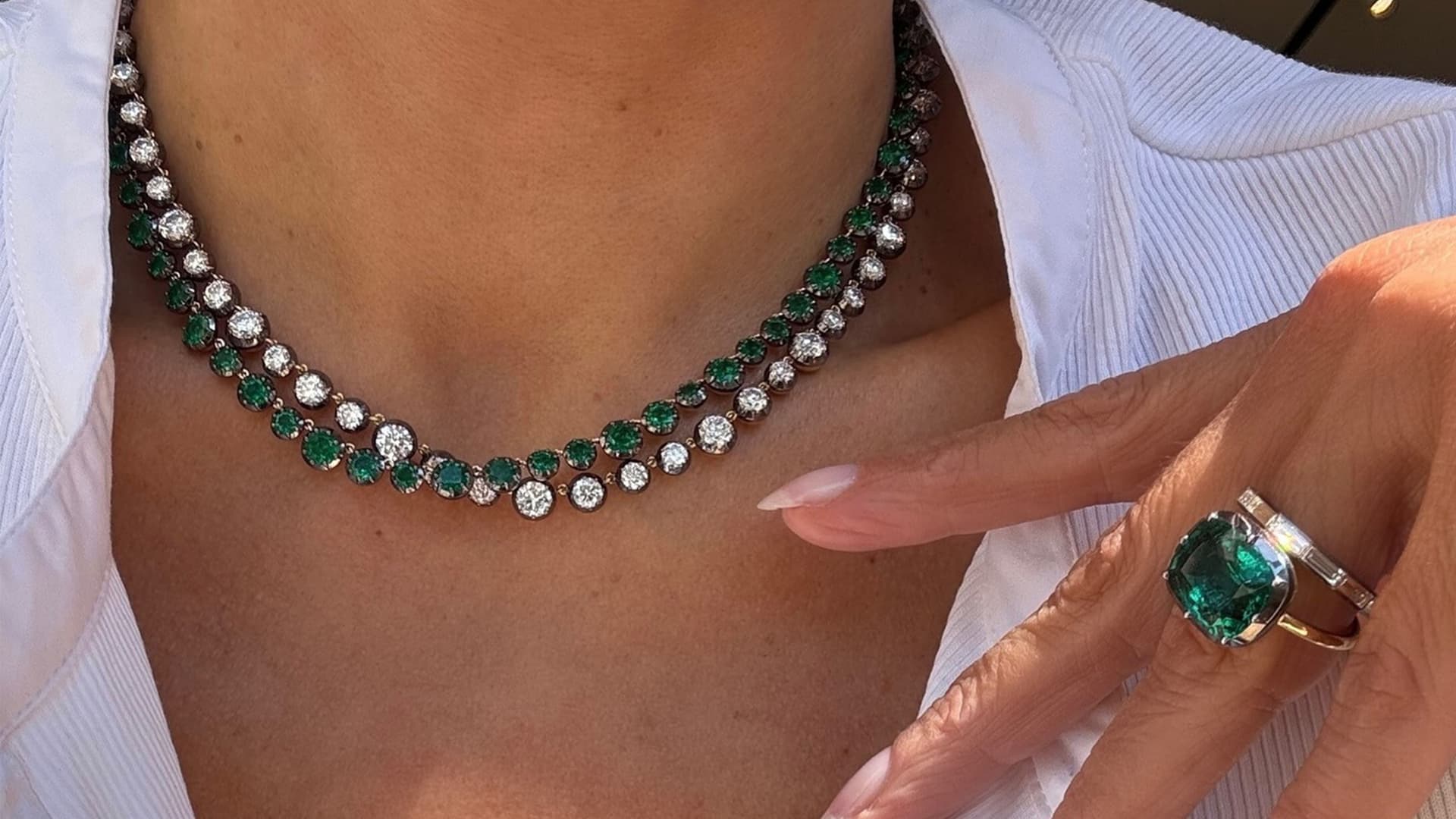
Emerald carries immediate emotional weight because it is one of the few stones that arrives with built-in symbolism and a very clear seasonal mood. The American Gem Society and the Gemological Institute of America list emerald as the official May birthstone, and both institutions connect it with ideas such as youth, love, renewal and spring’s green growth. That gives the ring a language of optimism that diamond-first promise rings often lack; where a diamond suggests permanence, emerald suggests life in motion.
It also helps that emerald reads as both luxurious and alive. The color is lush rather than icy, and in a ring this scale, that saturated green becomes a statement of taste rather than a shout. It feels like a choice made by someone who wants the jewelry to say something specific.
How the other birthstones change the mood
Peridot, moonstone and amethyst each bring a different emotional register to the same silhouette. Peridot, the August birthstone, has a sharper summer brightness to it, a green that feels sunlit rather than deep and wooded. In a promise ring, that makes it feel lighter and more playful than emerald, with a slightly more effortless personality.
Moonstone, one of June’s birthstones, moves in the opposite direction. Its appeal is in its soft glow and pale, shifting light, which gives the ring a quieter, more ethereal presence. If emerald is vivid and peridot is vivid with a citrus edge, moonstone is the stone that makes the whole design feel more romantic and less declarative.
Amethyst, the February birthstone, brings the richest color story of the group. Its purple tone gives the ring a more jewel-box feel, with enough depth to stand apart from classic colorless bridal codes. For shoppers who like the promise-ring idea but want something that feels less expected than diamond, amethyst is the clearest route to a look that feels personal without becoming precious in the formal sense.
That is the larger appeal of a birthstone-led promise ring: the stone can track a birthday, a month, a memory or simply a favorite color, and the gesture still feels intentional. A diamond can symbolize commitment; a birthstone can do that, too, but it also says, more specifically, this is yours.
Made in New York, chosen slowly
Martinez says her custom and bespoke work is designed and created in New York City by her and her team of artisans in NYC’s Diamond District, which gives the collection a distinctly hand-built backbone. That detail matters because the Promise Rings are not positioned as generic stock inventory. They are framed as a made-to-order process, and the gemstone-approval step reinforces that the final ring is selected, not merely shipped.
There is also something appealingly modern about the balance she strikes between craftsmanship and flexibility. Solid 14K gold gives the rings substance, while the month-specific stones and the approval process add a level of intimacy usually reserved for true bespoke work. The result is a promise-ring category that feels less like a subset of engagement jewelry and more like a personal signature, one that can carry a birth month, a mood and a style point all at once.
In a market crowded with diamond defaults, Martinez’s birthstone rings make a strong case for color as the new shorthand for meaning. The stones do not just decorate the promise ring format, they redefine it.
This article was produced by Prism’s automated news system from verified source data, official records, and press releases, then run through automated quality and moderation checks before publishing. The system is built and supervised by the people who set the standards it runs under. Read our full AI policy.
Did this article answer your question?