Birthstone jewelry blends folklore, history, and modern gemstone choices
Birthstone jewelry works because its meaning keeps changing: from folklore and protection to today’s split charts, the right stone feels deeply personal.
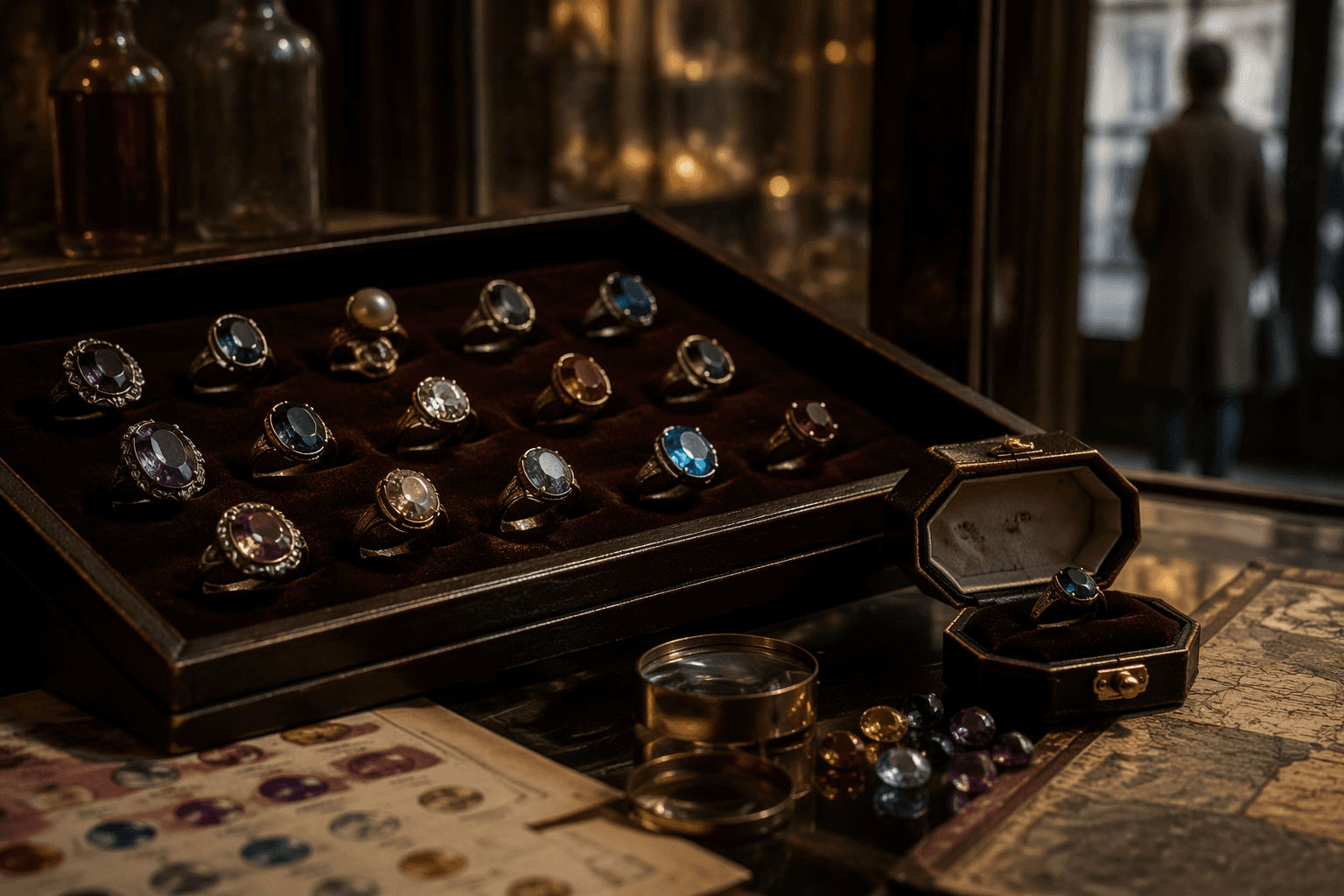
GIA’s “GIA Celebrates Birthstones” exhibit, which ran from April 2017 to August 2017, put more than 250 gems, minerals, and pieces of jewelry on view. Birthstones have long carried stories of luck, identity, and protection that still shape which cuts, settings, and heirloom pieces people choose now.
A museum story with living symbolism
Birthstones resonate across gender, age, nationality, and religion. That broad reach helps explain why a birthstone ring can feel as natural for a baby gift as for a graduation pendant, a mother’s ring, or an anniversary piece. The appeal is not just that each stone marks a calendar month; it is that each one can carry a private message in public.
Birthstones are tied to lore, meaning, and tradition across cultures. A turquoise charm worn for protection, a ruby ring chosen for love, or a pearl necklace handed down through a family all draw on the same instinct: jewelry can carry memory as well as color.
How the modern chart still lives beside the traditional one
The American National Association of Jewelers standardized an official U.S. birthstone list in 1912, and the Jewelry Industry Council of America made minor modifications in 1952. That history is why the chart is not frozen in place. Jewelers of America and The 1916 Company both present traditional and modern choices, which gives shoppers real flexibility instead of a single correct answer.
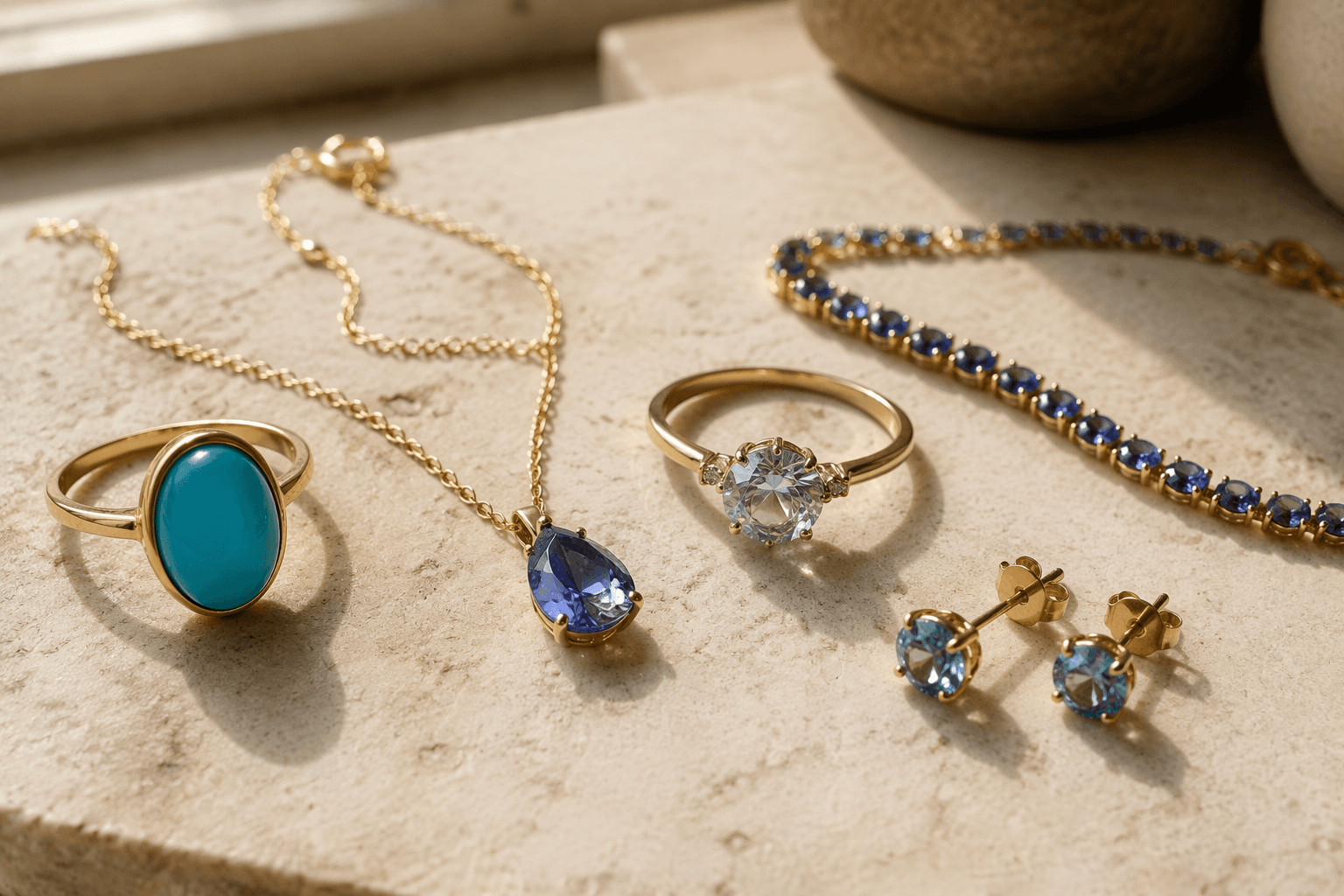
The most revealing months are the ones with multiple stones. June is one of only three months, along with August and December, that has three birthstones. June can be pearl, alexandrite, or moonstone. August includes peridot, spinel, or sardonyx. December can be tanzanite, turquoise, or zircon. In practice, that means a birthstone choice often comes down to color, budget, and wearability. A creamy pearl reads softer and more classic than moonstone’s glow; peridot’s sharp green feels different from the deeper tones of spinel; turquoise has a very different visual language from zircon’s sparkle.
The stones that carry the strongest stories
Some gems come with symbolism so entrenched that the meaning feels inseparable from the design. Diamond is commonly linked with clarity and strength, ruby with love and passion, turquoise with protection, pearl with purity and elegance, and opal with individuality and shifting color.
Amethyst has captivated people for millennia, and that long pull is easy to see in jewelry that relies on saturated violet instead of surface flash. February pieces often work best when the stone is allowed to show its color cleanly, whether in a simple pendant, a bezel-set ring, or a slim line of stones that lets the hue do the talking.
Peridot has an unusually dramatic origin story. It can form in hardened lava from deep within Earth’s mantle and also appear in meteorites from outer space.
Aquamarine and bloodstone share a reputation for protecting one’s well-being, which keeps March birthstone jewelry grounded in the language of care rather than decoration alone. That protective idea shows up best in pieces that sit close to the body: pendants worn daily, signet rings, or understated studs that become part of a routine.
The American Gem Society dates ruby trading along China’s North Silk Road to as early as 200 BC, and Chinese noblemen wore rubies on armor because they believed the gem would grant protection.
Why design choices matter now
Because birthstones already carry meaning, the setting can sharpen the message. A pearl in a delicate bezel feels intimate and heirloom-like. A ruby in a bold prong setting reads as passionate and more formal. A turquoise cabochon mounted in a simple ring can look modern and graphic, while the same stone in a more ornate frame leans into tradition.
The modern-versus-traditional split lets buyers choose by personality as much as by month, and birthstone jewelry often shows up in pieces that are meant to be worn often rather than stored away. A pendant can mark a milestone date, a ring can carry a family narrative, and a small pair of earrings can keep the symbolism subtle.
What makes a piece feel worth keeping
Pearl, alexandrite, moonstone, turquoise, zircon, and the other month-by-month options give shoppers a chance to match color and character to the wearer rather than forcing everyone into one fixed formula. That is especially useful when the same month offers both classic and unexpected choices.
- They give the birthstone a setting that suits the stone’s hardness, color, and shape.
- They lean into the stone’s symbolism instead of hiding it.
- They feel personal enough to be worn repeatedly, not just saved for a birthday.
Heirloom-worthy pieces usually do one of three things well:
This article was produced by Prism’s automated news system from verified source data, official records, and press releases, then run through automated quality and moderation checks before publishing. The system is built and supervised by the people who set the standards it runs under. Read our full AI policy.
Did this article answer your question?