Birthstone jewelry guide maps monthly gems and their lasting appeal
Birthstone jewelry turns a monthly chart into a personal gift, with 1912 U.S. standards, June’s trio, and budget-friendly choices built in.
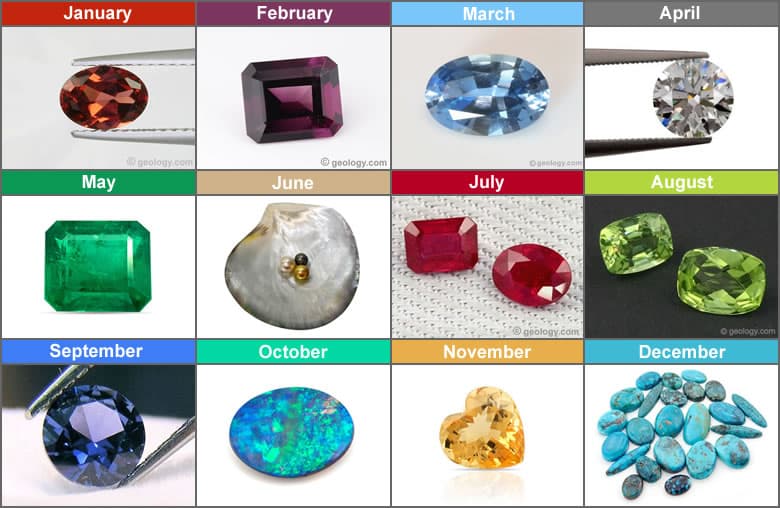
The official U.S. birthstone list dates to 1912, when the American National Retail Jewelers Association set the standard that Jewelers of America still traces today, and the American Gem Society has spent decades educating consumers and protecting buyers. Birthstones are a colorful introduction to gems that appeals across age, gender, nationality, and religion, which is why they keep making sense as gifts.
Why the chart keeps working
The market logic is simple. In 2024, Statista found that around half of Gen Z and millennial consumers in the United States were more likely to buy or give a personalized gift than in the previous holiday season, and The Plumb Club’s 2021 consumer study put the average new jewelry purchase at $1,207 while ranking uniqueness at 17 percent, behind quality and design but still firmly in the mix. Birthstones fit that behavior neatly: they are personal without requiring gemstone fluency, and they let a buyer say something specific without drifting into customization that feels fussy or overworked.
The month-by-month shortcut
Use the calendar first, then refine by style. January is garnet, February is amethyst, March offers aquamarine or bloodstone, April is diamond, May is emerald, and July is ruby. These single or dual options make the decision easy when you want the month itself to do most of the work.
The months with more than one choice give you the best room to tailor the gift. June brings pearl, alexandrite, and moonstone, making it one of only three months with three birthstones, alongside August and December. August adds peridot, sardonyx, and spinel, October offers opal or tourmaline, November gives topaz or citrine, and December includes tanzanite, turquoise, or zircon; these December stones each bring their own take on blue, so style and budget can lead the final pick.
September is sapphire, a choice that has long read as the most straightforward of the blue birthstones. The AGS chart also keeps the traditional pairings visible month by month.

Where provenance and practice matter most
Pearls are the clearest place to look closely at origin and production. Pearls are organic gems that grow inside the tissue of living saltwater or freshwater mollusks, and natural pearls differ from cultured pearls, which are formed through human intervention in pearl farms. Cultured pearls now account for the vast majority of pearl sales, in part because centuries of pearl fishing have decimated natural pearl beds.
Turquoise tells a different provenance story. Prized turquoise comes from Iran’s Nishapur district, mined for more than 1,000 years, and most U.S. production now comes from Arizona and Nevada. Its blue to green range, often marked by veins of matrix, is part of its visual identity rather than a flaw to hide, and turquoise can read earthy, royal, or graphic depending on the cut and setting.
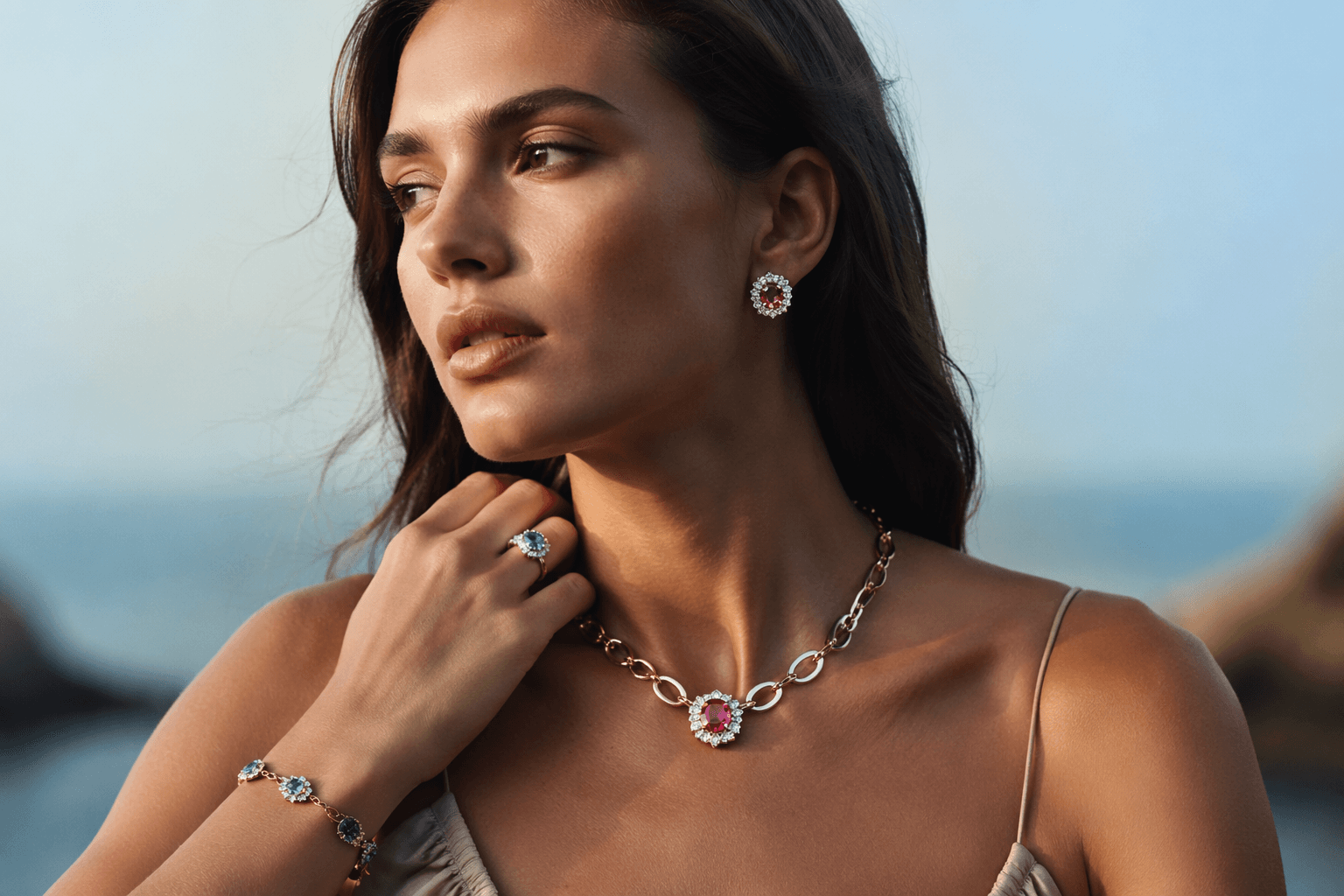
A birthstone necklace, ring, or bracelet can look restrained in one version and richly colored in another, and GIA’s birthstone exhibit featured more than 250 gems, minerals, and jewelry pieces.
How to choose the right piece
If you want the safest all-purpose gift, let the month lead and keep the setting simple. A single-stone birthstone piece is the easiest read, especially for months like April, May, July, and September, where one stone already carries strong visual identity. If you want more flexibility, June and December are the months to study first because both offer multiple stones and clear room to match mood, color preference, and price point.
This article was produced by Prism’s automated news system from verified source data, official records, and press releases, then run through automated quality and moderation checks before publishing. The system is built and supervised by the people who set the standards it runs under. Read our full AI policy.
Did this article answer your question?