Birthstones for engagement rings balance symbolism, durability, and wearability
Birthstone rings work when the stone can survive real life, not just sentiment. The best choices balance meaning, maintenance, and the kind of wear a ring takes every day.
A symbol with a long memory, and a modern test
Birthstones carry an old kind of charge. The American Gem Society traces the tradition back to the breastplate of Aaron in the Book of Exodus, said to hold twelve gemstones for the twelve tribes of Israel. The modern U.S. birthstone list, meanwhile, was standardized in 1912, when the American National Association of Jewelers created an agreed-upon set of gems for the twelve calendar months, a legacy now carried by Jewelers of America.
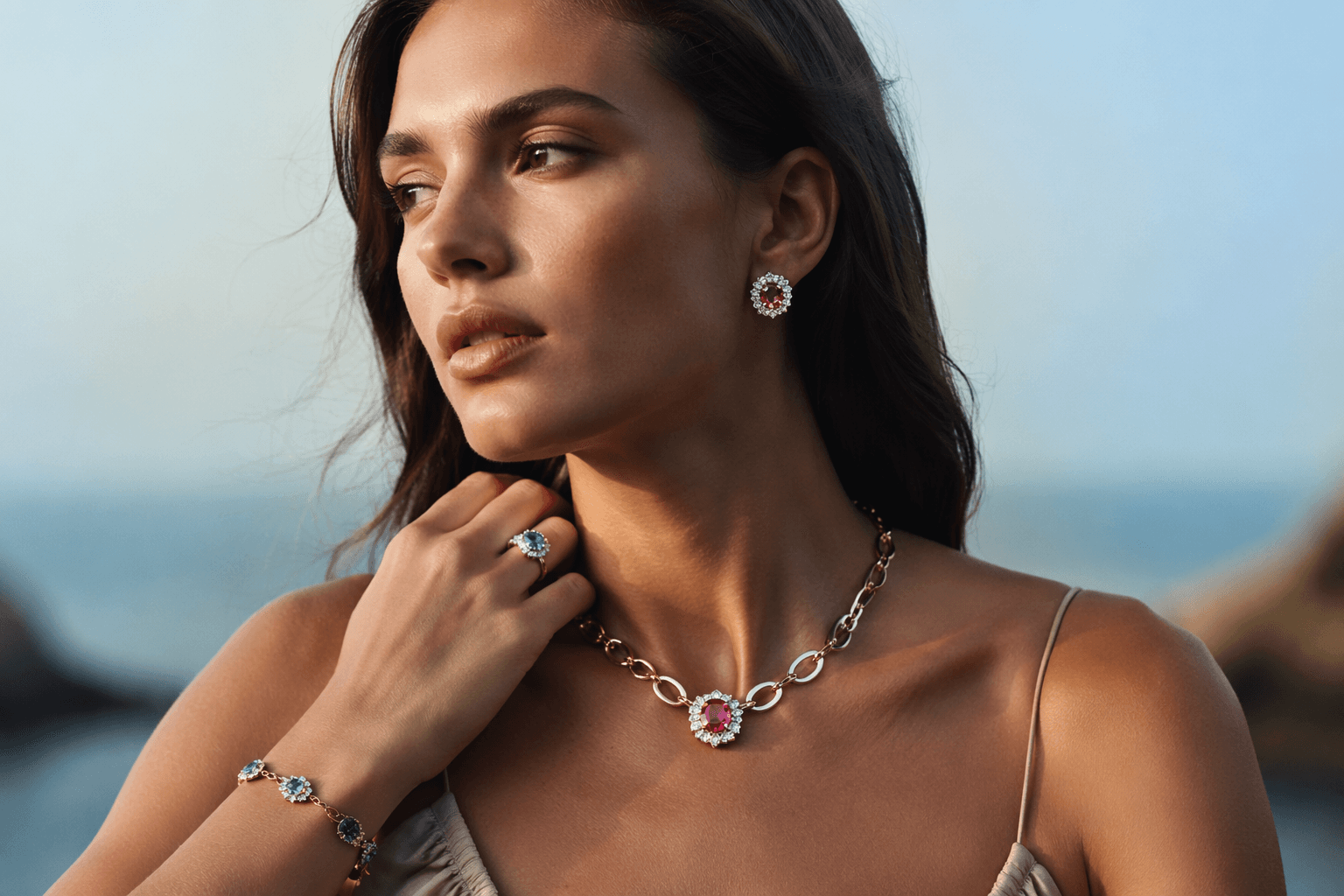
That history helps explain why birthstone engagement rings feel personal without needing much explanation. The Knot puts it plainly: a birthstone can absolutely be used for an engagement ring, and there are “really, no rules” when it comes to choosing one. The harder question is not whether it is allowed, but whether it is built for a life lived on the hand.
Why wearability matters more than sentiment alone
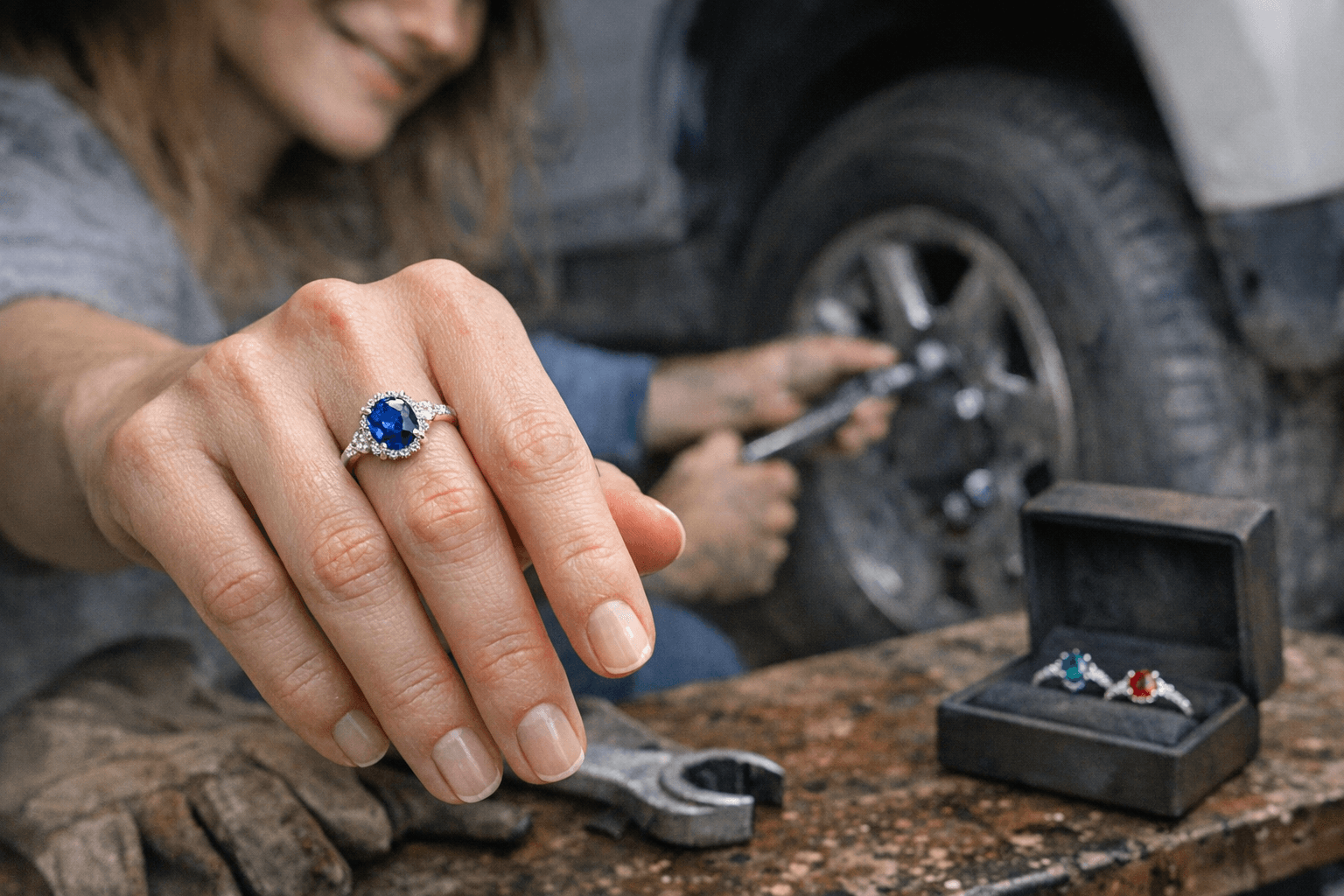
An engagement ring is not a pendant or a brooch. It faces handwashing, lotion, keyboards, heat, sunlight, humidity, and the casual knocks that come with opening doors and carrying bags. Gemological Institute of America guidance is clear that durability is bigger than hardness. A gemstone also has to handle toughness and stability, meaning how well it resists wear, heat, light, household chemicals, and changes in humidity.
That distinction is where many birthstone rings either succeed beautifully or become a repair bill. Friedrich Mohs’s scale measures scratch resistance, and diamond sits at 10, the top of the scale. But even that number is only one part of the story. A stone can be hard and still be vulnerable in other ways, which is why the best engagement-ring birthstones are the ones that can handle the full rhythm of daily life, not just the occasional dinner out.
The birthstones that work best for everyday wear
For a ring meant to be worn constantly, the safest birthstone choices are the ones with stronger durability profiles. Garnet is one of the more practical options, with the American Gem Society placing it at about 6.5 to 7.5 on the Mohs scale. That range is not diamond-hard, but it is sturdy enough to make garnet a serious candidate for a daily ring, especially in a well-protected setting.
Amethyst also has an appealing balance of color and practicality. The American Gem Society describes it as a durable, lasting option for jewelry, which matters for shoppers who want a purple stone without stepping into the more fragile end of the spectrum. Its appeal is exactly what many couples are looking for now: a ring that feels distinctive, but not delicate to the point of anxiety.
Diamond remains the benchmark for hard-wearing engagement rings, even when it is not the birthstone choice itself. In practice, many birthstone engagement rings borrow diamond’s most protective setting logic, using bezels, halos, or side stones to reinforce a center gem that is less robust than diamond.
Stones that deserve a gentler approach
Some birthstones are better understood as occasional-wear pieces or as center stones in more protective designs. The point is not that they are off-limits. It is that a ring built around them should be chosen with clear eyes about maintenance and daily habits.
June is the clearest example of why chart-reading matters. Depending on the list used, June can point to pearl, alexandrite, or moonstone, and that spread alone shows how different one month’s options can be. Alexandrite has the drama of color change and can be a striking choice, but pearl and moonstone sit in a very different wear category than garnet or amethyst. If you love one of those softer-looking stones, a bezel, a low-profile setting, or a ring reserved for lighter wear can make more sense than a high prong setting exposed to everything your hands touch.
That is where maintenance becomes part of the romance. Softer stones generally ask for more caution, more frequent checks, and a willingness to treat the ring as a treasured object rather than a wear-it-and-forget-it talisman. For some buyers, that is exactly the appeal. For others, it is the reason to choose a sturdier birthstone from the start.
Cost, value, and the real meaning of “investment”
Birthstone engagement rings often feel more personal than a standard diamond solitaire, and current buying habits reinforce that shift. The Knot says couples increasingly shop for engagement rings together, and its broader coverage points to colored gemstones, mixed metals, multi-stone designs, and ethically sourced rings as strong preferences. That mix makes birthstones especially appealing because they fit the move toward rings that look intentional rather than conventional.
Cost, though, should not be confused with value. A less expensive stone is not automatically the better buy if it needs constant maintenance or cannot survive daily wear. Long-term value depends on whether the ring remains beautiful, not just affordable on day one. For many shoppers, that means a durable birthstone set in a carefully engineered mounting will age more gracefully than a larger, softer gem that demands caution from the moment it leaves the jeweler’s bench.
Birthstones also have unusually broad cultural reach. The American Gem Society notes that they appeal across gender, age, nationality, and religion, which helps explain why they have become a flexible alternative for couples who want symbolism without repeating the same diamond formula everyone else has.
How to shop the month, not just the mood
Because there are multiple birthstone systems in circulation, month-based shopping is not always as simple as opening a calendar. The American Gem Society and the International Gem Society both recognize modern and traditional charts, which means the stone attached to a given month can vary. June makes that especially clear, since different charts can point to pearl, alexandrite, or moonstone.
A smart purchase starts with three questions:
- Which birthstone list is the jeweler using?
- Will the stone stand up to daily wear, or is it better suited to a more protected setting?
- Does the setting reinforce the gem’s strengths, or expose its weaknesses?
If the answer to the first question is unclear, pause before committing. If the answer to the second suggests fragility, choose a design that protects the stone rather than challenges it. And if the answer to the third is no, the ring may look lovely in a tray but disappoint once it becomes part of everyday life.
The best birthstone engagement rings do more than personalize a hand. They make symbolism practical, turning a month, a memory, and a material into something strong enough to live with for years.
This article was produced by Prism’s automated news system from verified source data, official records, and press releases, then run through automated quality and moderation checks before publishing. The system is built and supervised by the people who set the standards it runs under. Read our full AI policy.
Did this article answer your question?