Bonhams ruby necklace sells for $2.1 million at auction
A 5.02-carat Burmese ruby necklace brought $2.178 million, showing how origin, heat status and saturated color can send top stones far past estimate.
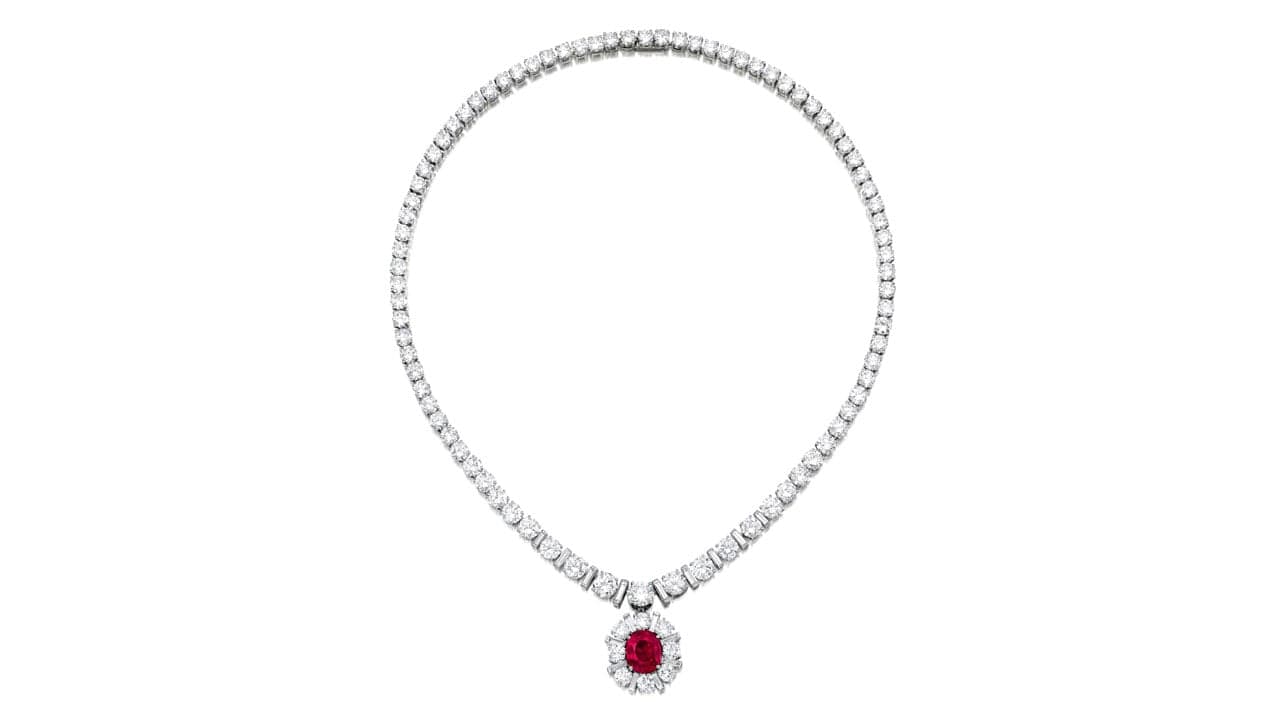
A ruby-and-diamond necklace centered on a 5.02-carat Burmese stone sold for $2,178,000 at Bonhams, a result that shows how quickly a top ruby can outrun estimate when origin, untreated status and color all line up. For July birthstone shoppers, the lesson is simple: at the highest level, rubies are priced less like red gems and more like scarce works of nature.
The necklace carried a pre-sale estimate of $100,000 to $150,000 and ended more than twenty times higher after intense competition among bidders. Bonhams described the ruby as oval-shaped, of Classic Burma origin, with no gemological evidence of heat, and an AGL appendix letter called it “Pigeon's Blood.” The setting added to the drama: the jewel included a detachable pendant and an estimated total diamond weight of 39.00 carats, giving the ruby a bright, architectural frame rather than letting it disappear into a dense diamond mass.
That result is the clearest reminder of what drives ruby prices at the luxury level. Origin matters because Burma, especially Classic Burma, remains the benchmark for connoisseurs. Untreated status matters because heat can improve appearance, but unheated stones with strong color command a premium. Saturation matters because a vivid, even red is far more desirable than a ruby with brown or purple modifiers. Size matters too, but only when the color holds up as the stone grows larger. A big ruby with weak color is not nearly as persuasive as a smaller one with exceptional glow.

For everyday buyers shopping July birthstone jewelry, those same markers still matter, just in a different hierarchy. Color should lead the decision, followed by clarity, cut and disclosure of treatment. A beautifully saturated ruby in a well-made bezel or prong setting can be more satisfying on the hand, at the neck or in the ear than a larger stone that looks sleepy or overly dark. Origin and untreated status can add value, but they should be weighed against budget and wearability, especially in pieces meant for daily use rather than collecting.
Bonhams said the 153-lot sale totaled $9,476,620, with 78% sold by lot and 98% sold by value, a strong showing for signed jewelry and colored stones. Another useful benchmark came from a 30.61-carat Mozambique paraíba-type tourmaline that sold for about $1,452,000 against a $150,000 to $250,000 estimate. The auction’s results, which also included jewels by Harry Winston, Chaumet, Bulgari, Graff, Tiffany & Co., Cartier, Van Cleef & Arpels, Oscar Heyman, Taffin and J.E. Caldwell, confirmed that in fine jewelry, rarity still rewards decisiveness.
This article was produced by Prism’s automated news system from verified source data, official records, and press releases, then run through automated quality and moderation checks before publishing. The system is built and supervised by the people who set the standards it runs under. Read our full AI policy.
Did this article answer your question?