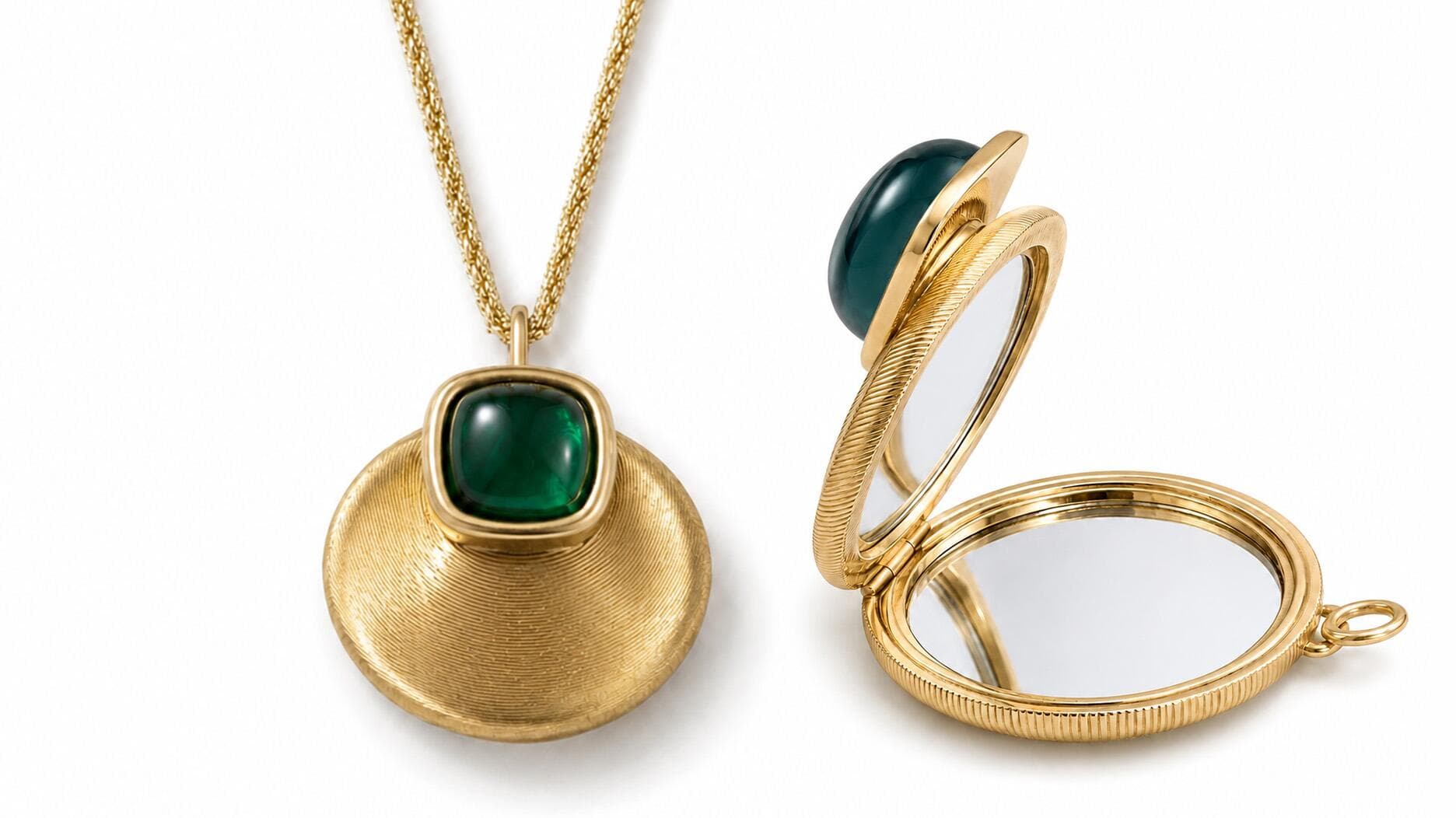
GIA explains how to clean and protect June's pearl birthstone jewelry
The fastest way to damage pearls is in the first month: perfume, heat, scratches, and aggressive cleaning can dull June’s most delicate birthstone before it ever settles into daily wear.

How to protect pearls in the first month
The quickest way to ruin a pearl necklace or pair of studs is not with dramatic neglect, but with ordinary habits that feel harmless at the vanity. Perfume, hairspray, cleaning sprays, and even an ultrasonic or steam cleaner can strip away the soft luster that makes pearls so seductive in the first place.
GIA’s guidance is refreshingly specific: pearls should never go into an ultrasonic or steam cleaner, and they should be wiped with a very soft, clean cloth after each wearing. If the pearls are strung, the string must be completely dry before you wear them again. That is not fussy housekeeping. It is the difference between preserving a gift that can be worn for decades and setting up a piece for premature wear.
Why June’s pearl is more vulnerable than it looks
Pearls belong to June alongside alexandrite and moonstone, and GIA notes that June is one of only three months with three birthstones, the others being August and December. That makes the month unusually rich in choice, but pearls remain the most emotionally charged option: the one most often gifted, inherited, and worn close to the skin.
Their beauty comes from nacre, the material that forms the pearl itself. Britannica describes nacre as made primarily of aragonite, a crystalline form of calcium carbonate, along with organic material including conchiolin. That organic structure is exactly why pearls need a different kind of care than diamonds, sapphires, or even many other gemset pieces. They are not meant to be treated like hard, chemically resistant stones. They are meant to be protected.
The habits that cause the most damage
The biggest pearl mistakes are usually the easiest to make. Spraying fragrance before fastening a necklace is one of them. So is stacking pearls beside sharp rings or textured bracelets that can abrade the surface. GIA advises keeping pearls away from harsh chemicals such as perfumes, hairspray, and cleaning agents, and storing them away from sharp or rough objects to avoid scratching.
Overwearing is another quiet threat. Pearls are beautiful precisely because they live on the skin and catch the light in movement, but that intimacy brings risk. Oils, cosmetics, perspiration, and incidental contact can build up on the surface and cloud the finish. A gentle wipe after each wear keeps the pearl from accumulating the residue that robs it of sheen.
How to clean pearls without stripping their glow
For routine care, GIA recommends a very soft, clean cloth after each wearing. For occasional, more thorough cleaning, warm, soapy water is safe. The key word is warm, not hot, and the soap should be mild rather than harsh. The American Gem Society’s jewelry-care guidance points in the same direction, recommending warm water and mild dish soap for jewelry cleaning, with a soft-bristle toothbrush reserved only for hard-to-reach areas.
That overlap matters because it reinforces the central rule: pearls need gentleness, not specialist-looking force. If you use water, keep the process brief and controlled. Never soak pearl jewelry for long periods, and never assume that a stronger cleaner will do a better job. With pearls, strength is often the enemy of beauty.
Why the string deserves as much attention as the gem
Pearl jewelry is often strung on silk or another thread, and the thread can be as important to the life of the piece as the pearls themselves. GIA’s instruction to make sure the string is completely dry before wearing is not a small technicality. Moisture weakens stringing over time and can create a false sense that the necklace is clean when it is not fully ready for wear.
This is one reason pearl strands benefit from periodic professional attention. A strand that looks perfect from a distance may already be stretching, fraying, or losing its original drape. The piece does not just need polishing. It needs inspection.
Storage that preserves luster, not just shape
Pearls should live in a soft pouch or case, not rattling loose in a drawer with harder jewelry. GIA is explicit that they need protection from sharp or rough objects, which can scratch the nacre and leave marks that cannot be polished away. That makes storage a conservation habit, not a luxury detail.
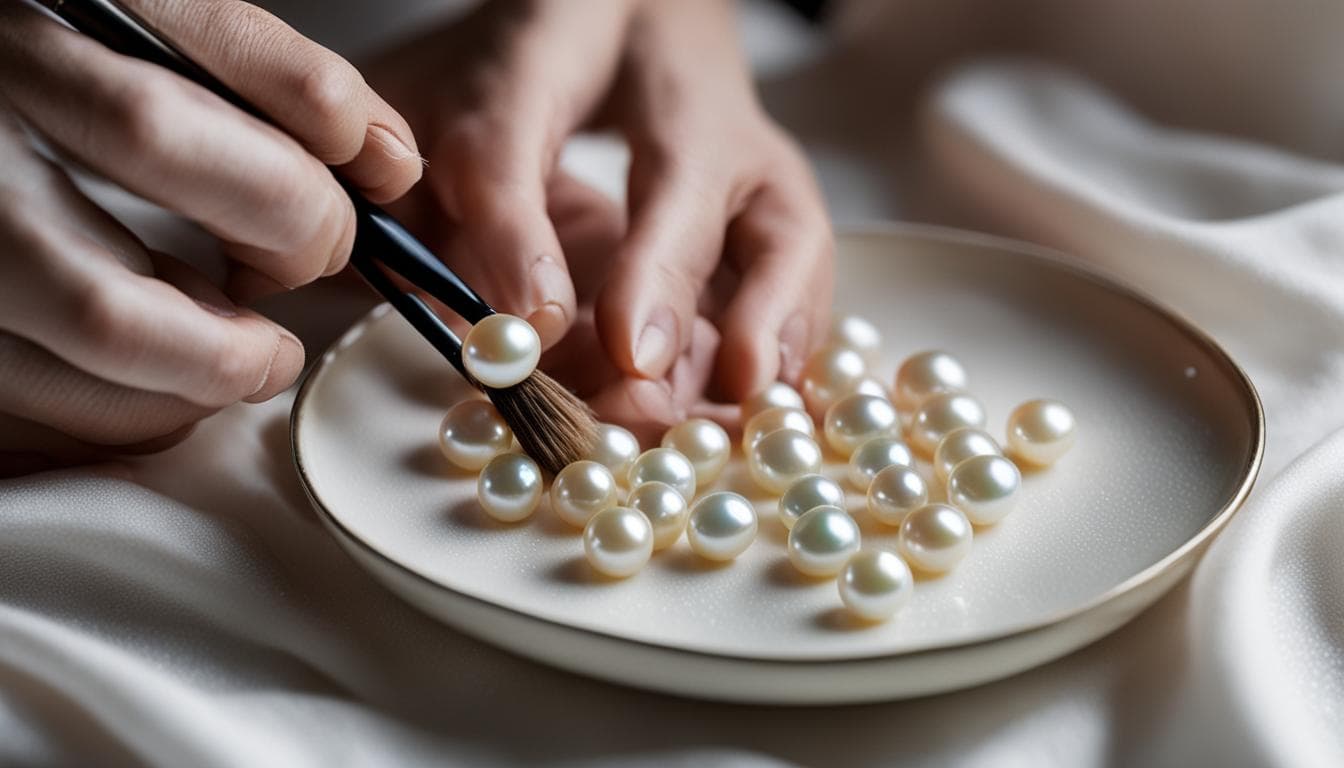
If you are putting away a pearl piece after a night out, the best practice is simple: wipe it gently, let it dry fully, and place it somewhere soft and separate. Pearls do best when they are not pressed into contact with metal edges, gemstone pavé, or the gritty contents of an overfilled jewelry box.
What a professional checkup can catch
The American Gem Society recommends visiting a jeweler at least once a year for professional cleaning and inspection. That annual visit is especially useful for pearl jewelry because it can reveal issues long before they become visible to the eye. Loose clasps, worn stringing, and surface wear are easier to address early than after a strand has failed or a cherished pendant has been knocked about.
AGS also warns against cleaning jewelry over an open drain, a practical reminder that elegant pieces can disappear in a second. A sink stopper or a closed basin is not a detail to ignore. It is part of protecting the piece and protecting the investment behind it.
Why pearl care is really buyer protection
Pearls are often purchased or gifted for the sentiment they carry, but their value depends on more than sentiment. Luster, surface quality, string integrity, and careful storage all shape how a piece looks now and how long it remains wearable. A pearl necklace that is cleaned gently, dried properly, and kept away from chemicals is not merely prettier. It is more likely to survive the years in the condition that made it desirable in the first place.
That is the real June lesson. Pearls do not ask for much, only restraint, and the reward for that discipline is a birthstone that can move from gift box to heirloom without losing its glow.
This article was produced by Prism’s automated news system from verified source data, official records, and press releases, then run through automated quality and moderation checks before publishing. The system is built and supervised by the people who set the standards it runs under. Read our full AI policy.
Did this article answer your question?