Historic Inchiquin emerald with royal Irish provenance surfaces at Hancocks London
A 5.67-carat Colombian emerald tied to Ireland’s O’Brien dynasty has resurfaced, with an SSEF report showing no clarity modification.
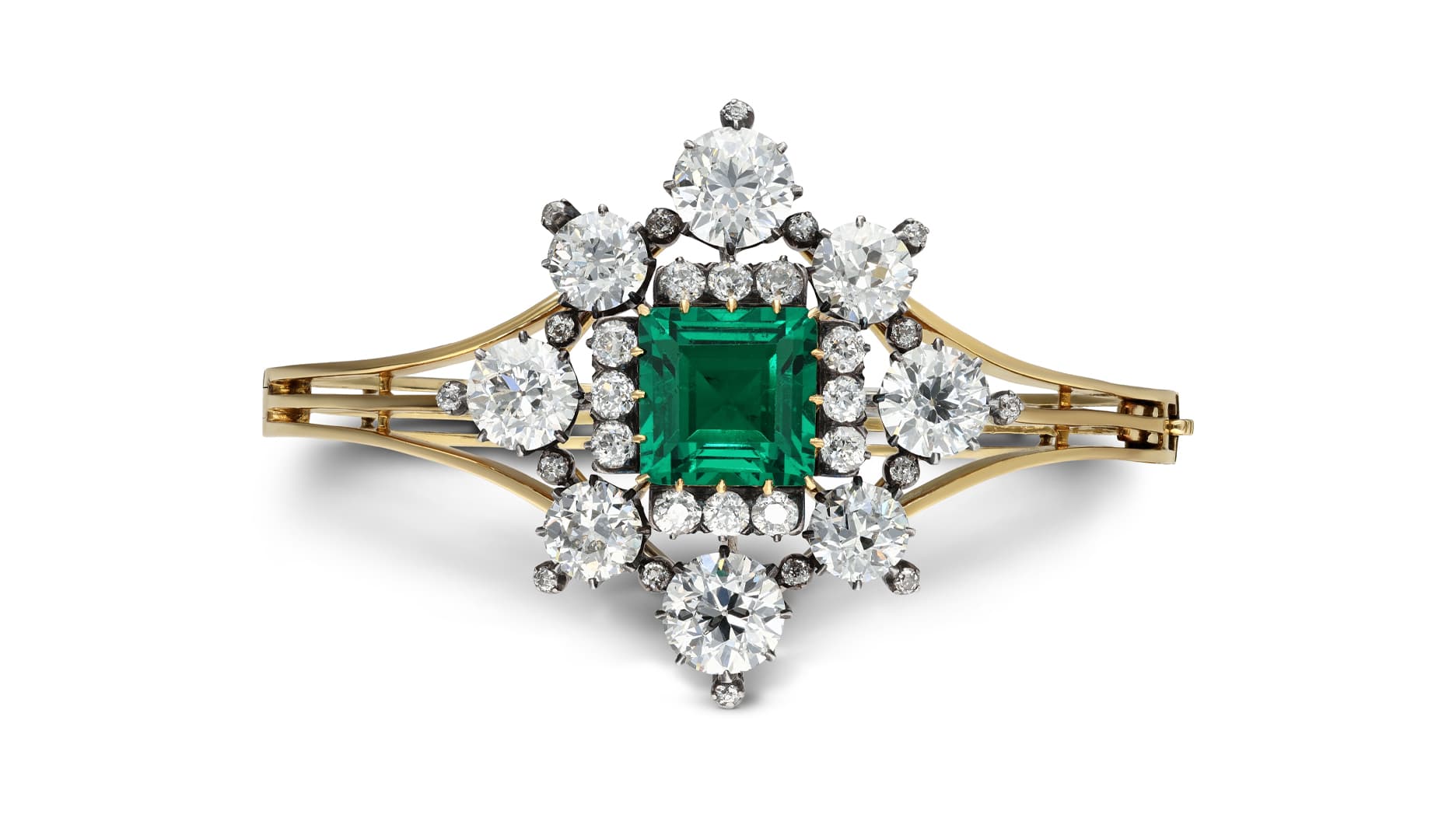
Emeralds become far more than May’s signature green when they arrive with a paper trail that reaches medieval Ireland. At Hancocks London, the “Inchiquin” emerald has resurfaced as a circa-1890 convertible diamond jewel, and its appeal lies as much in history as in carats.
The piece centers on a 5.67-carat antique Colombian emerald and was made to do more than sit in a case. It can be worn as either a pendant or a bangle, a flexibility that feels distinctly late-Victorian in spirit and adds to its heirloom appeal. The stone is set in yellow gold claws and bordered by twelve old mine-cut diamonds, then framed by eight larger old European-cut diamonds, with diamond points totaling approximately 10.50 carats. That combination gives the jewel the kind of dense, old-world sparkle collectors recognize immediately.
Its provenance is what lifts it into rarer territory. The jewel is linked to the O’Briens, Barons of Inchiquin, descendants of Brian Boru, the High King of Ireland from 1002 to 1014. The barony of Inchiquin was created by Henry VIII in 1543 for Murrough O’Brien, tying Tudor power to an older Gaelic line. The emerald was given to Ethel Jane Foster when she married the Hon. Lucius William O’Brien on January 14, 1896, at Richard’s Castle near Ludlow in Shropshire. Lucius later became the 15th Baron Inchiquin in 1900 and inherited the Gaelic titles Chief of the Name of O’Brien and Prince of Thomond.
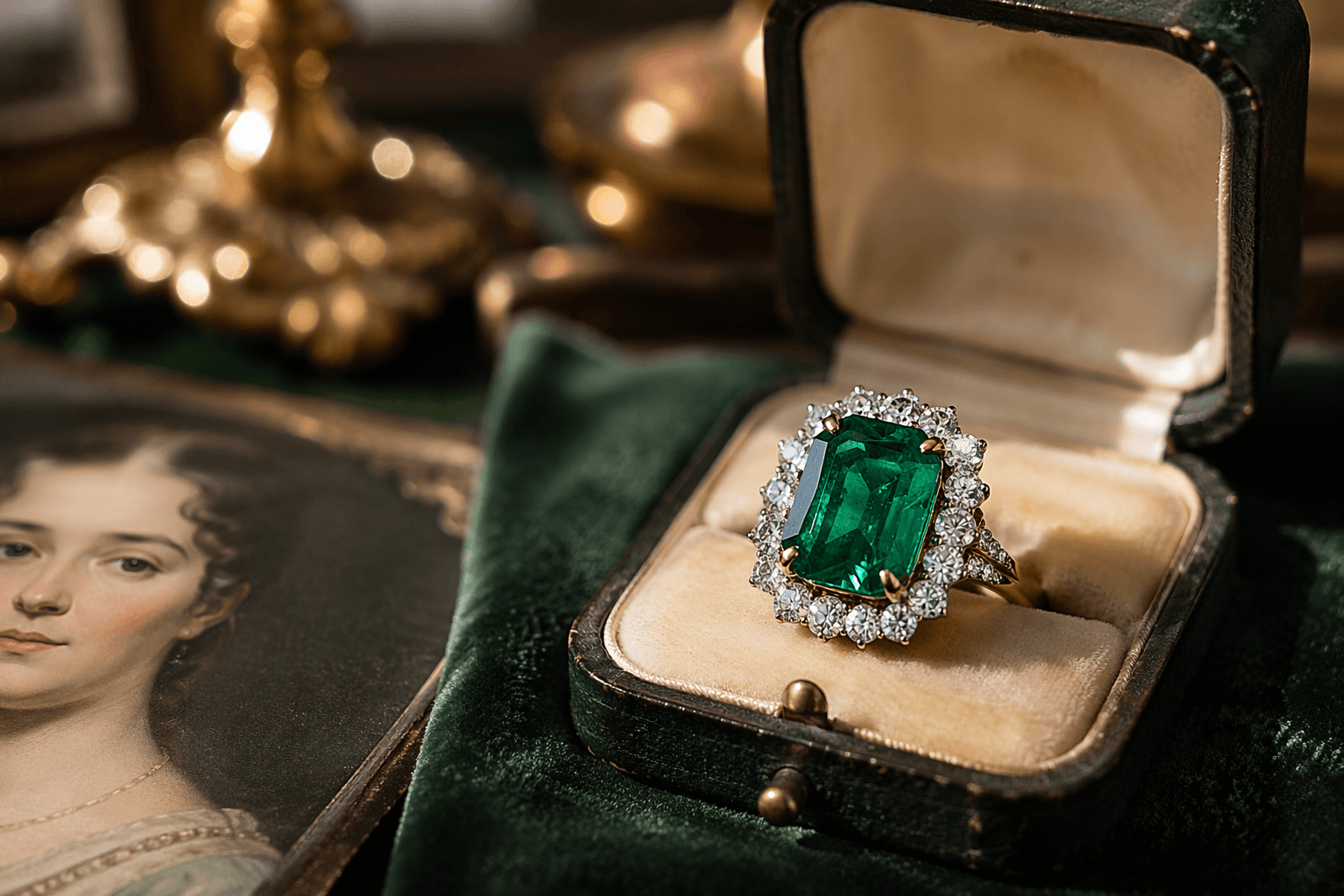
The family kept the jewel close. In Lady Ethel Inchiquin’s 1939 will, she called it “my large emerald and diamond bracelet given me by my mother on my marriage,” a line that turns the object from ornament into family record. That continuity matters because provenance changes how a jewel is read: not as an isolated gemstone, but as a witness to marriage, inheritance and status across generations.
The gemological case is equally compelling. Hancocks says the emerald is accompanied by an SSEF report identifying it as Colombian and noting no indications of clarity modification, a notable distinction in a category where treatment is common. Guy Burton, managing director of Hancocks London, said the Inchiquin Emerald belongs to an “exceptionally small group of named heritage jewels available today,” and described the blend of Colombian quality, Irish noble provenance and antique craftsmanship as “unheard of.” In a market that increasingly prizes documented origin, the jewel reads as a textbook example of why the best emeralds feel less like accessories than inherited stories. Emerald is May’s birthstone, but pieces like this explain why it is also one of the most emotionally and intellectually persuasive stones a collector can own.
This article was produced by Prism’s automated news system from verified source data, official records, and press releases, then run through automated quality and moderation checks before publishing. The system is built and supervised by the people who set the standards it runs under. Read our full AI policy.
Did this article answer your question?