Lab-Grown Diamonds Redefine April Birthstone Jewelry, Value, and Sustainability
April’s diamond now sits at the center of a new choice: pay for rarity and resale, or trade up to a larger lab-grown stone with total transparency.
The April stone now comes with a harder question
Diamond has always carried two identities at once: a symbol of permanence and a luxury defined by scarcity. Lab-grown stones have split those ideas apart, making it possible to buy a visually identical diamond at a fraction of the mined price while forcing buyers to decide what matters more, size, provenance, symbolism, or resale.
GIA says diamond is the April birthstone, and it also ties the gem to one of the earliest recorded engagement-ring stories, when Archduke Maximilian of Austria gave Mary of Burgundy a diamond ring in 1477. That history matters because April shoppers are not only buying sparkle. They are buying into a legacy that stretches back to diamonds traded in the fourth century BCE and into the European elite by the 1400s.
Why the market feels different now
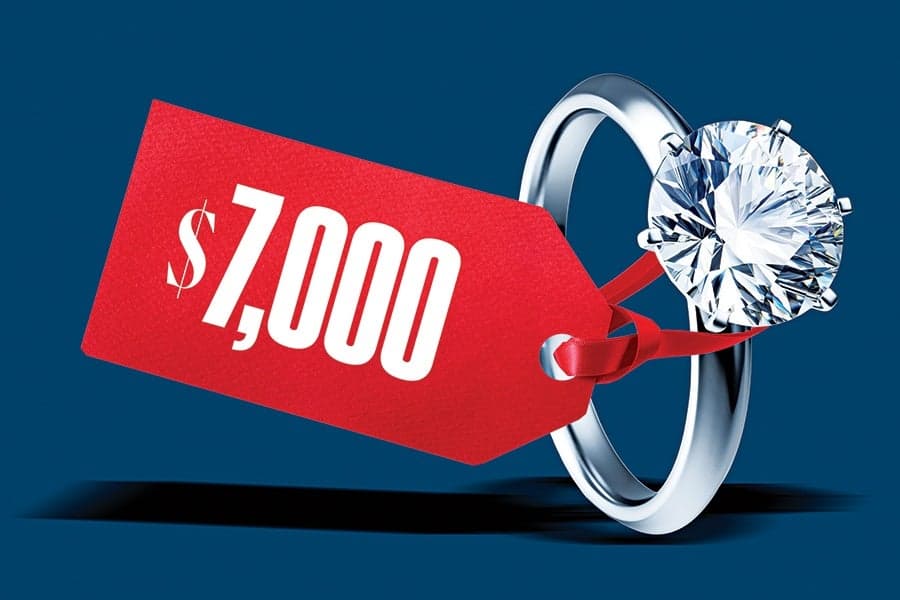
The biggest change is economic. A lab-grown diamond priced at $7,000 can look indistinguishable from a mined diamond priced at $70,000, and that gap is reshaping what consumers expect from engagement rings and birthstone jewelry alike. BriteCo reported in August 2025 that more than 45% of U.S. engagement-ring purchases were lab-grown diamonds, a share large enough to make the category impossible to treat as a niche.
That shift is not just about price. The Natural Diamond Council said in June 2025 that lab-grown diamond prices had dropped more than 90%, which explains why the old equation of bigger stone equals far more money no longer holds the way it once did. For many buyers, the appeal is obvious: a larger center stone, a cleaner budget, and more room to customize the setting with better metal, finer prongs, or a more distinctive band.
What makes a diamond feel “real” now
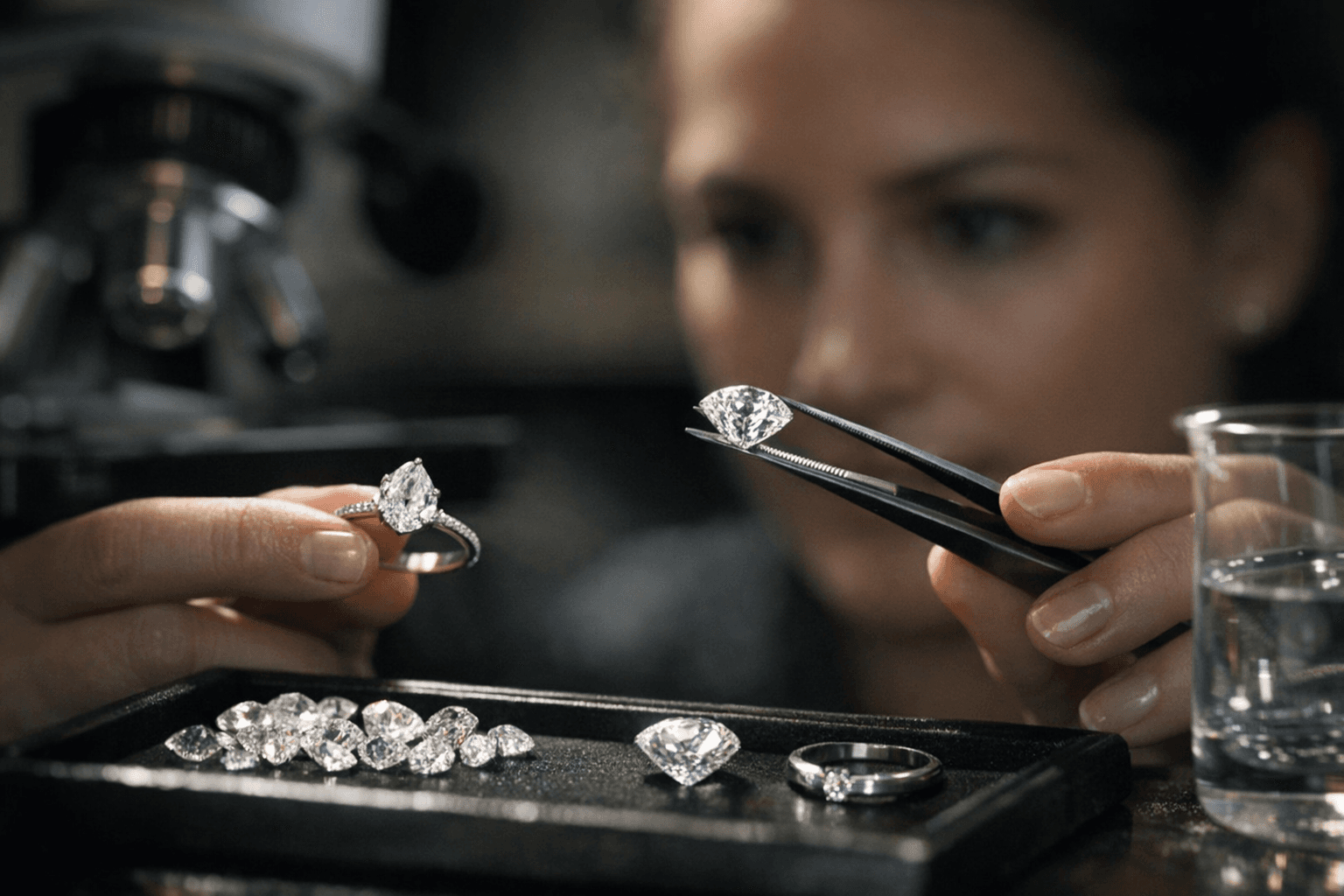
GIA still defines diamond by its physical authority. It says diamond is the hardest natural material and scores 10 on the Mohs scale, which is part of why it has long been the default engagement-ring gem. Lab-grown diamonds complicate that story because colorless to near-colorless stones share many gemological and physical properties with natural diamonds, making them difficult for some independent gemologists and appraisers to distinguish without specialized identification methods.
That is where disclosure becomes essential. The FTC Jewelry Guides require clear and conspicuous disclosure when a diamond is laboratory-created or laboratory-grown, a safeguard that protects buyers from vague language and slippery merchandising. If a listing says “diamond” without making the origin clear, that is not a minor omission, it is the central fact a shopper needs to know.
The trade itself is signaling that lab-grown diamonds are now being treated differently from mined stones. In August 2025, GIA said that beginning October 1, 2025, it would move away from full 4Cs-style grading for D-to-Z lab-grown diamonds and instead issue a simpler printed quality assessment using the categories “premium” and “standard.” That change matters because it acknowledges what shoppers already feel: the lab-grown category has its own market logic, separate from the long-established hierarchy of natural diamonds.
Where lab-grown fits best, and where mined still holds the edge
If price and size are your priorities, lab-grown is the clearest answer. The category lets couples buy a bigger stone, often with better color or clarity on paper, without blowing past a budget that also has to cover a honeymoon, a home down payment, or daily life. It is also attractive if you care more about design control than the romance of rarity, because the savings can go into a custom setting, a more substantial wedding band, or matching jewelry for a birthstone anniversary later.
If resale value, rarity, or symbolic weight matter most, mined diamonds still carry more cultural and market power. Natural stones retain the aura of geological scarcity, and for some buyers that is the whole point of a diamond engagement ring or an April birthstone piece. Lab-grown diamonds may offer extraordinary value at purchase, but they do not yet carry the same long-term market story, and that difference should be part of the decision from the start.
There is also a sustainability question, and it deserves scrutiny, not slogans. Some brands lean hard on the language of clean, ethical, or low-impact sourcing, but those claims can be vague unless they explain energy use, manufacturing location, and what exactly is being measured. That is why provenance matters as much as polish: a transparent origin story is better than a feel-good label with no details behind it.
The questions couples should answer before choosing
Before choosing lab-grown over mined, the real decision is not “Which is better?” It is “What do we want this ring to mean, and what do we want it to do for our budget?” The best buyers ask the same practical questions whether they are shopping for an engagement ring or an April birthstone pendant.
- Do we care most about carat size, or about owning a stone formed in the earth?
- Will we ever want to resell, trade in, or insure this piece with an eye toward retained value?
- Is the setting, metal, and craftsmanship doing enough work that the center stone does not need to carry the entire emotional load?
- Do we want a ring with an origin story tied to rarity, or one that gives us more stone for the money?
- Has the seller clearly disclosed whether the diamond is laboratory-created or natural, and is that language easy to find on the receipt, report, and product page?
- If sustainability is part of the pitch, what concrete details are provided beyond broad claims?
These questions matter because the market now offers two versions of desire. One is about maximum size and maximum value. The other is about permanence, provenance, and the feeling that a stone is one of a kind because the earth made it that way.
What April birthstone buyers should take from all this
April’s diamond has not lost its meaning. If anything, lab-grown stones have made that meaning more visible by separating symbolism from scarcity. The birthstone still stands for endurance, and the engagement ring still carries the promise first attached to Mary of Burgundy in 1477, but modern shoppers now get to decide whether that promise should come with a mined origin, a laboratory origin, or simply the best stone they can afford with eyes open.
That is the new April standard: not just sparkle, but disclosure, context, and a clear answer to what kind of value a diamond is meant to hold.
This article was produced by Prism’s automated news system from verified source data, official records, and press releases, then run through automated quality and moderation checks before publishing. The system is built and supervised by the people who set the standards it runs under. Read our full AI policy.
Know something we missed? Have a correction or additional information?
Submit a Tip