March Birthstones Aquamarine and Bloodstone, Symbols, History, and Buying Guide
March lets you choose between a sea-blue classic and a dark, speckled talisman. Aquamarine reads polished and easy, while bloodstone feels rarer and more arresting.
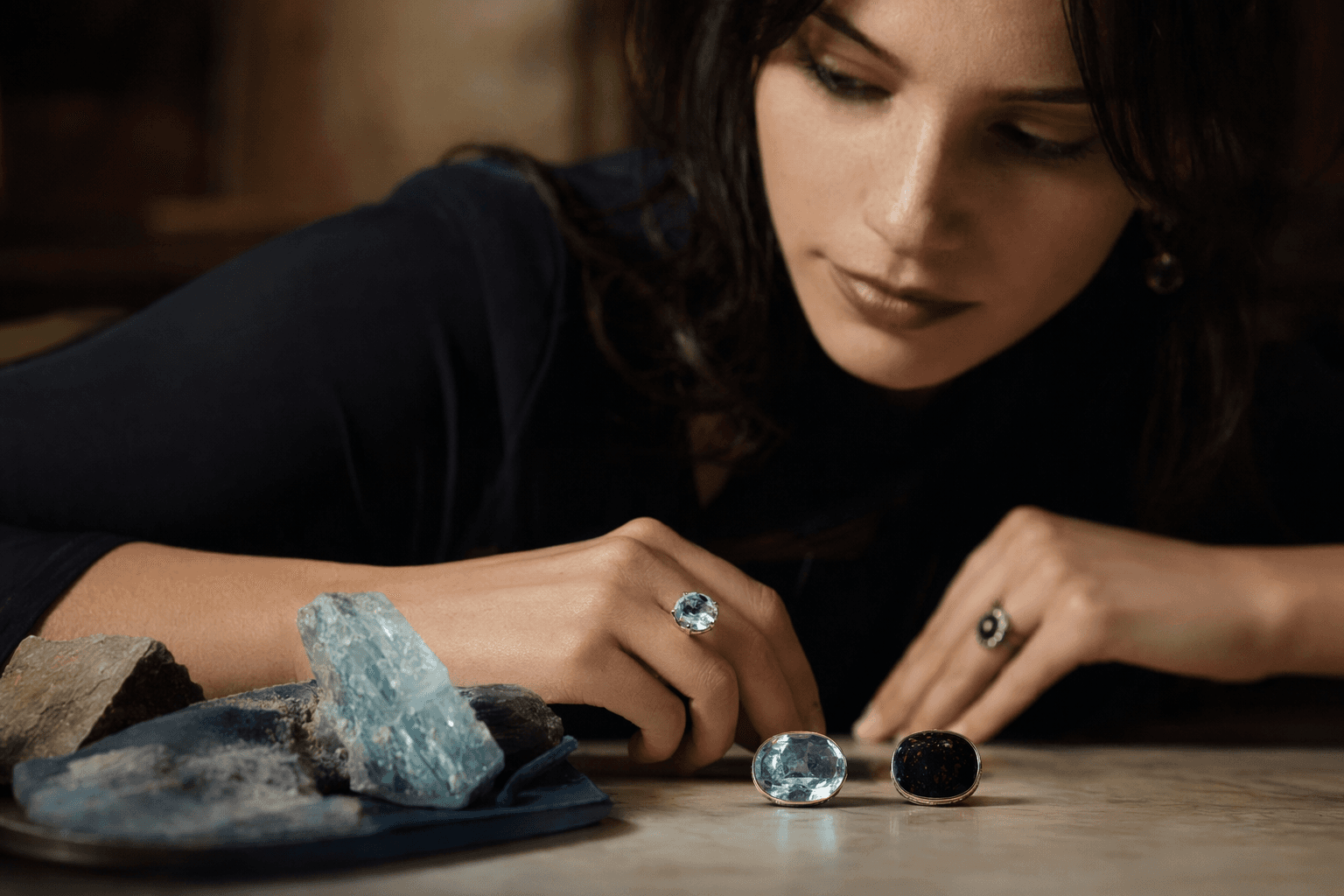
March does not hand you one birthstone so much as a choice of character. One stone glows with watery brightness and easy glamour; the other carries a darker, more enigmatic history, the kind that makes a piece feel personal the moment it leaves the jewelry case.
Why March has two birthstones
The modern birthstone calendar is less ancient decree than evolving tradition. Jewelers of America traces the official U.S. birthstone list to 1912, when the American National Retail Jewelers Association established it, and Britannica notes that these lists were shaped by availability, cost, and changing commercial standards as much as by older lore. That is why March belongs to both aquamarine and bloodstone, two stones that could hardly feel more different.
Britannica also points out that modern birthstone discussions have made room for synthetic spinel in March’s orbit, which is a reminder that birthstones have always been part myth, part market, and part style language. For a buyer, that flexibility is useful. It means March jewelry can lean serene and familiar, or moody and unconventional, depending on the person wearing it.
Aquamarine: the stone of air, water, and ease
Aquamarine is the more immediate crowd pleaser, and for good reason. Its name comes from the Latin for seawater, and the gemological appeal is exactly that: a clear, blue to slightly greenish blue color that looks as if it has been skimmed from bright water. The Gemological Institute of America says aquamarine was believed to calm waves, keep sailors safe at sea, and even enhance marital happiness, which gives the stone a romantic, travel-worn aura that still feels fresh today.
It is also the gem for the 19th wedding anniversary, a detail that makes aquamarine especially appealing for gifts. A ring or pendant set with aquamarine says something softer than diamond, but not less considered. In a daily-wear piece, its high clarity gives it a clean, modern finish, and its color sits beautifully in both precious metal and minimalist settings.
Aquamarine’s scale is another part of its appeal. The stone often forms large crystals, and GIA notes that the largest gem-quality aquamarine crystal mined to date is 19 inches long. That kind of size helps explain why aquamarine can carry generously cut center stones without losing its poise. Set as a pendant, it can read airy and elegant; in a ring, it can feel quietly luxurious rather than ornate.
For the wearer who wants March jewelry to disappear into a wardrobe and still look expensive, aquamarine has that rare combination of versatility and visibility. It is mainstream, yes, but not generic. Its best pieces look like they were chosen for their restraint.
Bloodstone: the darker March stone with medieval drama
Bloodstone takes a very different path. Britannica describes it as a dark-green chalcedony with bright-red jasper spots, named for its bloodlike appearance, and notes that it was greatly prized in the Middle Ages. It also tells us that bloodstone, sometimes called heliotrope, was used in sculptures representing flagellation and martyrdom, which gives the gem a weightier symbolic history than most modern birthstones can claim.
That history matters when you are choosing jewelry. Bloodstone is not the obvious answer, and that is precisely its charm. Its deep green body color, punctuated by red flecks, creates instant visual tension. In a ring, especially a signet-style piece or a low, architectural setting, it feels like a private emblem. In a pendant, it becomes more talismanic, less decorative and more declarative.
The Old Farmer’s Almanac links bloodstone with strength, bravery, and vitality, which suits its appearance. This is a stone that does not beg for attention through sparkle. It earns it through pattern, contrast, and story. If aquamarine is the March gem that slips easily into everyday wear, bloodstone is the one that invites a second look.
How to choose the piece that feels right
The smartest way to choose March jewelry is to think about the mood you want the stone to carry.
- Choose aquamarine if you want a ring or pendant that feels bright, wearable, and polished enough for daily rotation.
- Choose bloodstone if you want a piece with a more antique, conversation-starting presence, especially in a signet ring or sculptural pendant.
- Choose aquamarine when clarity and light matter most. Its transparent beryl body rewards settings that let the stone open up, whether that means a prong setting that catches the light or a simple mount that keeps the color front and center.
- Choose bloodstone when the surface pattern is the point. A bezel or low-set cabochon can make those red jasper spots read like intentional design, not incidental texture.
For gifts, the emotional read is just as important as the gem itself. Aquamarine feels like the safer, more universally legible choice, especially for someone who likes clean lines, pale color, and pieces that move easily from workday to dinner. Bloodstone feels more intimate, more niche, more likely to delight someone who already knows their own taste and likes jewelry with a little grit.
What to look for before you buy
Source can matter, especially if you want a stone with a particular pedigree. The Old Farmer’s Almanac lists aquamarine sources including Brazil, Madagascar, Pakistan, Nigeria, and the United States. It lists bloodstone sources including India, Brazil, Australia, the United States, and Canada. Those origins do not guarantee quality by themselves, but they do help situate a stone in the broader world of gem history.
With aquamarine, look for a color that feels balanced, not washed out, and for clarity that gives the stone a crisp, glassy presence. With bloodstone, look for strong contrast between the dark-green body color and the red jasper spotting, because that contrast is what gives the gem its drama. In both cases, the best pieces are the ones where setting and stone work together, rather than competing for attention.
March’s birthstones offer two sharply different answers to the same question. Aquamarine gives you serenity, polish, and familiar beauty; bloodstone gives you depth, history, and a little mystery. The stronger statement depends on whether you want your jewelry to shimmer like water or wear its story like a seal.
This article was produced by Prism’s automated news system from verified source data, official records, and press releases, then run through automated quality and moderation checks before publishing. The system is built and supervised by the people who set the standards it runs under. Read our full AI policy.
Did this article answer your question?