May's Emerald Birthstone Guide Covers Quality, Settings, and Budget Options
Color saturation, not perfection, is the real measure of a great emerald; here's how to decode jardin, oil treatments, and settings before gifting for May.
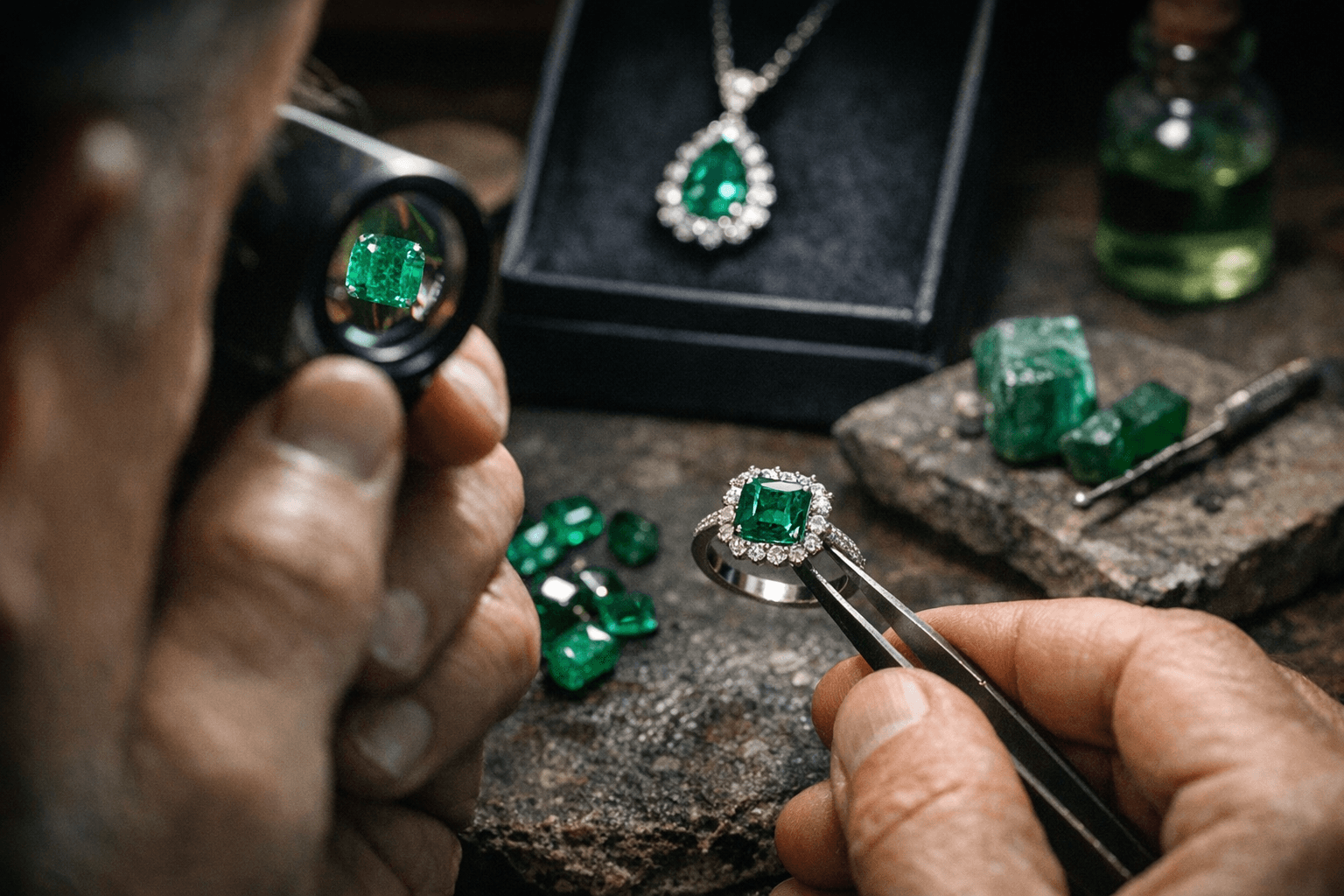
No gemstone signals spring quite like the emerald. As the gem of spring, emerald is the perfect choice as the birthstone for the month of May and, less commonly known, it's also the gem of the twentieth and thirty-fifth wedding anniversaries. Its deep, living green has drawn devotion across civilizations: Elizabeth Taylor's emerald pendant sold in 2011 for the equivalent of $280,000 per carat. For the rest of us choosing a piece for a partner, a mother, or a May graduate, the calculus is more practical. Getting it right means understanding what the stone actually is before reaching for a credit card.
Color First: The Non-Negotiable
Buying a quality emerald comes down to color, clarity that celebrates the jardin, thoughtful cut, and honest disclosure about treatments and origin. Of those four factors, color is the undisputed leader. A high-quality emerald shows even color distribution without obvious zoning, and it feels lively under natural light. The spectrum runs from bluish-green to pure green; Colombian emeralds are the most prized due to their rich green hue and transparency, and that premium has held through 2026. Zambian stones, by contrast, are generally considered a more accessible alternative to Colombian emeralds, and their frequently higher clarity and fewer inclusions make them especially durable for everyday wear. If budget is a constraint, a well-saturated Zambian emerald in a protective setting will outshine a pale Colombian stone at twice the price.
Understanding Jardin: Reset Your Clarity Expectations
Emeralds are Type III gemstones, and they are one of the most heavily included gemstones in that group. Emerald inclusions are sometimes called "jardin," the French word for garden, because the inclusions have a mossy, garden-esque look to them. This is not a flaw to be hidden; inclusions are not only universally accepted in emeralds, but they often add to the stone's unique appeal. In fact, a suspiciously clean emerald is a red flag rather than a selling point. The practical guidance here: look for a Type III clarity grade where the inclusions are translucent and wispy, not black and opaque. Wispy jardin catches light beautifully and confirms natural origin. Dense, opaque black inclusions, on the other hand, interrupt that characteristic depth and can structurally weaken the stone. Some inclusions may reach the surface, which makes the stone vulnerable to chipping, so inspect the stone carefully and ask your jeweler about surface-reaching fractures specifically before committing.
The Treatment Question: Almost Every Emerald Is Oiled
This is where many buyers are caught off guard. To improve clarity and appearance, nearly all emeralds undergo oil treatment: oil fills surface-reaching fractures, making them less visible by matching the refractive index of the emerald. Common oils used include cedar oil (the traditional choice), synthetic oils, or resins, which are more stable but permanent. Oil treatments are standard industry practice and not considered deceptive, but they must be disclosed. Always ask for a grading report from a respected lab such as GIA, AGL, or Gübelin that specifies the treatment level. The disclosure matters for two reasons: value and maintenance. Untreated emeralds are rare and expensive; if an emerald is advertised as "no oil" or "untreated," expect it to be significantly more expensive than oiled equivalents, often two to ten times the price for comparable size and color. And for any oiled stone you do buy, the gem may need to be re-oiled at least once every three to four years to maintain its luster.
Natural vs. Lab-Grown: An Honest Comparison
The lab-grown emerald conversation has matured considerably. These stones are chemically identical to their natural counterparts but are much more affordable. Lab-grown emeralds are significantly cheaper, often costing 30 to 50 percent less than natural emeralds, while still offering similar visual appeal. Lab-created emeralds also tend to be free of inclusions, which can read as a bonus but also removes the organic depth that makes natural stones so compelling. On the price scale: a high-quality laboratory-created emerald can be found for less than $300 per carat, while fine natural emeralds range from $3,000 to $30,000 per carat depending on quality, size, and origin. For a gift where the emotional and provenance story matters, a smaller, well-selected natural stone often carries more resonance than a larger lab-grown one. For a style-first purchase on a strict budget, lab-grown is a genuinely intelligent choice.
Settings That Protect a Vulnerable Stone
Emeralds are 7.5 to 8 on the Mohs hardness scale, softer than sapphires at 9 and diamonds at 10, and their inclusions make them more brittle than that number suggests. The choice of setting depends heavily on whether the emerald is worn in a ring, earrings, or a necklace, because a ring endures far more daily impact than a pendant. Two settings earn consistent praise from gemologists:
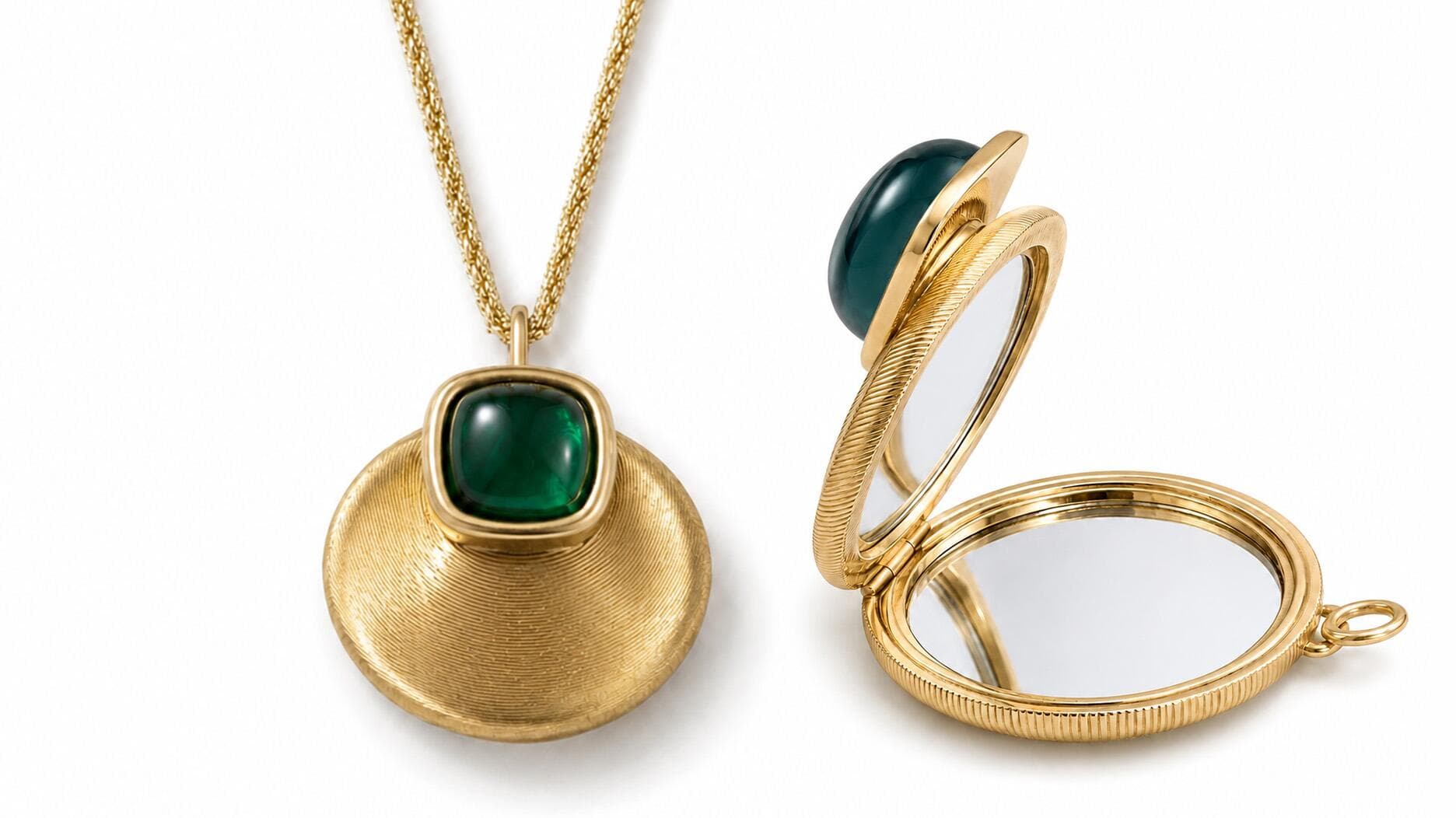
- Bezel setting: A metal collar that wraps the entire girdle of the stone, shielding its edges from knocks. It offers strong physical protection and a sleek, modern profile that suits both contemporary and vintage-inspired designs.
- Halo setting: A halo or cluster of diamonds surrounding an emerald will absorb the hard knocks and protect the stone while also visually amplifying the center stone's apparent size, a practical advantage with smaller emeralds.
When it comes to metal choice, an emerald's color often improves when it is set in yellow gold, while top-color stones are typically set in platinum to keep the focus on the stone's natural saturation without any warm tint from the metal.
The Gift Decision Tree: Ring, Pendant, or Earrings?
The form of the piece should follow the occasion and the recipient's lifestyle as much as their taste.
For a partner or engagement: A ring is the natural choice, but the setting matters urgently. A bezel or halo protects the stone through everyday wear. An emerald engagement ring makes a bold statement of enduring love; pair it with a simple band in complementary gold to keep focus on the green center stone. Budget accordingly: for fine natural emeralds in 14k or 18k gold, expect to spend considerably more than a comparable diamond of the same carat weight.
For a mother or mentor: A pendant is the smarter choice. It experiences far fewer impacts than a ring, which means even a more delicate prong setting is lower risk, and a pendant lets light dance through the facets in a way that a ring, worn face-up against everyday surfaces, often cannot. A bezel-set drop in 14k yellow gold is a classic combination.
For a graduate: Emerald stud or drop earrings offer versatility across every dress code without the durability concerns of a ring. Emerald studs make an excellent graduation gift; they are available in sterling silver, 14k gold, and 18k gold, covering a broad range of budgets without sacrificing the symbolism of a real gemstone.
Care That Preserves Your Investment
Oil treatments make emeralds particularly vulnerable to certain everyday hazards. Remove your emerald jewelry before participating in any physical activity such as exercising, swimming, or gardening, and protect the stone from direct sunlight and heating appliances, since exposure to extreme temperatures can cause internal cracks. Ultrasonic cleaners should be avoided entirely; the vibrations can displace the oil filling in fractures and visibly cloud the stone. Instead, clean emerald jewelry with a soft cloth and mild soap in lukewarm water. Store pieces separately from harder stones like diamonds and sapphires, which will scratch an emerald's surface on contact. For any emerald valued above a few hundred dollars, adding it to a jewelry rider on a homeowner's policy is worth the nominal annual cost.
The smartest emerald buyer is not the one who spends the most; it is the one who understands exactly what they are holding. A vivid, well-saturated stone with honest jardin, proper treatment disclosure, and a setting that earns its keep physically is the piece that becomes an heirloom. That is true whether the budget runs to a modest sterling pendant or an untreated Colombian center stone in 18k gold.
This article was produced by Prism’s automated news system from verified source data, official records, and press releases, then run through automated quality and moderation checks before publishing. The system is built and supervised by the people who set the standards it runs under. Read our full AI policy.
Did this article answer your question?