Moonstone rings shine as an affordable June birthstone alternative
Moonstone brings June-born romance at a friendlier price, with adularescent glow, deep history, and a softer profile that rewards careful wear.
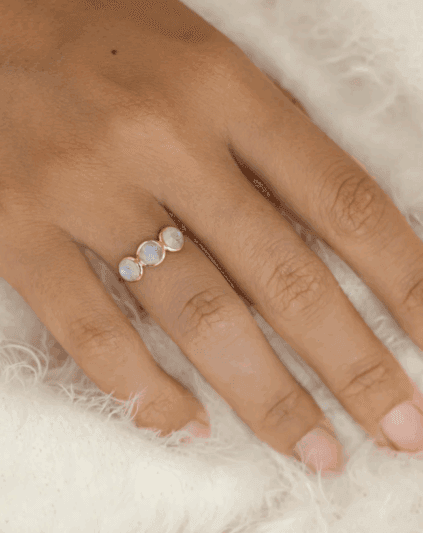
June is one of only three months with three birthstones, and moonstone is the one that gives a ring the kind of light play diamond cannot imitate. Alongside pearl and alexandrite, it offers unusual room to choose by mood, color, and budget without losing the symbolism of a birthstone piece.
Why moonstone feels like a smart-value buy
The allure begins with adularescence, the shimmering effect that seems to billow under the surface of the stone. That glow comes from light scattering between microscopic layers of feldspar, and it is the reason moonstone reads as ethereal even in a simple ring mount. For shoppers weighing June’s three birthstones, that optical effect delivers a distinctly romantic look at a more accessible price point than the rarest alternatives.
Moonstone also carries the appeal of a gem with a long memory. The Roman natural historian Pliny wrote that its appearance shifted with the phases of the moon, while Hindu mythology linked it to solidified moonbeams. Roman and Greek traditions associated it with lunar deities, and the stone has been worn as adornment and talisman since ancient civilizations.
The case for choosing moonstone over pearl or alexandrite
Each of June’s birthstones tells a different story. Pearl reads as classic and aqueous, alexandrite as rare and color-shifting, while moonstone offers an iridescent middle ground that feels both old-world and accessible. In parts of Germany and Scandinavia, moonstone is the preferred June birthstone over pearl and alexandrite, a useful reminder that the gem has a cultural life well beyond the American birthstone chart.
Art Nouveau jewelers such as René Lalique and Louis Comfort Tiffany used moonstone in custom pieces, drawn to the gem’s soft glow and organic feel. It also appeared in handcrafted silver work during the Arts and Crafts era in the late 19th century, where its restrained shimmer paired naturally with handwrought settings.
What to look for when you buy
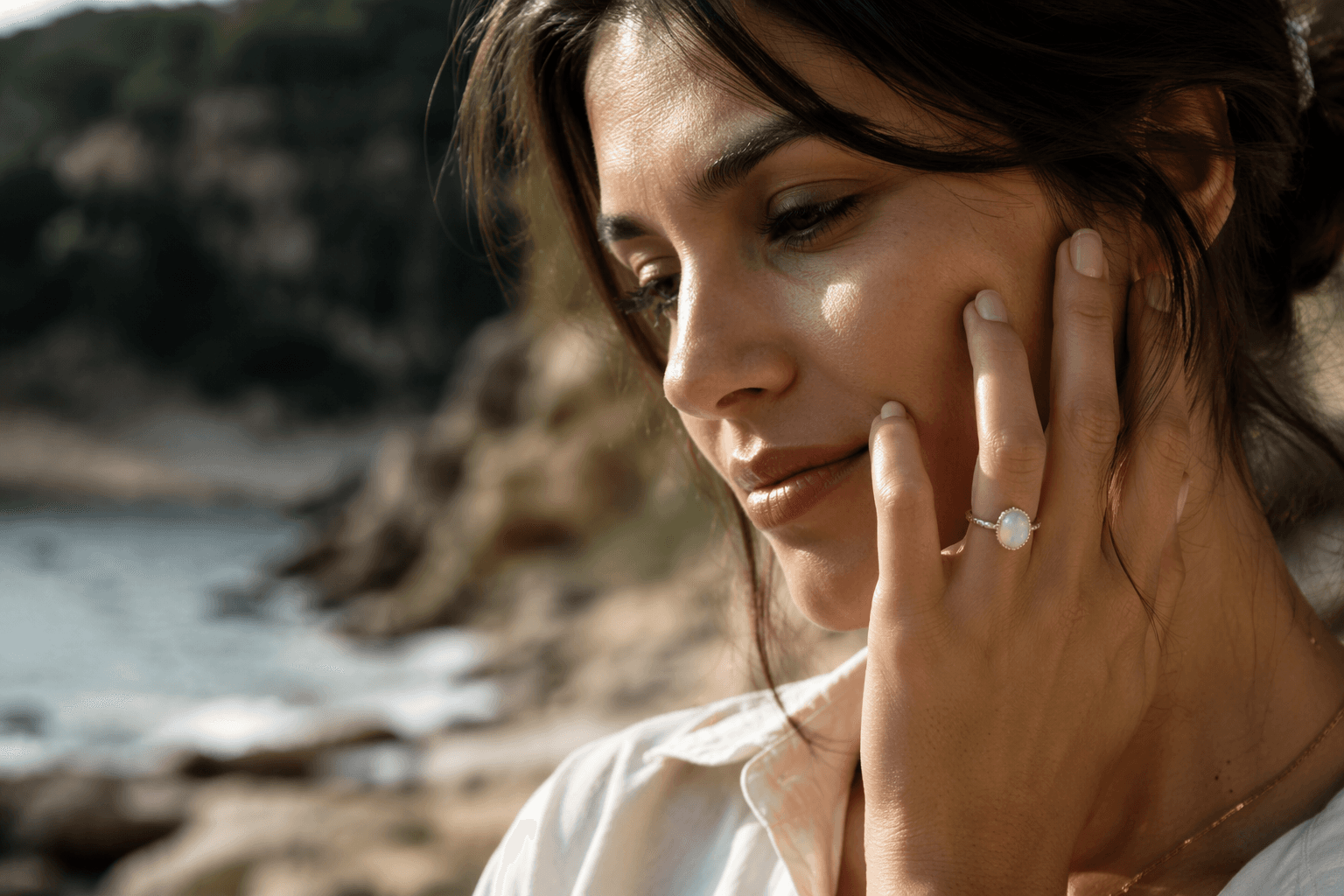
The most important quality in moonstone is not sparkle in the diamond sense, but the strength and movement of the light within the stone. Good moonstone shows a clear, floating sheen rather than a flat haze, and faceted cuts, which have been available in recent years, open the door to more architectural ring designs alongside vintage-inspired cabochons and sharper contemporary silhouettes.
Origin can also add a layer of interest. The name adularia comes from Mt. Adular in Switzerland, an early mining site associated with fine moonstone. Today, most commercial moonstone comes from Sri Lanka, with other deposits in India, Madagascar, Myanmar, Norway, Mexico, Armenia, Australia, and the United States.
Everyday wear calls for a protective setting
Moonstone is less durable than sapphire, diamond, or amethyst, and it can scratch, chip, or cleave if it takes a hit against a hard surface. With proper care, many people wear moonstone rings for years, which is why the setting matters so much.
For daily wear, a lower-profile ring is the safest bet. A bezel setting, which wraps metal around the stone’s edge, offers more protection than exposed prongs, especially for a gem that can chip if struck. If you prefer prongs, look for a design that keeps the stone close to the finger rather than perched high above it.

- Remove the ring for gym sessions, gardening, and housework.
- Store it separately so harder gems do not mark its surface.
- Treat it as a finish-sensitive gem, not a workhorse like diamond or sapphire.
A few habits help the stone last:
The best moonstone ring for an engagement alternative
As an engagement alternative, moonstone is strongest when the ring is meant to signal individuality rather than maximum hardness. Its glow feels personal and a little unconventional. A simple bezel-set moonstone, or a design that combines the stone with a low surrounding frame, gives the piece a refined profile without pretending the gem is something it is not.
The tradeoff is durability. If the ring will take daily impact, moonstone is a more delicate choice than sapphire or diamond, and that should shape the setting from the start.
A thoughtful gift with room for personality
For a June birthday gift, moonstone has a giftable advantage: it feels intimate without being predictable. Pearl can lean formal, and alexandrite can push the budget into rarified territory, but moonstone sits in a sweet spot where sentiment and style meet. Its glow looks different in every light, which gives the ring a sense of discovery each time it is worn.
This article was produced by Prism’s automated news system from verified source data, official records, and press releases, then run through automated quality and moderation checks before publishing. The system is built and supervised by the people who set the standards it runs under. Read our full AI policy.
Did this article answer your question?