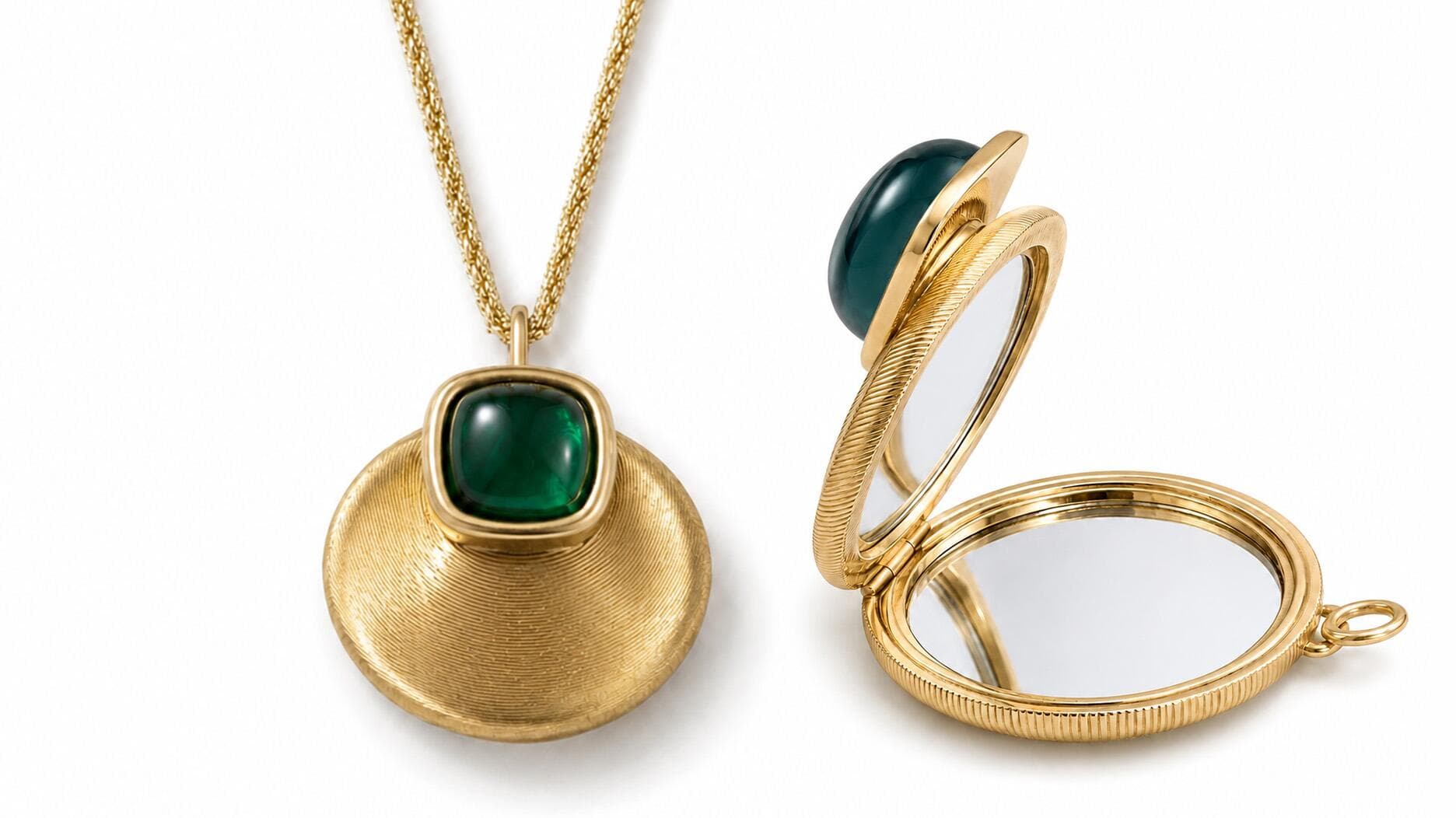
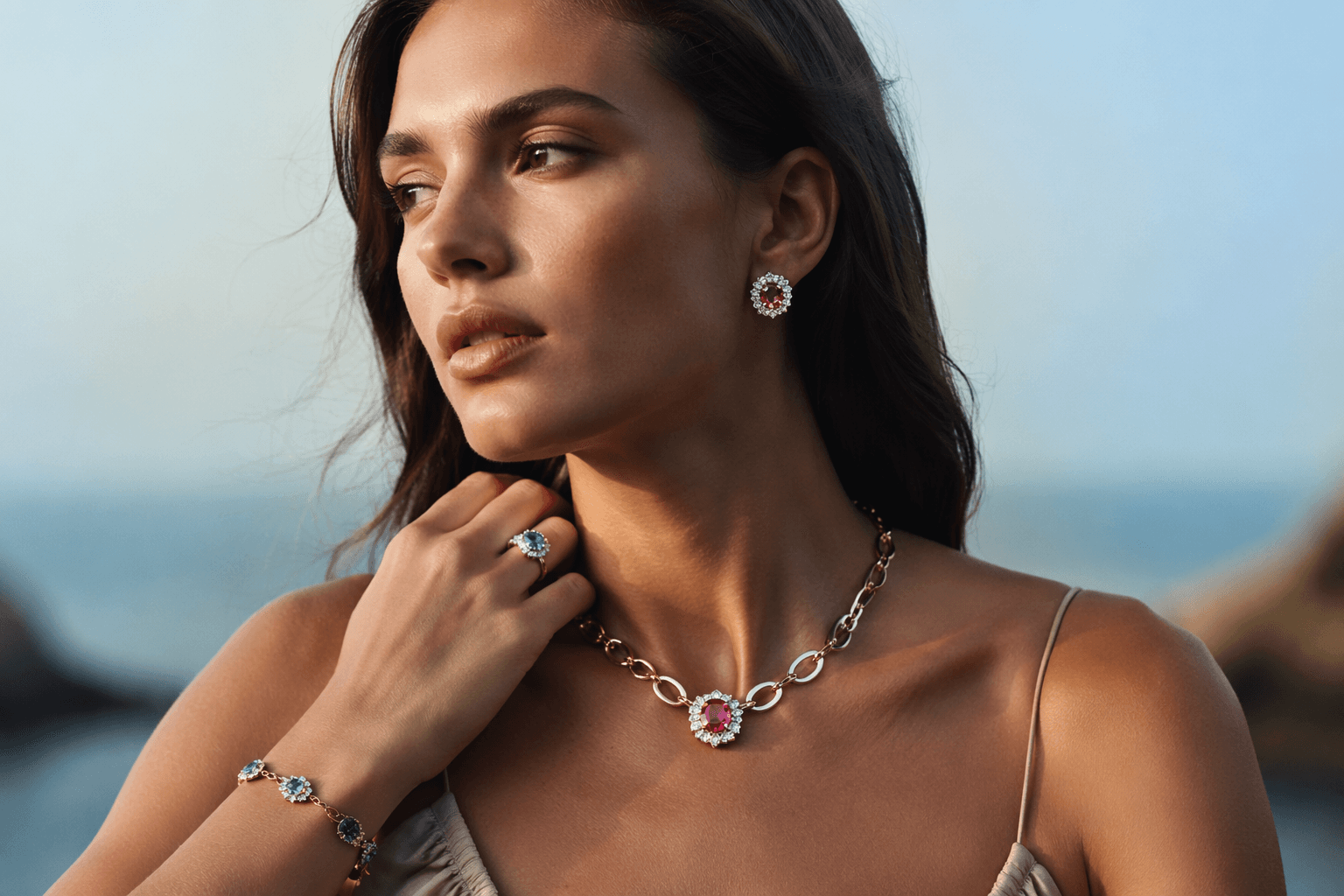
Moonstone shines as June’s celestial birthstone in modern fine jewelry
Moonstone gives June a luminous, more accessible choice, with Art Nouveau pedigree, cabochon beauty, and a softer spend story than alexandrite.

Birthstones are at their best when they feel personal, not preset, and moonstone makes a persuasive case for June shoppers who want glow, not formality. June is one of only three months with three official birthstones, alongside pearl and alexandrite, which means the smartest choice is often the one that fits your style and budget, not just the calendar. Moonstone stands out because its light has movement, its history is rich, and its look can shift from bohemian to polished with nothing more than a better cut or a sharper setting.
Why moonstone feels modern
Moonstone’s signature effect is adularescence, the glow created when light scatters between thin layers inside the stone. GIA describes the best material as colorless with a blue sheen, and notes that a cabochon cut helps show that floating light most clearly. That is why moonstone can feel softer than a diamond but still more visually alive than many opaque gems: it does not sparkle so much as hover.
That visual quality is exactly why moonstone is such a good style-led purchase for June. Pearl gives you a classic, organic luster, with a long history as a wardrobe staple and an easy fit for strands, studs, and solitaires. Alexandrite offers dramatic color change, but GIA calls it exceptionally rare and valuable, which puts it into a far more exclusive bracket. Moonstone lands in the middle: more attainable than top-tier alexandrite, more unexpected than pearl, and distinctly celestial without looking costume-like.
A gem with deep design pedigree
Moonstone is not a new trend disguised as a discovery. GIA ties it to the romantic Art Nouveau era, when René Lalique and Louis Comfort Tiffany featured the pale gem in custom jewelry, and also to Arts and Crafts artisans who used it in handcrafted silver pieces. It returned in the 1960s flower-child movement and again in 1990s New Age design, which explains why moonstone can still read as both vintage and current without much effort.
That history matters because it shows moonstone has always thrived when jewelers treat it as a light source, not a mere center stone. The most compelling pieces lean into its glow with minimal fuss: smooth cabochons, clean metal, and enough framing to let the stone do the talking. Contemporary makers are following that logic now, pairing moonstone with diamonds and setting it in 14k gold for a more resolved fine-jewelry look rather than a purely earthy one. Anna Sheffield describes its moonstone line as a modern mystic reinterpretation in 14k gold, while Carter Eve Jewelry uses moonstone-and-diamond combinations that push the stone toward dressier, more finished territory.
Where the stone comes from, and why that affects price
Provenance shapes moonstone’s story as much as style does. The name adularia traces back to Mt. Adular, now St. Gotthard in Switzerland, one of the early fine-quality sources, while classical bluish moonstones are traditionally associated with Sri Lanka. The stone is also found in the United States, Brazil, Australia, Myanmar, and Madagascar, but the International Colored Gemstone Association notes that high-quality bluish moonstones have become rarer in recent years, which has pushed prices up.
That rarity is exactly why moonstone can be a smart buy if you are weighing aesthetics against spend. You are not paying for alexandrite-level scarcity, yet the better bluish material still commands more attention than the average casual gemstone, especially when the adularescence is strong and the stone is relatively clean. The smartest moonstone purchases are the ones where the cut and setting do some of the work: a well-shaped cabochon, a warm gold mount, or a diamond outline can make the gem look far more expensive than its raw material category would suggest.
How to wear moonstone so it looks elevated
Moonstone shines best when the design is disciplined. Silver can be beautiful, especially given its Arts and Crafts heritage, but the stone often looks most fine-jewelry when paired with 14k gold, a polished cabochon, and a narrow halo or accent stones that sharpen the silhouette. Diamonds are especially effective here because they give the moonstone a crisp edge, turning that soft internal glow into something more architectural and evening-ready.
For buyers comparing June birthstones, the rule is simple. Choose pearl when you want the cleanest classic, alexandrite when rarity is the point, and moonstone when you want the most character for the money. Moonstone is the most style-flexible of the three: it can feel romantic in vintage-inspired silver, refined in 14k gold, or quietly glamorous when paired with diamonds, and that versatility is exactly what makes it the smartest June purchase for a modern jewelry box.
This article was produced by Prism’s automated news system from verified source data, official records, and press releases, then run through automated quality and moderation checks before publishing. The system is built and supervised by the people who set the standards it runs under. Read our full AI policy.
Did this article answer your question?