Pearls return for June, styled beyond the classic strand
Pearls feel fresh again when you skip the strand. June’s birthstone now spans sculptural earrings, layered necklaces, and giftable pieces at more than one price point.
Birthstones are at their best when they feel personal, not preset. For June, that means looking past the expected single strand and into a category that can feel light, modern, and easy to wear from a dinner reservation to an everyday uniform.
June gives you three very different paths
June is one of the few months with three official birthstones: pearl, alexandrite, and moonstone. That matters because it turns the month into a choice, not a rule. The American Gem Society notes that the trio covers different price points and color stories, from the opalescent softness of pearl to the milky glow of moonstone and the color-changing drama of alexandrite.
The U.S. birthstone list was standardized in 1912 by the American National Retail Jewelers Association, now Jewelers of America, which identifies itself as the originator of the American list. Its current guide still presents both traditional and modern birthstones, so June sits in a lineage that is official, but not frozen. For buyers, that creates room to match mood, budget, and wardrobe without losing the birthstone connection.
Why pearls keep coming back
Pearls carry a longer memory than almost any other June stone. The American Gem Society traces pearl adornment back centuries, including ancient Greece, and notes that the oldest known pearl jewelry was found in the sarcophagus of a Persian princess who died in 520 BC. That kind of provenance gives pearls a particular authority. They are not trying to prove themselves as precious, because they already are.
The Smithsonian Institution’s record of an 1830s seed-pearl parure adds another useful piece of context. A parure is a matching suite of interchangeable jewelry, and that idea still feels modern because it answers the way people actually dress now: mix, repeat, reframe, and wear in more than one setting. Pearls have always had that dual identity, part heirloom, part reinvention.
The new pearl look is lighter, sharper, and easier to style
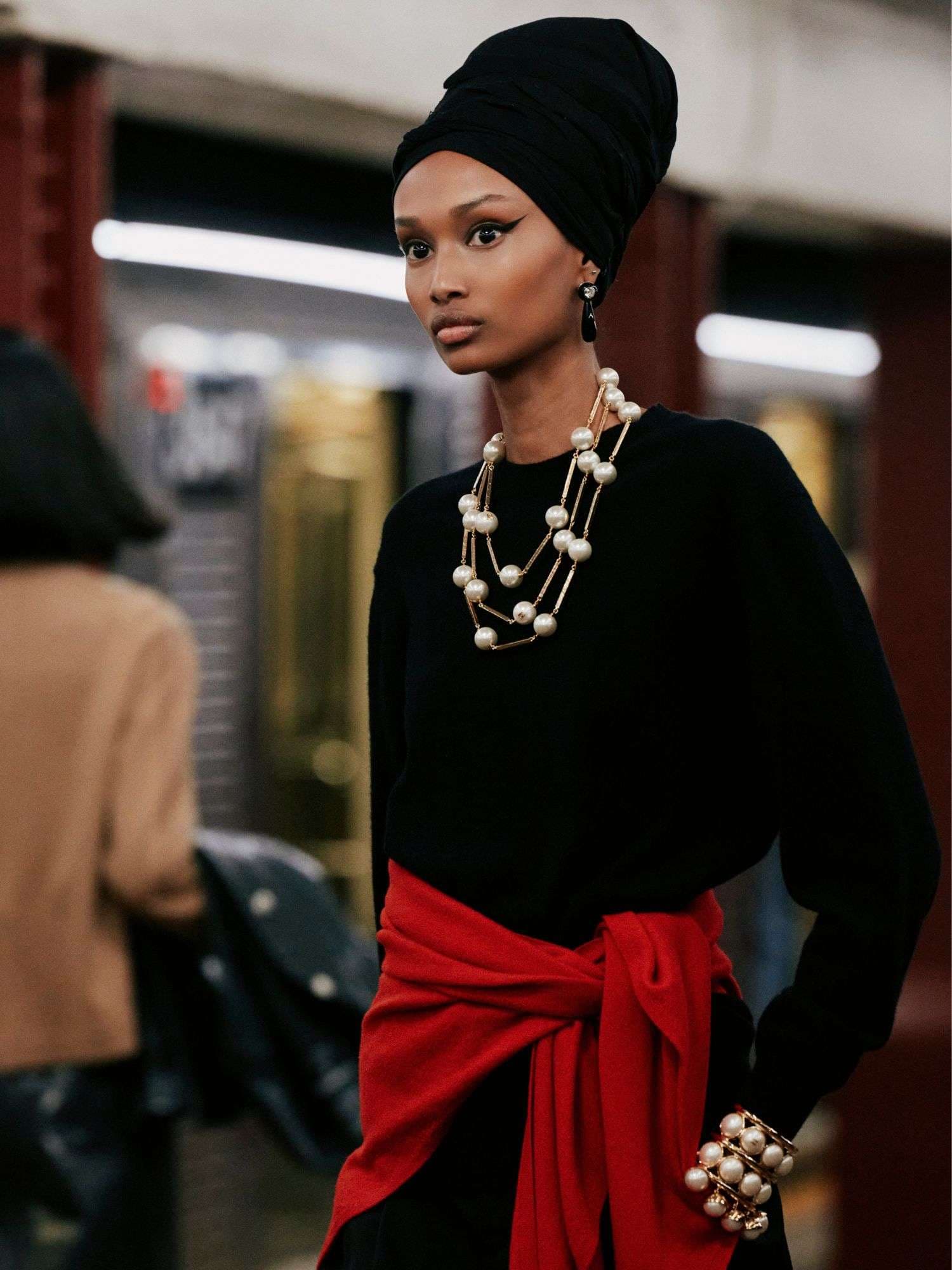
MOJEH’s reading of the category is exactly why pearls are back in the conversation for June: the appeal is no longer locked to a classic strand. The fresh pearl story is about movement, contrast, and pieces that work with clothes you already wear. Alémais and Self-Portrait push pearls into a fashion context that feels more current than ceremonial, while Dior Fine Jewellery, Chanel, Gucci, and Sophie Bille Brahe show how the stone can sit inside a more directional jewelry wardrobe.
That shift is important because pearls do not need to be styled like formalwear. Their modern appeal comes when they break up sharper shapes and more casual fabrics. Think of a pearl detail softening tailoring, a pearl drop making a simple neckline feel finished, or a more sculptural pearl piece giving a summer dress a little edge. The category is strongest now when it looks intentional rather than precious.
How to buy into pearls without defaulting to the strand
If you want pearls that feel current, start with silhouettes that do more than sit neatly at the collarbone. A strand can still work, especially in a short, crisp length or in a more uneven, baroque treatment, but the most wearable pieces right now tend to be the ones with a little motion or a little tension. That is where the category feels less expected and more shareable.

- Look for earrings that frame the face rather than formalize it. Pearl studs, drops, and mismatched pairs are easier to wear often than a single occasion-only necklace.
- Choose pendants and shorter necklaces if you want flexibility. A small pearl on a fine chain can move from knitwear to evening without feeling bridal.
- Favor pieces that pair pearl with a harder finish, like polished metal or a sharper line. The contrast keeps the look from drifting into costume territory.
- Consider baroque or irregular pearls if you want the stone to read more contemporary. Their shape gives the piece more character and less symmetry, which makes styling easier.
The best versions are not the loudest. They are the ones that make pearls feel like part of a living wardrobe, not a special-occasion box.
Price entry should be about design, not just size
Because June has three official birthstones, pearl can act as the most approachable entry point. The American Gem Society’s framework is useful here: the month spans widely different looks and price points, so pearl can be the stone that gets you in without closing the door on more expensive options later. That makes it especially practical for gifts, where you want something meaningful but not necessarily the highest-ticket gem in the month.
At the entry level, small pearl earrings or a simple pendant often give the cleanest return on wear. As you move upward, design matters more than weight or size alone. A well-made pearl piece from a fashion house or fine-jewelry label earns its keep when the setting is thoughtful, the proportions are balanced, and the pearl itself is matched to the overall silhouette instead of simply attached as decoration.
Why these pieces hold wardrobe value beyond one season
Pearls last in the wardrobe when they avoid looking too literal. The styles most likely to outlive the current moment are the ones that feel architectural, minimal, or subtly asymmetric, because they can work with many clothes and many moods. A pearl piece that is too tied to a trend can date quickly, but one that uses the stone as texture, light, or punctuation tends to stay useful.
That is the real appeal of June’s return to pearl: it is not nostalgia dressed up as novelty. It is a reminder that one of jewelry’s oldest materials still has room to look fresh, especially when it is worn with the confidence of something chosen, not prescribed.
This article was produced by Prism’s automated news system from verified source data, official records, and press releases, then run through automated quality and moderation checks before publishing. The system is built and supervised by the people who set the standards it runs under. Read our full AI policy.
Did this article answer your question?