Retailers lean into birthstone jewelry as customization demand grows
Birthstones are moving from sentimental keepsakes to high-volume personalization, with colored stones, cross necklaces and expandable bracelets leading the next retail push.

Birthstones are becoming a retail format, not just a sentiment
The most useful thing on the JCK floor in Las Vegas was not a single hero jewel, but a pattern: retailers were leaning hard into colored gemstone designs, expandable bracelets, cross necklaces, and customization tools that work for both bridal and everyday jewelry. That mix tells a clear story. Birthstone jewelry is no longer being treated as a narrow month-by-month tradition. It is being merchandised as an adaptable category with emotional pull, repeat-gift potential, and enough design flexibility to move across ages, occasions, and price points.
That matters because JCK still functions as a buying signal with real scale. The International Colored Gemstone Association says the show has more than 30 years of history in Las Vegas, and its 2022 edition drew more than 17,000 attendees and 1,800 exhibitors from around the world. When that many buyers and suppliers converge, the formats that get attention on the floor often become the formats shoppers see in cases a few months later.
A century-old category with modern commercial power
Birthstone jewelry has always carried a built-in advantage: people already understand it. Jewelers of America says the official U.S. birthstone list dates back to 1912, when it was established by the American National Retail Jewelers Association. Birthstone-history sources place the standardization in August 1912 in Kansas City, Missouri, and later updates added stones such as alexandrite for June, citrine for November, and pink tourmaline for October in 1952.
That history gives the category unusual staying power. It is rare for a jewelry code to be this familiar and this flexible at the same time. Jewelers of America describes birthstone jewelry as a personalized way to celebrate oneself or loved ones, and that is exactly why it continues to sell. It works as a birthday gift, but also as a self-purchase, a family marker, a bridal token, or a subtle way to wear meaning without resorting to monogramming.
What is likely to sell now: color, ease, and customization
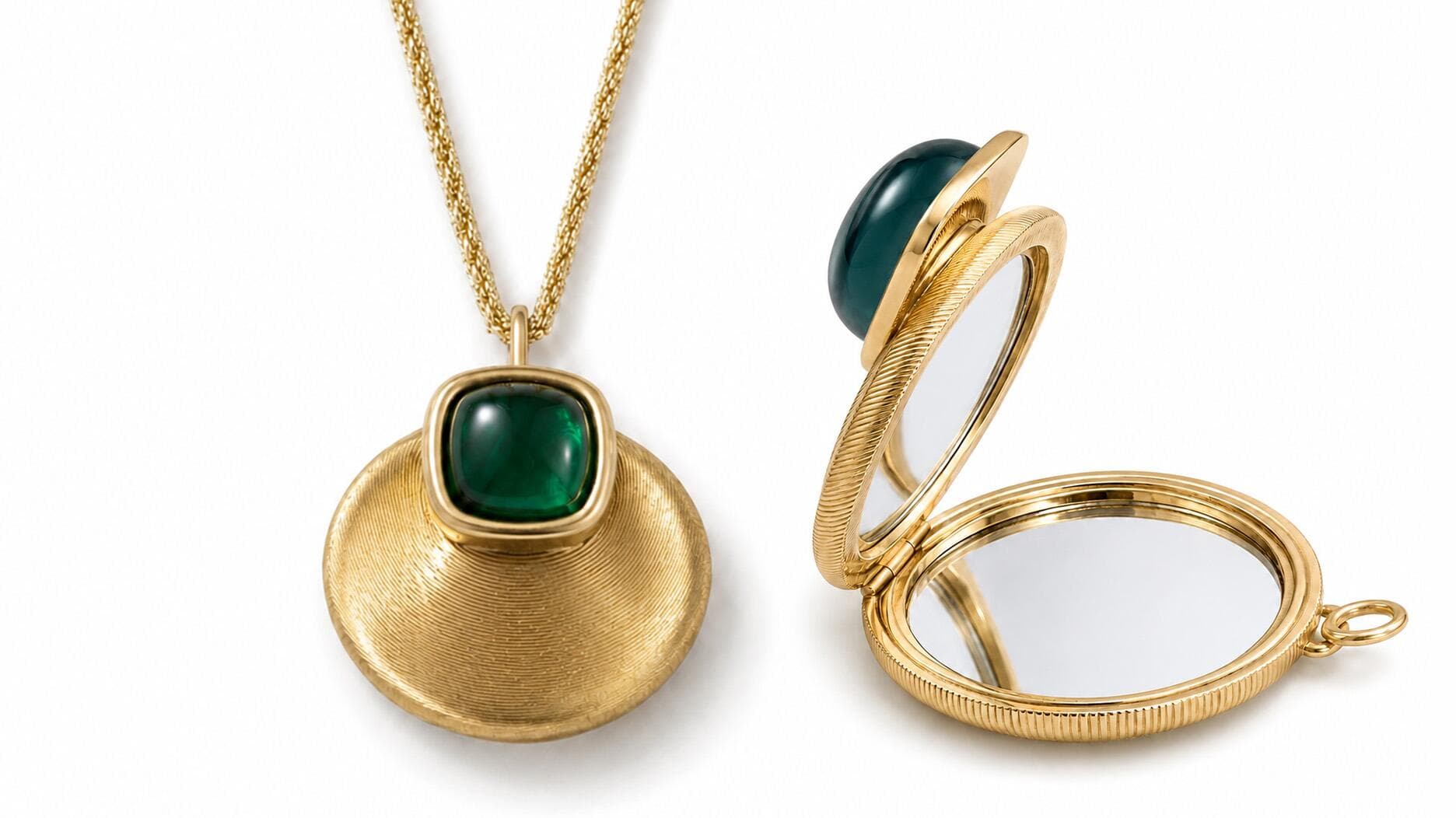
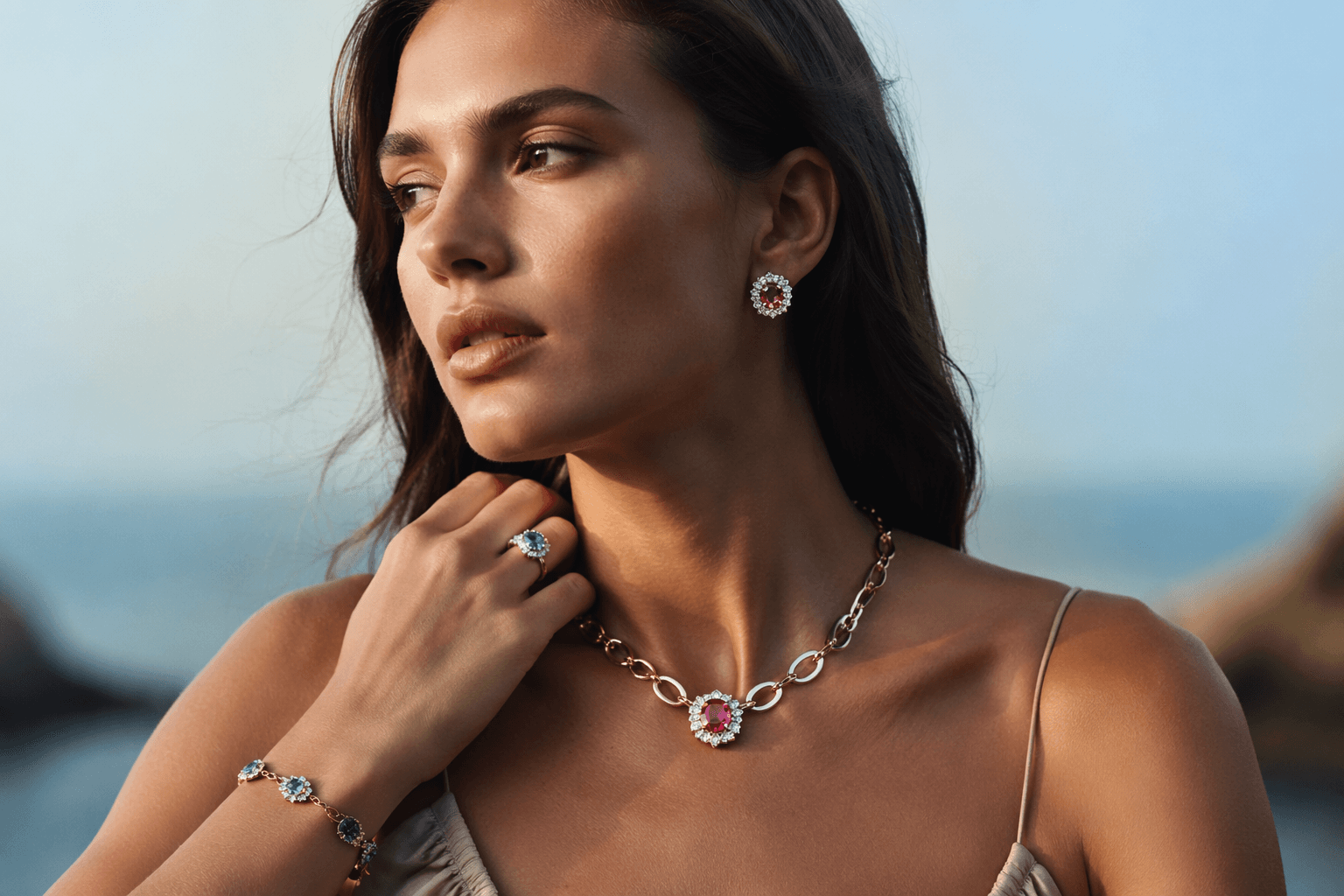
The strongest commercial momentum is concentrating in pieces that make personalization easy to understand at a glance. Colored gemstone designs remain the clearest winner because they let retailers lean into the emotional shorthand of birthstones while still serving shoppers who simply want color. Expandable bracelets are another smart format, because they solve fit problems, stack easily, and feel giftable without requiring exact sizing. Cross necklaces point to a related truth: symbolic jewelry still has broad appeal when it carries a personal twist.
The pieces most likely to perform are the ones that combine meaning with low-friction wearability.
- Everyday self-purchase pieces: small pendants, slim bracelets, and stackable rings that can be worn daily without feeling overly formal.
- Bridal and milestone gifts: personalized necklaces, bands, and bracelets where a birthstone sits alongside engravings or metal choices.
- Higher-value custom orders: designs that use multiple stones, especially when the shopper wants to represent children, partners, or a family cluster rather than a single birth month.
- Faith-forward or symbolic gifts: cross necklaces that can be made more personal through a birthstone accent, metal choice, or engraved detail.
That is where the price-tier opportunity emerges. Entry-level birthstone jewelry tends to win when it is simple, direct, and easy to gift. Mid-tier pieces have the broadest room to grow, especially when a single stone is set into a more considered design or paired with engraving. At the upper end, customization becomes part of the value proposition itself, particularly for bridal buys and family pieces where multiple stones justify a more substantial ticket.
Retailers are already building the playbook
Kay’s personalized jewelry offering is a useful snapshot of how the category is being sold. Birthstones sit alongside metals, engravings, and other customization choices, which is the right architecture for a category that depends on identity as much as aesthetics. That kind of merchandising makes birthstone jewelry feel less like a seasonal novelty and more like a configurable purchase, something that can be tailored for a birthday, an anniversary, or a wedding gift without leaving the category.
Blue Nile takes the idea further with a custom birthstone collection that includes garnet, amethyst, aquamarine, emerald, lab-grown alexandrite, ruby, peridot, sapphire, pink tourmaline, citrine, and blue topaz. Some of its designs allow one to five gemstones, and that detail is especially revealing. It shows that the modern birthstone buyer is not limited to one symbolic stone on a chain. The appetite is for family stories, layered meanings, and pieces that can be worn long after the original occasion has passed.
The inclusion of lab-grown alexandrite also reflects a broader shift in the gemstone market. Interest in ethically sourced stones and lab-grown gems is rising, and that makes perfect sense in a personalized category. When the point of the piece is color, memory, or symbolism, shoppers are increasingly open to options that deliver visual impact and a cleaner value story.
The real takeaway for birthstone jewelry
Birthstone jewelry is gaining its strongest commercial momentum where three forces overlap: familiar symbolism, customizable construction, and formats that can be worn every day. Colored gemstones supply the emotional language. Expandable bracelets and cross necklaces supply the easy-to-sell silhouette. Custom tools from retailers like Kay and Blue Nile supply the conversion engine.
The old birthstone story was about a single month. The new one is broader, more collectible, and easier to merchandise across birthdays, bridal moments, and self-purchase. In the next wave of jewelry buying, the winners will not be the pieces that merely name a stone. They will be the pieces that make that stone feel personal, current, and worth reaching for again.
This article was produced by Prism’s automated news system from verified source data, official records, and press releases, then run through automated quality and moderation checks before publishing. The system is built and supervised by the people who set the standards it runs under. Read our full AI policy.
Did this article answer your question?