Sotheby’s to auction rare Imperial Fabergé aquamarine necklace for $600,000
A 1911 Fabergé necklace of eleven Siberian aquamarines will lead Sotheby’s new Artistic Luxury sale, where imperial provenance may outshine March-birthstone sparkle.

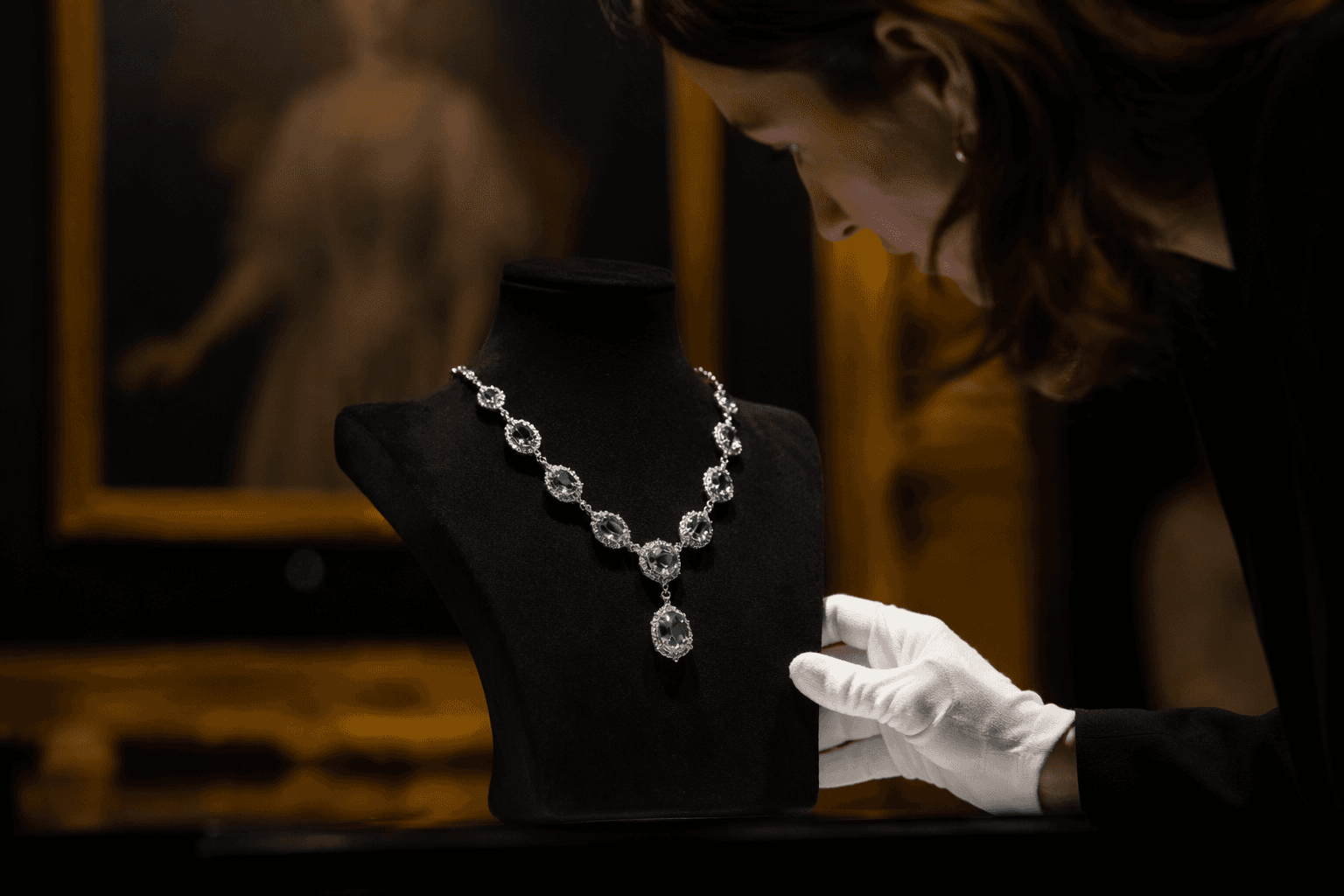
A Fabergé necklace built around eleven graduated Siberian aquamarines is headed to Sotheby’s with a $400,000 to $600,000 estimate, a price that says as much about imperial history as it does about the stone itself. For March-birthstone buyers used to seeing aquamarine in tidy retail settings, this is the opposite: a 15 1/4-inch jewel with St Petersburg provenance, rose-cut diamond framing and a documented link to the Russian court.
Catalogued as Lot 5, the necklace is identified by Sotheby’s as a rare and magnificent imperial Fabergé diamond and aquamarine necklace by workmaster Albert Holmström, made circa 1911. The design pairs the blue stones with alternating openwork laurel motifs centered by old-cut diamond brilliants, all set in platinized mounts with a gold clasp. It is the kind of object that turns aquamarine from a familiar birthstone into a serious collector’s category, where color, workmanship and provenance matter as much as carat weight.
Sotheby’s says the necklace was presented by the Imperial Cabinet in May 1911 to Empress Alexandra Feodorovna as a proposed diplomatic gift for the visit of German Crown Prince Wilhelm and Crown Princess Cecilie to St Petersburg. The recorded cost was 2,650 rubles, a reminder that even at court, these jewels were measured not only in sparkle but in political intent. The piece was not selected and was returned to the Imperial Cabinet, giving today’s sale a rare paper trail that collectors prize.
The necklace will anchor Sotheby’s inaugural Artistic Luxury sale in New York, a new format the house is positioning around Fabergé, Tiffany and Lalique, with a focus on materials such as gold, silver, enamel, hardstones and glass. The live auction is scheduled for June 17 at 11:00 a.m. EDT, following a sale period that runs from June 2 through June 17. Sotheby’s is also bringing other Imperial Russian jewels to the block, including three diamond-set floral ornaments worn on imperial gowns and pieces linked to Catherine the Great, deepening the sense that this is as much a decorative-arts event as a jewel sale.
That context matters because aquamarine pieces of this caliber are scarce. Most March-birthstone jewelry reaches the market as commercial pendants or rings, cut for everyday wear rather than court presentation. Here, the stone is elevated by size, provenance and survival. Sotheby’s has been leaning into that appetite for rare Russian works of art, pointing to the Castle Howard Fabergé and Vertu sale, which achieved a 100% sell-through rate and realized more than three times its pre-sale estimate. In a market crowded with attractive stones, documented imperial history still sells the strongest story.
This article was produced by Prism’s automated news system from verified source data, official records, and press releases, then run through automated quality and moderation checks before publishing. The system is built and supervised by the people who set the standards it runs under. Read our full AI policy.
Did this article answer your question?