What to ask before buying birthstone jewelry: treatments, value, disclosure
Birthstone jewelry is only as smart a buy as its disclosure. Natural, treated, lab-created, and simulated stones can look alike, but price, wear, and resale do not.
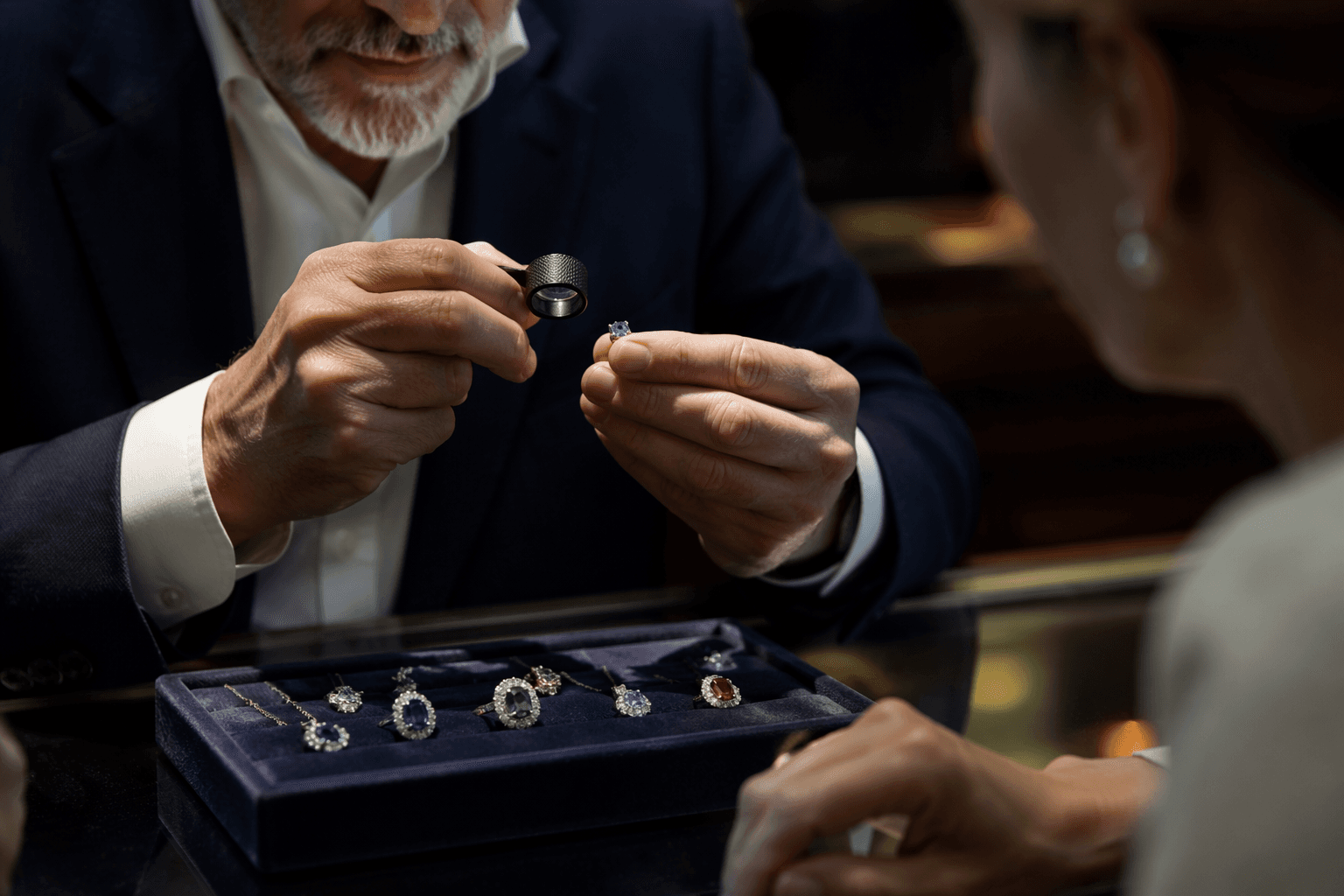
A ruby, sapphire, emerald, or spinel can all be sold as a birthstone, yet treatment, enhancement, and lab-created origin can move the piece into a completely different price tier. In birthstone jewelry, the real question is what the stone is, what has been done to it, and how that changes what you should pay.
Why disclosure comes first
You have the right to know whether a gem is natural, enhanced or treated, or lab-created. That is not a formality, because treatments can change a gem’s appearance, durability, and value, and non-disclosure can make a stone seem naturally higher quality than it really is. The Federal Trade Commission’s Jewelry Guides, revised in 2018 and effective August 16, 2018, help consumers get accurate information and help businesses avoid deceptive claims under Section 5 of the FTC Act.
That means the first question is not whether the stone matches a birth month. It is whether the seller is describing the gem honestly enough for you to compare it with every other version on the market. A birthstone necklace priced like a natural gem should not be hiding a treated, lab-created, or simulated material in plain sight.
Decode the language on the product page
Product pages often rely on words that sound reassuring but mean very different things. Ask for the gem’s species first, then ask whether it is natural, treated, lab-created, or simulated. “Heated” is a treatment, “filled” signals a different kind of alteration, “lab-created” means the stone was made in a laboratory, and “simulated” means it only imitates the look of the gem without being that gemstone at all.
A careful seller should also tell you whether a treatment is permanent, long-lasting, or short-lived. Treatments that are not permanent, that create special care requirements, or that significantly affect a stone’s value should be disclosed. Even a permanent treatment still belongs in the conversation if it changes value in a meaningful way.
Value lives in color, not carat weight alone
For colored gemstones, color is the most important quality factor. That means you should look at hue, tone, and saturation, not just the size of the stone or the number on the tag. Two gems with the same carat weight can live in different worlds if one has vivid color and the other reads pale or muddy.
Cut matters too, because it shapes how color reaches the eye. Opal is often formed as a smooth cabochon, which suits its play of color, while sapphire is usually faceted to bring out brilliance and depth.
Inclusions are not always defects
One of the easiest mistakes in birthstone shopping is to assume clarity always means quality. Some stones, such as tanzanite, may have relatively few inclusions, while emeralds often show characteristic jardin inclusions. In emerald, those garden-like internal features are part of the stone’s identity, not simply a flaw to be erased.
A gem may be beautiful, durable enough for regular wear, and still not be “clean” in the way a diamond shopper might expect. If a seller is pushing a birthstone as flawless without explaining what kind of gem it is, the price may be doing more storytelling than the stone.
The checklist to use before you buy
Carry these questions into any birthstone purchase, whether you are buying a pendant, a ring, or a pair of earrings:
- What is the gemstone species?
- Is it natural, treated, enhanced, lab-created, or simulated?
- What exact treatment was used?
- Is that treatment permanent, long-lasting, or short-lived?
- Does the treatment create special care requirements?
- Does the treatment significantly affect value?
- Is the disclosure written on the receipt, invoice, or product page?
A clear record of what the gem is, and what has been done to it, helps the next buyer price it honestly. A birthstone with clean paperwork is easier to compare, insure, and pass down than one that relies on vague language and implied rarity.
Know the birthstone tradition, then choose the version that fits the stone
The official U.S. birthstone list dates to 1912, when it was established by the American National Retail Jewelers Association, now Jewelers of America. The list was updated again in 1952, and it has continued to evolve. In 2016, Jewelers of America and the American Gem Trade Association added spinel as an official August birthstone, joining peridot; the Gemological Institute of America and the American Gem Society now list August as a three-stone month with peridot, spinel, and sardonyx.
This article was produced by Prism’s automated news system from verified source data, official records, and press releases, then run through automated quality and moderation checks before publishing. The system is built and supervised by the people who set the standards it runs under. Read our full AI policy.
Did this article answer your question?