Why emeralds still reign, through three royal jewels
Emeralds endure because the best jewels turn provenance into value, from a 93.70-carat Greville center stone to a Greek parure reset for a new royal life.
%2520by%2520Boucheron%2520for%2520Margaret%2520Greville%25202.jpg&w=1920&q=75)
Why emeralds still hold the room
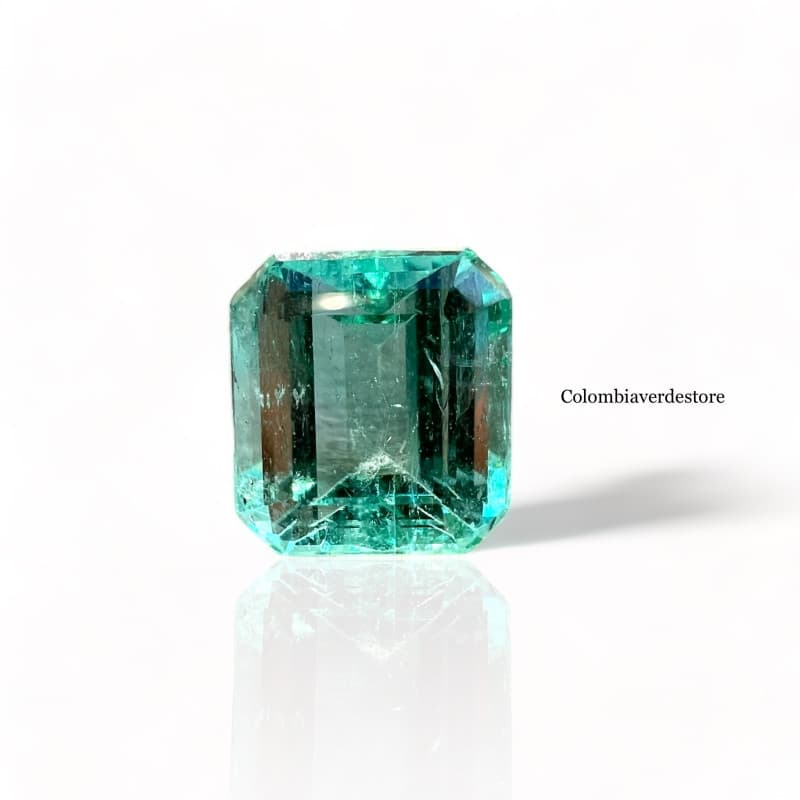
Emeralds are not subtle stones, and that is precisely their appeal. Their green has always read as power first and ornament second, which is why May’s birthstone has survived every shift in taste from antique court dress to modern red-carpet polish. The first known emerald mines were in Egypt, with history stretching back to at least 3500 BC, and Cleopatra’s passion for the gem helped fix its reputation as a stone of authority. Later, Colombian emeralds entered European awareness after sixteenth-century Spanish conquest and trade, giving the market a new standard for color, scale, and desirability.
That long arc matters because emerald jewelry is never just about hue. The most compelling examples combine geological rarity with visible social history, and the finest royal pieces make that relationship almost architectural. When the gem is set with discipline, framed by diamonds, and linked to named owners and public occasions, it becomes more than a birthstone. It becomes a collectible with memory.
The Churchill lesson, provenance as access
The Churchill Emeralds story is a reminder that provenance is not only a question of where a jewel came from, but who was trusted to wear it. Lady Churchill borrowing the Cartier Essex Tiara for Queen Elizabeth II’s 1953 coronation shows how elite jewels could move through a narrow social circle for occasions that mattered to the state as much as to the family. That kind of borrowing created a second life for a jewel, one that was public, photographed, and remembered.
For modern buyers, that is a useful lens. A piece with a documented chain of significance feels different from a pretty emerald with no context. The best collectible jewels gather value through visibility: a coronation, a wedding, a diplomatic reception, a moment when the stone is seen not as inventory but as ceremonial language. Provenance, in that sense, is social as well as historical.
The Greville Emerald Kokoshnik Tiara, scale made elegant
If one jewel explains why emeralds still command attention, it is the Greville Emerald Kokoshnik Tiara. Boucheron created it in 1919 for Dame Margaret Greville, and the piece is built with the kind of precision that lets scale feel graceful rather than heavy. It is set with rose-cut and brilliant diamonds in platinum, and its central emerald has been reported at 93.70 carats, an imposing figure that never overwhelms the tiara’s clean line.
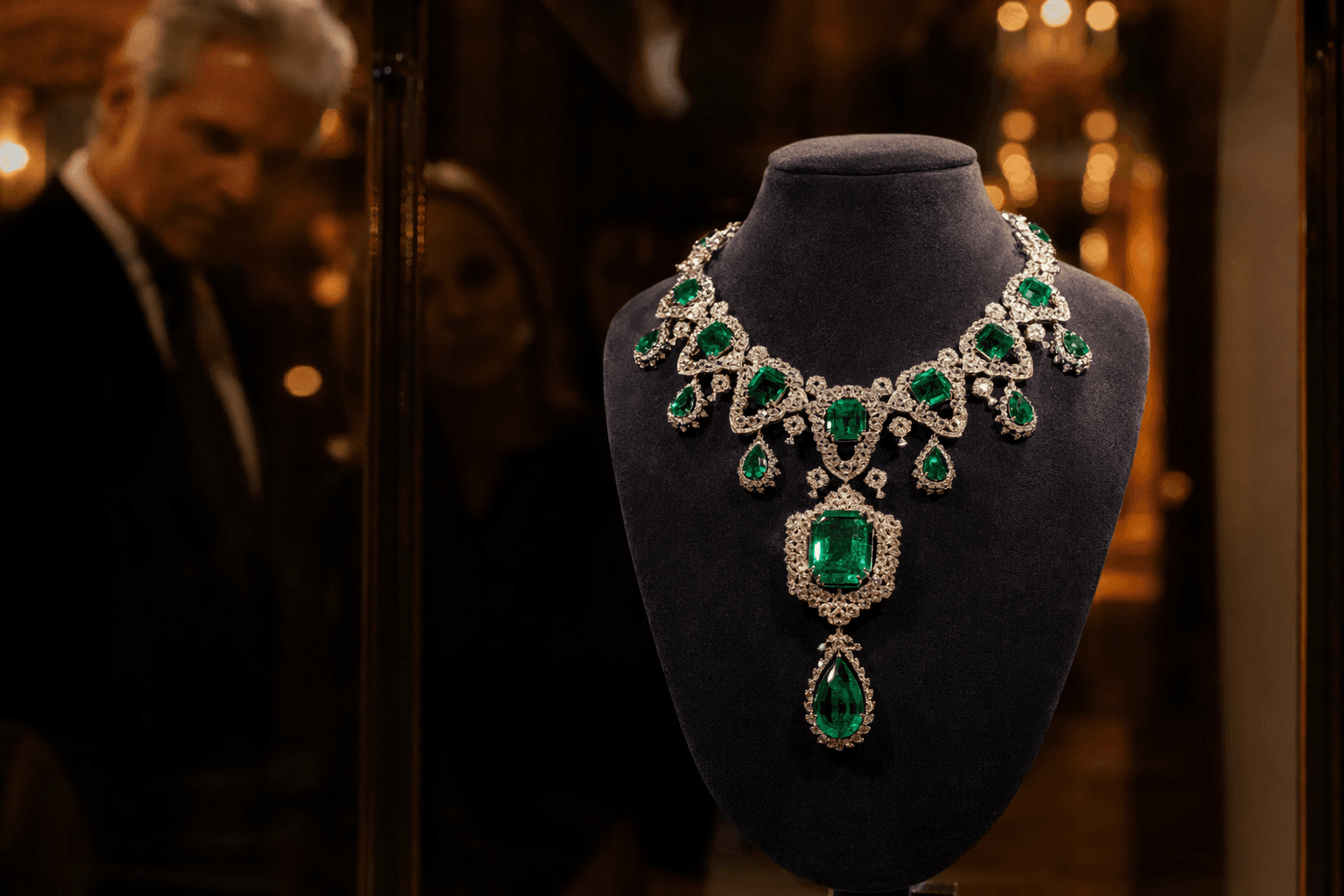
The kokoshnik silhouette gives the piece its drama. That high, rounded shape sits close to the head but rises with purpose, turning the emerald into a focal point rather than a loose accent. Six emeralds flank the central stone, reinforcing symmetry and balance, while the platinum mount keeps the whole design bright and crisp. It is a master class in how to make a large emerald feel authoritative instead of merely large.
The tiara’s modern appearances only deepen its cachet. Princess Eugenie wore it for her 2018 wedding, and Queen Camilla wore it again at a Diplomatic Corps reception in 2025. Those moments matter because they show continuity of use, not just preservation behind glass. A jewel that returns to circulation, especially in major public settings, keeps compounding its story.
The Greek Emerald Parure, reinvention with memory intact
The Greek Emerald Parure proves that a jewel can be reset without losing its soul. Its emeralds trace back to Queen Olga of Greece’s Romanov-era jewels from Russia, and Queen Elisabeth of Greece later had the stones reset into the current tiara design. The result is a kokoshnik-style diamond tiara built around prominent “E” motifs, a detail that gives the piece both signature and identity.
The suite is especially rich because it was designed to move beyond a single crown-like display. It includes matching earrings, a brooch, and detachable emerald drops, which gives it the kind of versatility collectors prize in serious jewels. Queen Anne-Marie of Greece has worn the parure on major occasions, including a 2012 event in Copenhagen, and that repeated public life has kept the suite in the conversation as the grandest of the Greek royal jewels.
For a collector, this is one of the most important signals of value: adaptability. A jewel that can live as a tiara, a brooch, or a pair of earrings has a broader ceremonial vocabulary than a one-use showpiece. When the stones are old, the reset is intelligent, and the design still reads unmistakably royal, the piece feels less like a relic and more like an inheritance that keeps evolving.
What to look for in emerald jewelry now
The royal examples point to a few clear cues that separate merely beautiful emerald jewelry from pieces with lasting importance:
- A named provenance, especially one tied to identifiable owners, commissions, or public occasions.
- Serious scale, but handled with proportion, as in the 93.70-carat Greville center stone set within a disciplined diamond framework.
- Platinum and diamond settings that sharpen the green rather than dull it.
- Signature design language, such as kokoshnik shapes, monogram motifs, cabochon clusters, or detachable elements.
- Evidence of continued wear, from weddings to state events, because a jewel gains authority when it remains alive in public.
The lesson across the Churchill, Greville, and Greek jewels is that emeralds reward both the eye and the intellect. Their green is immediate, but their value deepens when craftsmanship, scale, and history all speak at once. That is why emeralds still reign: the best ones do not merely sparkle, they carry a lineage that makes them feel inevitable.
Know something we missed? Have a correction or additional information?
Submit a Tip