Why rubies are July’s most valuable birthstone
Top rubies can outprice diamonds per carat. Their premium comes from chromium-rich color, rare origins, and unheated stones, not just the red look.

Ruby is the red variety of corundum, and corundum in its purest form is colorless. Trace amounts of chromium create the red that defines a ruby, and at the Smithsonian National Museum of Natural History, even a few atoms of chromium are enough to tint corundum deep red. That is why the rare July birthstone can sell for more per carat than many diamonds.
That chemistry separates ruby from sapphire at the molecular level. In the same corundum family, iron and titanium are responsible for sapphire’s blue, while chromium turns the stone red. Ruby is the most valuable variety of corundum and can command the highest per-carat price of any colored stone.
Why the best rubies cost so much
Ruby’s value is not just about color, but about how much color, how cleanly it shows, and how scarce the stone is at the top end. The ideal ruby has a vivid, saturated red that reads as alive rather than dark or brownish, and the market rewards that intensity with sharp price jumps. In fine jewelry, that premium is tied to the stone’s rarity as much as its beauty.
The historical language around ruby tells the same story. In ancient India, ruby was called the “king of precious stones,” and its Sanskrit name, ratnaraj, means “king of gems.” That reputation still shapes buying behavior today, especially for clients who want a stone that carries both glamour and weight. Ruby is also the gemstone for the 15th and 40th anniversaries.
What 'pigeon blood' really means
The phrase most often used for the finest rubies is “pigeon blood,” and it is not casual marketing fluff. Pigeon blood rubies represent fewer than 1 percent of all rubies, by Sotheby’s estimate. Sotheby’s dates the phrase to 1829, when it was first used to describe the finest rubies from the Mogok mines in Myanmar.
Mogok has become shorthand for the ruby that serious collectors chase. A pigeon blood Burmese ruby can sell for more than a similar diamond depending on size and quality, and top unheated rubies over five carats are especially scarce. In practice, that means the stone’s price is driven by a narrow set of conditions: vivid color, natural treatment status, size, and traceable origin.
Auction results show the high end
Auction history makes the pricing gap easier to understand. Christie’s sold a 32.08-carat Burmese ruby and diamond ring for more than $6.7 million in 2011, setting a then-world record for any ruby sold at auction. In 2016, the Jubilee Ruby sold for $14,165,000.
Christie’s estimated a 13.22-carat Burmese ruby at US$6.4 million to US$10 million and positioned it as its most valuable and largest Burmese ruby sold in Hong Kong in a decade.
How to separate investment-grade ruby from the ruby look
For July shoppers, the key question is whether you are buying rarity or just the ruby look. Investment-grade rubies tend to sit at the intersection of vivid color, strong size, unheated status, and prized origin, especially when the stone can be tied to Mogok or other Burmese material. Those are the characteristics that push a ruby into auction-level territory.
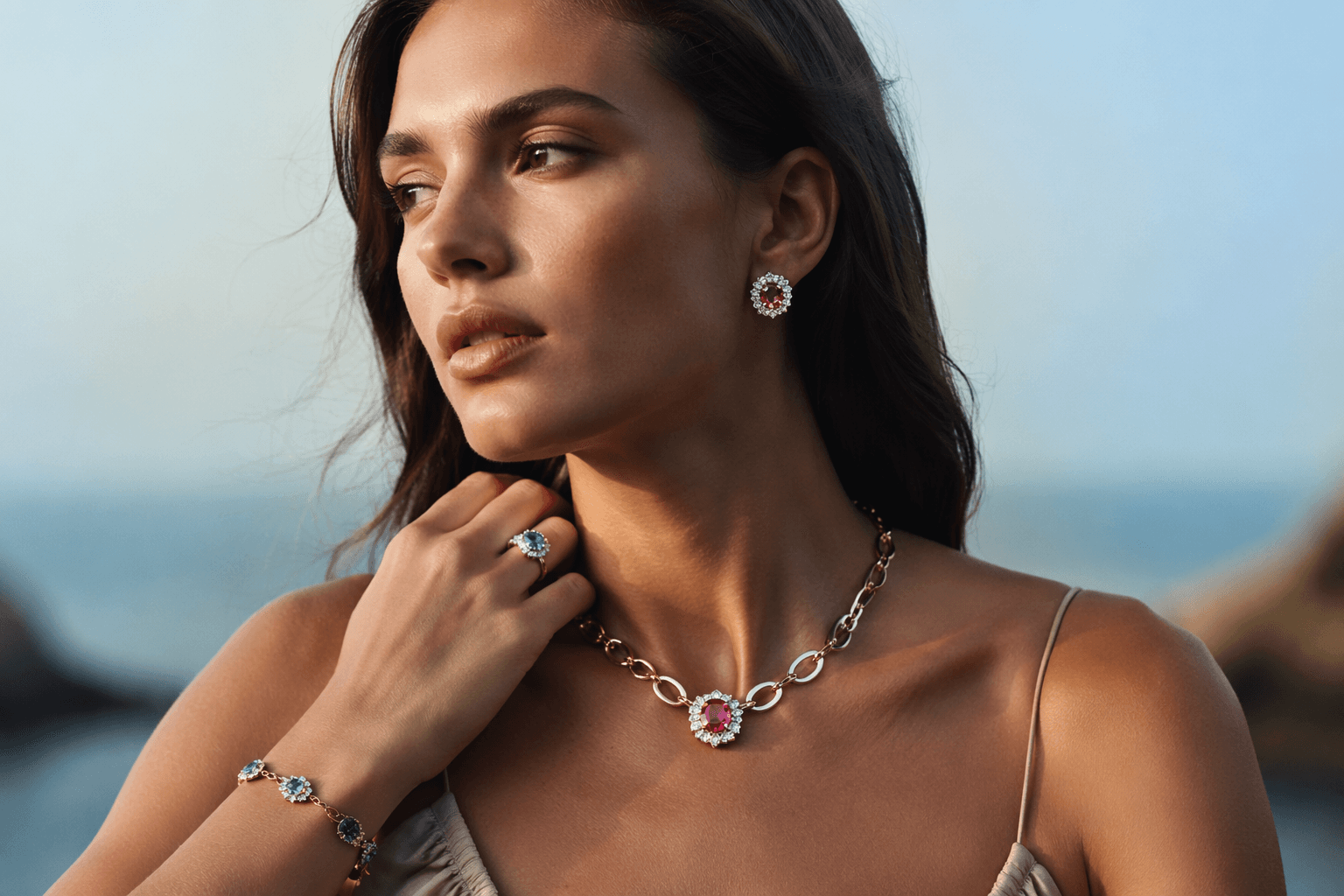
Accessible birthstone jewelry is a different purchase. A smaller ruby, or a ruby in a more everyday setting, can deliver the symbolic July color without claiming the scarcity of a pigeon blood Burmese stone. If the piece is meant to be worn daily, the craftsmanship of the setting matters almost as much as the gem itself: a secure bezel, a clean prong layout, or a sturdy halo can make a modest stone feel polished and intentional.
If a seller uses words like “fine,” “rare,” or “investment,” the stone should come with specific answers about color, treatment, size, and origin. Vague language is not a substitute for a provenance story.
What to look for when you buy
The most honest ruby purchases are the ones that tell you exactly why the stone costs what it does. A deep, saturated red, documented origin, and an unheated stone are the classic markers of the upper market. If the ring or pendant is priced like a collector’s piece, the ruby should look and behave like one, not just read as red from across the room.
- Ask whether the stone is unheated.
- Ask where it comes from, especially if it is described as Burmese.
- Ask how the color is described, and whether the red is vivid enough to stand apart from darker, browner material.
- Ask for the weight in carats, because size changes ruby pricing quickly at the top end.
This article was produced by Prism’s automated news system from verified source data, official records, and press releases, then run through automated quality and moderation checks before publishing. The system is built and supervised by the people who set the standards it runs under. Read our full AI policy.
Did this article answer your question?