Alrosa Reports 6 to 9 Percent Rough Diamond Price Gains in Early 2026
Alrosa's rough diamond prices rose 6 to 9 percent in early 2026, with 2-to-10-carat stones leading gains as global supply nears a two-decade low.
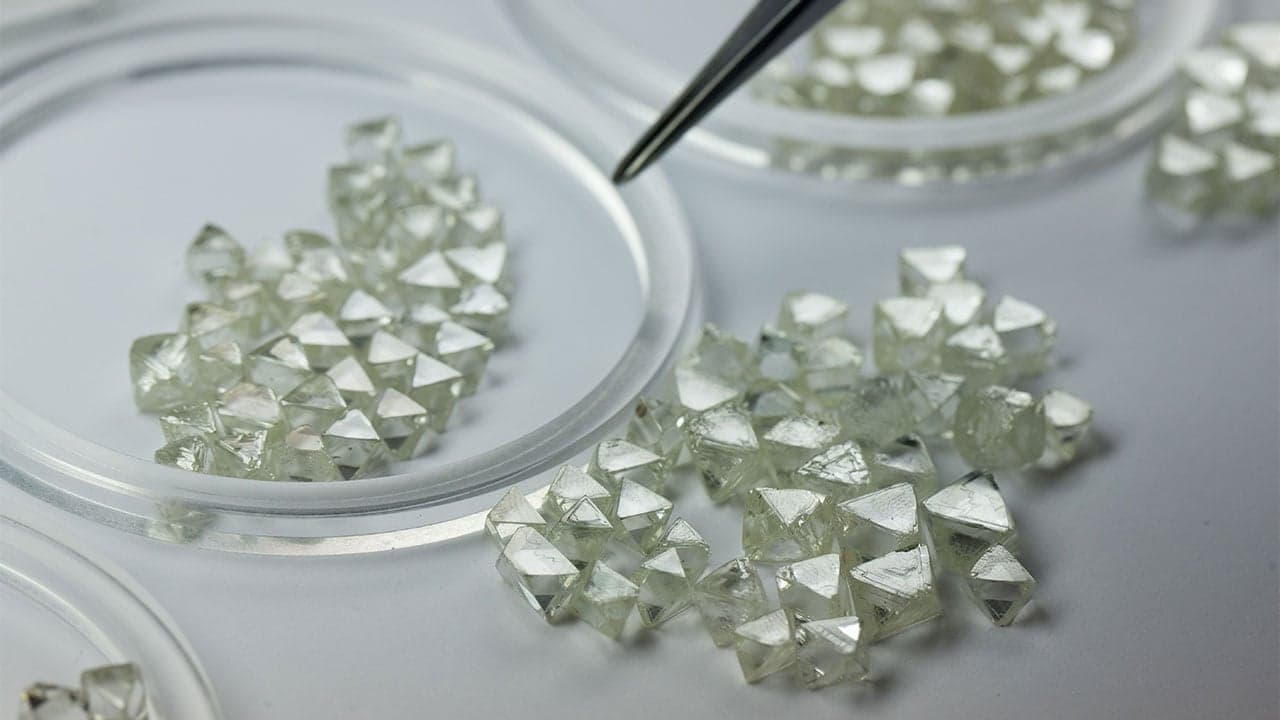
Global diamond production is on track to fall below 100 million carats in 2026, a threshold the industry has not crossed in two decades, and the rough market is already pricing in that reality. Alrosa reported this month that its rough diamond prices rose between 6 and 9 percent since January, with the most pronounced gains concentrated in the 2-to-10-carat range, a segment that comprises approximately 80 percent of the Russian miner's production by value.
The momentum built steadily through the quarter. Alrosa first registered growth in January, then saw more significant improvements in February and March. Prices for the 2-to-10-carat categories increased across all three of the company's trading sessions this year, and Alrosa raised selling prices to varying degrees on almost half of its regular diamond assortment in the first quarter.
CEO Pavel Marinychev pointed to scarcity as the engine driving larger-stone pricing. "Demand and prices for large rough diamonds and diamonds weighing over 3 carats stabilized last year," he said. "In recent months, amid declining global production, the shortage of rare and large stones...has become increasingly noticeable."
That shortage has a structural basis. Industry output is projected to fall below 100 million carats this year as existing deposits are depleted and production at less profitable operations is curtailed. Restocking has begun to emerge among manufacturers, adding demand-side pressure to a supply constraint that shows no near-term sign of reversing.

Yet the recovery is anything but uniform. Analysts and industry commentary consistently describe the market as bifurcated: large and investment-grade stones are firming, while smaller goods remain under pressure. The Pressing Matters Executive Memo, published March 23, framed the asymmetry as a market "divided, not down," and noted a structural bind facing major producers: large-scale miners cannot select what they recover, meaning the market will keep absorbing a share of less desirable goods for which the industry must either rebuild demand or find alternative uses.
That divide extends into the lab-grown segment. Symancyk, cited in the same memo, noted that natural diamonds have historically had lower penetration in fashion jewelry, where center stones are less prominent, leaving room for lab-grown stones to expand the category. Pricing for both natural and lab-grown diamonds showed signs of stabilizing toward the end of 2025, with slight increases at wholesale.
What the first-quarter figures confirm is a market where recovery is real but restricted: the 2-to-10-carat stone is outperforming precisely because supply is tightening where demand from collectors and cutting houses remains most committed.
This article was produced by Prism’s automated news system from verified source data, official records, and press releases, then run through automated quality and moderation checks before publishing. The system is built and supervised by the people who set the standards it runs under. Read our full AI policy.
Did this article answer your question?