Alternative engagement rings gain lasting traction as diamond trends shift
East-west, toi et moi, and asymmetrical rings are no longer novelty buys; diamond still leads, but shoppers now want shape, scale, and a point of view.
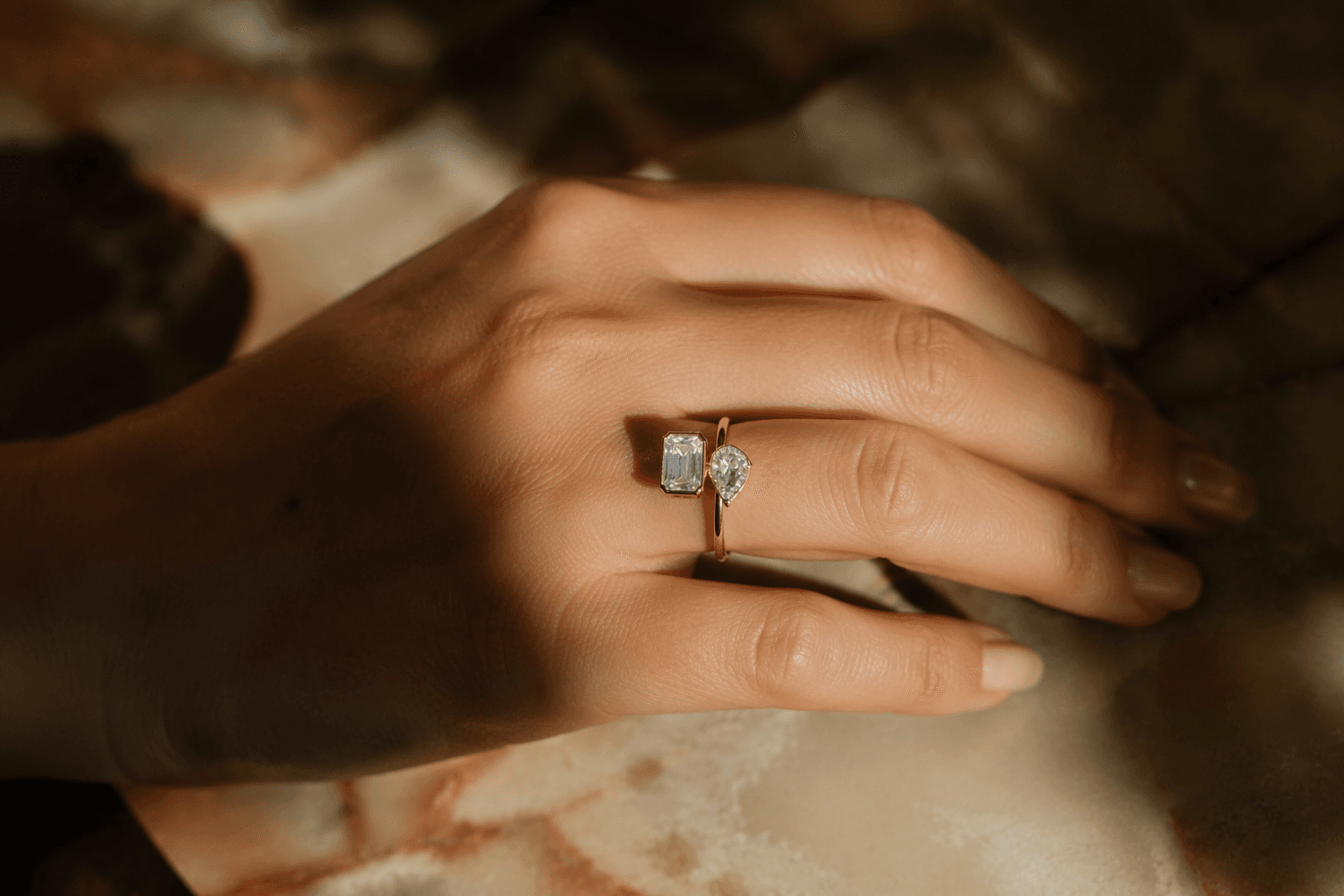
The modern engagement ring has learned to speak in a new accent. East-west settings, toi et moi designs, asymmetry, colored stones, and mixed metals are no longer the kind of choices reserved for the unusually bold; they are becoming commercial workhorses for bridal counters where individuality now sells as strongly as tradition. What keeps them durable is not rebellion for its own sake, but the fact that diamond still sits at the center of the story, even when the silhouette changes.
What is sticking, and why it is sticking
JCK’s reporting makes clear that the most successful nontraditional rings are not abandoning diamond so much as re-framing it. An east-west mounting turns a familiar stone sideways, instantly changing the visual read without stripping away bridal recognizability. A toi et moi ring, with two stones instead of one, delivers symbolism and symmetry at once, while asymmetrical layouts create the sense of a custom jewel rather than a catalog piece. These formats feel fresh, but they remain legible as engagement rings, which is why retailers are seeing them as lasting demand rather than a passing fashion cycle.
The key commercial advantage is that these designs give shoppers a feeling of distinction without forcing them too far from the category’s core expectations. A diamond can still be the anchor, whether it is a single elongated center stone, a pair of stones in a toi et moi composition, or a main stone offset by a second shape. That balance matters in bridal, where emotional symbolism and resale-minded pragmatism often sit in the same shopping conversation.
Why the toi et moi story still sells
Few alternative formats carry the same narrative weight as toi et moi. The phrase is French for “you and me,” and the style is widely traced to Napoleon Bonaparte’s 1796 proposal to Joséphine de Beauharnais, a history that gives the design a built-in romance few modern trends can match. That lineage helps explain why it has moved beyond a celebrity moment and into mainstream bridal rotation: it reads as intimate, symbolic, and steeped in jewelry history rather than merely engineered for social media.
For jewelers, that matters because the design gives space for personal meaning without sacrificing gem quality. Two stones can be matched for color and shape, or deliberately contrasted to create tension. Either way, the ring communicates intention, and intention is what makes a custom-looking piece feel worth a higher spend.
The new bridal shopper wants shape, length, and presence
The most interesting shift is not just that alternative formats are selling, but that they are selling alongside a larger appetite for elongated and fashion-forward diamonds. The Natural Diamond Council’s 2025 trend report, based on Tenoris data from more than four million jewelry transactions across 2,500 U.S. specialty jewelers, found that round brilliants still led engagement-ring sales at 62%. But marquise shapes rose 12% year on year, a telling sign that shoppers are responding to silhouette as much as carat weight.
That same report found engagement-ring purchases in the 2.00 to 2.24 carat range grew 9% in 2025, after an 18% gain the year before. Taken together, those numbers explain why east-west settings and other nontraditional mountings have traction: they can make a diamond feel larger, longer, or more architectural without requiring the shopper to move into a classic solitaire. The ring looks individual, but it still satisfies the instinct for presence.
Diamond is still the anchor, even when the market broadens
The broader market context is just as important as the design story. Natural diamond jewelry sales at specialty jewelers rose 2.1% in 2025, while the average price of natural diamond jewelry increased 10%. Holiday jewelry sales at specialty jewelers ended the year up more than 6%, evidence that demand held up even amid tariffs, inflation, and higher gold prices. Those are not the numbers of a category in retreat.
At the same time, the bridge to lab-grown has changed the way bridal cases are merchandised. Tenoris reported that total U.S. jewelry market sales rose only 1.4% in 2024 while unit sales fell 1.4%, with declining natural-diamond revenue weighing on performance. Lab-grown diamond jewelry, by contrast, saw unit sales jump 43% and sales rise 31% in 2024. BriteCo’s 2025 analysis sharpened the picture further, finding that more than 45% of U.S. consumer engagement-ring purchases were for lab-grown diamonds. In practical terms, that means shoppers are now walking in expecting choice, and retailers are responding by showing natural and lab-grown options side by side.
What makes these rings commercially sticky
The alternative engagement rings gaining real traction share a few traits that make them easier to sell over time:
- They keep the diamond visible, even when the mounting is unconventional.
- They read as personal, which gives a salesperson a clear story beyond carat size.
- They can make a center stone appear more dramatic without depending on a traditional solitaire.
- They work in both natural and lab-grown inventory, which protects the store’s merchandising flexibility.
- They pair naturally with yellow gold, antique cuts, and mixed-stone combinations, all of which deepen the sense of individuality.
That versatility is why these looks have escaped the novelty trap. They are expressive enough to feel special and structured enough to feel bridal.
The lasting appeal is balance, not radical reinvention
The strongest alternative engagement rings do not reject the language of diamond jewelry. They refine it. An east-west ring changes the line of sight; a toi et moi ring turns romance into geometry; an asymmetrical design makes the hand look like it is wearing something discovered rather than chosen from a tray. Yet in every case, diamond remains the material that gives the ring authority, whether the stone is natural or lab-grown.
That is the durable truth behind the trend. Brides are not simply abandoning tradition. They are updating it, and the formats that will last are the ones that let diamond stay central while giving it a fresher frame.
This article was produced by Prism’s automated news system from verified source data, official records, and press releases, then run through automated quality and moderation checks before publishing. The system is built and supervised by the people who set the standards it runs under. Read our full AI policy.
Did this article answer your question?