Antique-inspired engagement rings return in bigger, bolder diamond styles
Vintage-inspired rings are growing up: lab-grown diamonds are making old-mine romance and cushion-cut drama feel bigger, bolder, and newly attainable.
The new vintage is built on scale
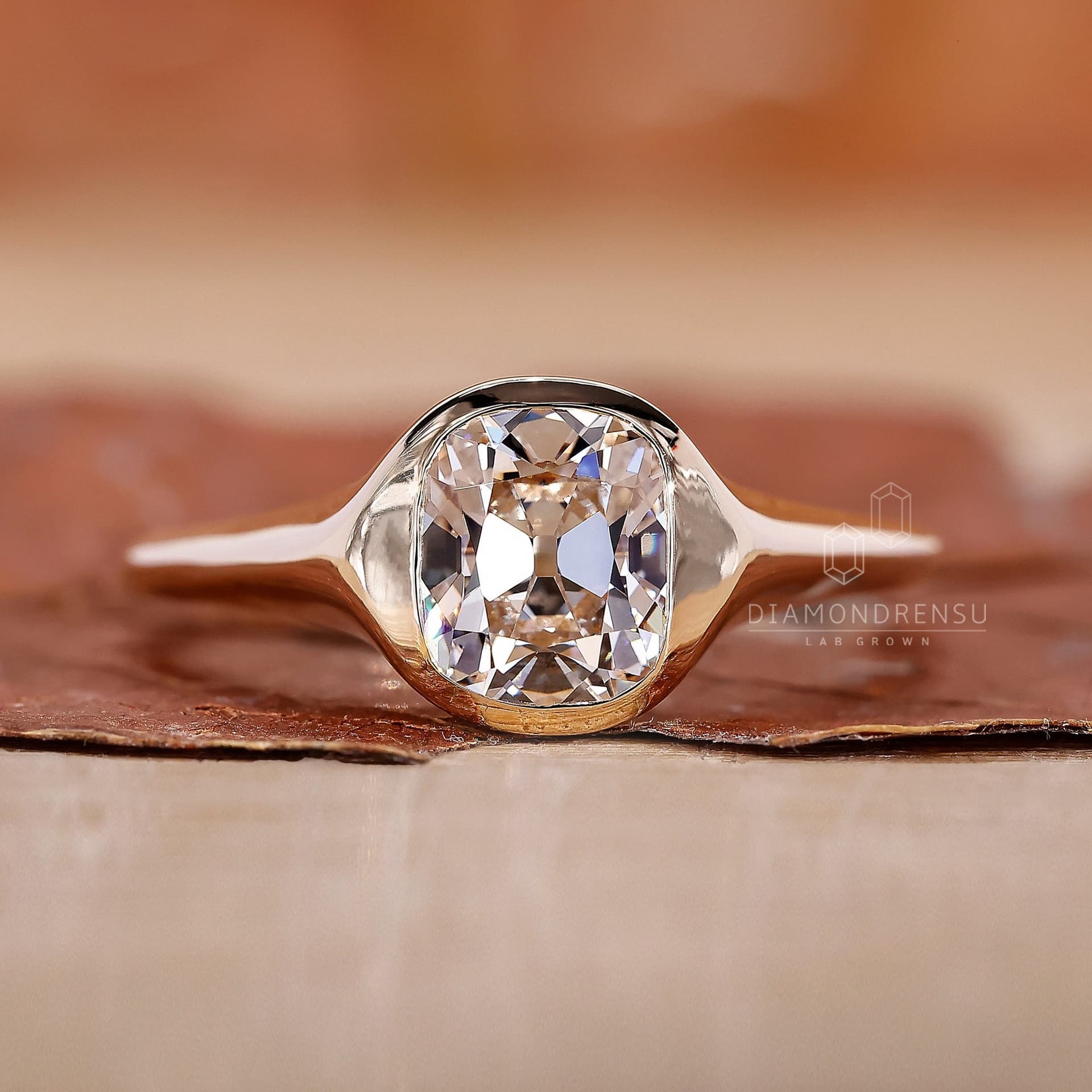
Antique-inspired engagement rings are back, but the mood has changed. The delicate, heirloom-like look that once defined “vintage” has given way to stronger silhouettes, larger center stones, and settings with more visual weight, the kind that read as fashion as much as romance. WWD captures the shift neatly: today’s antique-inspired rings are “only bigger and bolder,” and they are being styled less like inherited keepsakes and more like personal statements.
That matters because engagement-ring taste is not simply circling backward. It is being reset. The visual language of the category is moving toward pieces with presence, where an old-world cut can sit inside a clean, contemporary frame and still feel current. Instead of whispering vintage, these rings speak in a louder register.
Why old mine cuts feel newly relevant
At the center of this revival is the old mine cut, a historic diamond style from the pre-modern cutting era. The Gemological Institute of America describes these stones as measured by eye and shaped entirely by hand, created to sparkle in candlelight. That origin story still shapes their appeal: the cut has softer geometry, a warmer personality, and an irregular charm that feels unmistakably human.
Natural Diamonds says the old mine cut is experiencing a substantial resurgence, and the reason is easy to understand. In a market crowded with technically perfect shapes, the old mine cut offers something more idiosyncratic: uniqueness, romance, and a direct connection to earlier jewelry traditions. It does not try to look machine-made or ultra-minimal. It looks lived-in, which is exactly why it feels fresh again.
The same logic is driving renewed interest in elongated cushion shapes, which carry the softness of antique design but read with more length and finger coverage. Together, these cuts give modern engagement rings a slightly cinematic quality, especially when paired with more assertive proportions.
Lab-grown diamonds changed the size conversation
The biggest force behind this shift is affordability. Lab-grown diamonds have made larger center stones far more accessible, and that has changed what shoppers expect an engagement ring to look like. The Knot Worldwide’s 2026 Real Weddings Study, which drew responses from 10,474 U.S. couples married in 2025, found that lab-grown center stones accounted for 61% of all engagement ring purchases. That figure represents a 239% increase since 2020, a dramatic marker of how quickly the market has moved.
BriteCo’s 2025 analysis points in the same direction, finding that more than 45% of U.S. consumer engagement ring purchases were for lab-grown diamonds. Another industry report tied to BriteCo noted that the average lab-grown engagement center stone grew from 1.31 carats in 2019 to 2.45 carats in 2025. Those numbers explain the current mood better than any trend forecast could: when buyers can spend less on the center stone itself, they often redirect the savings into size, presence, and stronger design.
That is why old mine cuts and elongated cushions are suddenly appearing at larger carat weights. The cuts themselves are not new, but the scale is. Lab-grown diamonds have made it practical to choose a stone with more visual impact, then frame it in a way that still feels antique-inspired rather than traditionally classic.

The setting has to carry the story
Once the center stone gets bigger, the setting has to do more work. WWD notes that designers are leaning into chunkier settings and modern updates to keep vintage styling feeling current, and that detail is crucial. A slim band that once looked graceful beneath a petite stone can feel underpowered next to a larger old mine cut or cushion.
This is where proportion becomes the real design language. A thicker shank, a more architectural head, or a bezel that wraps the stone in a clean metal outline can make the ring feel intentional rather than overloaded. Prong settings keep more of the diamond visible and can preserve a lighter, more lifted profile; bezels create a more graphic silhouette and often make antique shapes feel especially contemporary. Either way, the setting is no longer a supporting role. It is part of the ring’s identity.
The strongest examples of the trend do not imitate the past too literally. They borrow antique cues such as rounded corners, soft faceting, and romantic symmetry, then sharpen them with bolder metalwork or more sculptural proportions. The result is jewelry that feels rooted in history without looking costume-like.
Celebrity taste and the appetite for personal stories
Celebrity coverage and retailer trend reports from 2025 also helped push vintage cuts back into the conversation, especially old mine and cushion shapes. That attention has reinforced a larger cultural shift toward jewelry with narrative value. Buyers want rings that feel chosen, not just selected from a familiar template.
That appetite for story is one reason antique-inspired design has such staying power. An old mine cut does not merely signal taste; it signals a point of view. It suggests an interest in texture, provenance, and the idea that a ring can look distinctive without relying on novelty for its own sake. In a bridal market increasingly shaped by personalization, that distinction is powerful.
What the new visual language means for modern engagement rings
The most interesting part of this trend is not simply that rings are getting bigger. It is that “vintage-inspired” now means something much less delicate and much more editorial. It means broader proportions, stronger outlines, and cuts that recall the past while still feeling styled for the present. It also means the center stone is no longer the only story; the way it is mounted, balanced, and framed matters just as much.
Lab-grown diamonds have made that possible. They have opened the door to larger carat weights, which in turn has pushed designers toward more decisive silhouettes. Antique-inspired rings are no longer trying to whisper their heritage. They are wearing it with confidence, in a scale that feels unmistakably modern.
This article was produced by Prism’s automated news system from verified source data, official records, and press releases, then run through automated quality and moderation checks before publishing. The system is built and supervised by the people who set the standards it runs under. Read our full AI policy.
Did this article answer your question?