Antwerp Diamond Hub Scans Jewelry Free to Spot Lab-Grown Stones
Antwerp offered free diamond scans at a train station, revealing a price gap as stark as $8,900 versus $100 for visually identical stones.
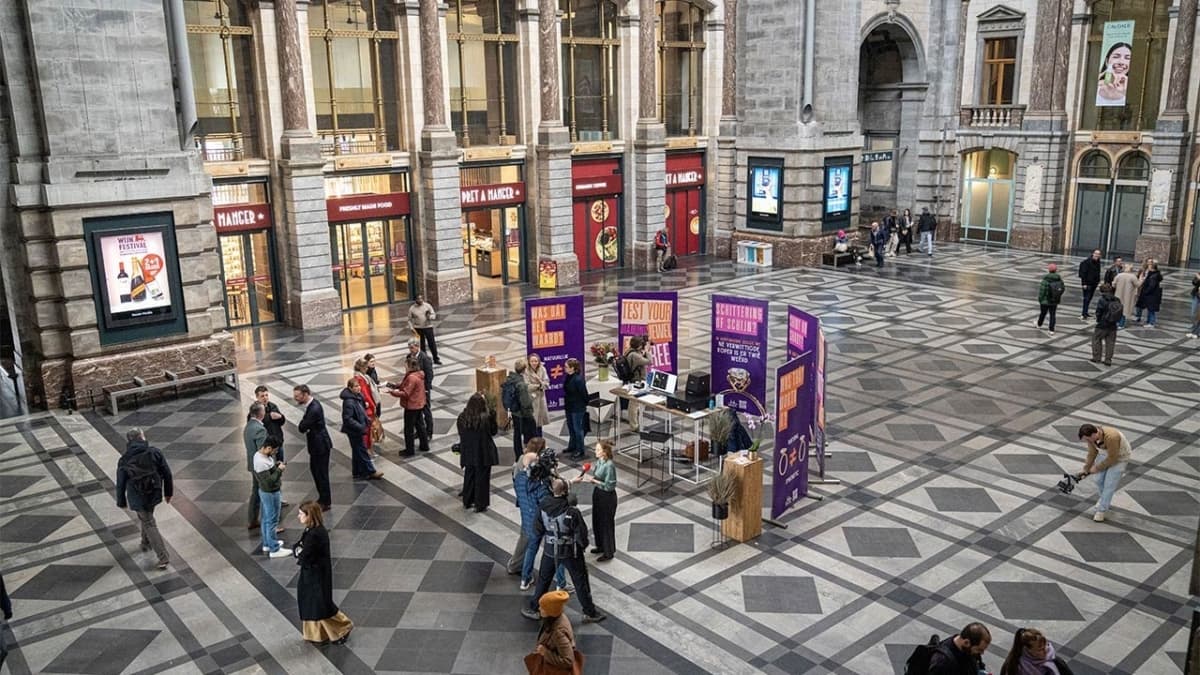
At Antwerpen-Centraal railway station on March 10, the Antwerp World Diamond Centre set up something rarely seen outside a gemologist's laboratory: a free, walk-up scanning station where any passerby could hand over their diamond jewelry and learn, within moments, whether the stones were natural or synthetic. The demonstration was equal parts public service and provocation, staged to make vivid a truth the industry has long struggled to communicate at retail level.
"Natural and synthetic diamonds look identical to the naked eye," said AWDC CEO Karen Rentmeesters. The price gap, however, is anything but invisible. Rentmeesters offered a figure that crystallizes the consumer risk: a natural diamond valued at $8,900 has a synthetic counterpart worth roughly $100. "Anyone who does not know the difference therefore risks buying a jewel with synthetic diamonds while paying the price of a natural-diamond jewel," she said.
Belgium is not without legal infrastructure on this question. A royal decree adopted in 2023 already requires jewelers to issue documentation specifying a diamond's characteristics, including whether it is natural or lab-grown. The problem, Rentmeesters acknowledged, is that retailers do not always comply. That gap between law and practice is precisely what the AWDC is pressing to close, and the railway station demonstration was designed to give consumers a direct experience of what certification should deliver.
Belgian Minister of Employment and Economy David Clarinval is pushing for significantly stronger measures. He wants to require online and in-store sellers, as well as advertisers, to explicitly mark lab-grown diamonds as synthetic, and he is examining whether the unmodified term "diamond" can be legally reserved for natural stones. "Anyone buying a diamond must know exactly what they are purchasing," Clarinval said. "Today, however, there is still too much confusion in the diamond sector. This is a matter of transparency for consumers and fairness towards our diamond sector." If enacted, the restriction on terminology would place Belgium alongside the U.S. Federal Trade Commission, which drew the same boundary in 2018, and France and India, which took similar regulatory steps in 2024. Because the existing Belgian information obligation covers only physical retail sales, the AWDC is also calling for the legislation to extend to online shops and advertising, what Rentmeesters described as "two important additional steps to better protect consumers from deception."

Alongside the consumer event, a related institutional decision arrived from HRD Antwerp, the AWDC's diamond grading subsidiary, which has operated as a certification laboratory since 1973. HRD announced it will stop providing quality grading reports for loose synthetic diamonds intended for commercial purposes starting this year. "This is a deliberate and strategic decision," said HRD CEO Ellen Joncheere. "From 2026 onwards, we will no longer provide quality grading reports for loose synthetic diamonds intended for commercial purposes. Exceptions may be made in rare cases for research, but the focus of our work will firmly return to the natural diamond segment. However, jewellery pieces containing synthetic stones will still be eligible for certification." The carve-out for mounted jewelry is a meaningful technical distinction: a ring set with a lab-grown stone can still receive a certificate, but that stone, if submitted loose for commercial grading, no longer falls within HRD's scope.
The AWDC framed the decision in historic terms. Rentmeesters called HRD "the first major international lab to formally exit the commercial certification of synthetic diamonds," adding that "consumers deserve transparency, and this decision strengthens the natural diamond value chain at a critical time for the industry." The announcement lands as the broader trade navigates genuine pressure from lab-grown diamond producers, whose stones have gained commercial momentum through lower price points and marketing positioned around perceived sustainability. Many in the natural diamond sector argue that the absence of clear, enforced differentiation at point of sale erodes consumer confidence in the natural market's value proposition.
The stakes embedded in Antwerpen-Centraal's concourse on March 10 were considerable. A free scan can reveal what a sales receipt often does not.
This article was produced by Prism’s automated news system from verified source data, official records, and press releases, then run through automated quality and moderation checks before publishing. The system is built and supervised by the people who set the standards it runs under. Read our full AI policy.
Did this article answer your question?