Antwerp polished diamond prices rise 12% as trade rebounds 19%
Polished diamonds in Antwerp rose 12% even as rough fell 27%, a split that suggests demand is repairing unevenly, not roaring back all at once.

Polished diamonds passing through Antwerp rose 12% in the first quarter even as rough prices fell 27% to $72 a carat from $99 a year earlier. That gap matters: it suggests the market is not seeing a simple rebound in raw materials, but a more selective recovery led by downstream buying, inventory correction, and better appetite for finished stones.
The Antwerp World Diamond Centre said total diamond trade volume in the city climbed 19% year over year, with polished imports up 14% and polished exports up 1.3%. Rough movements were stronger on volume, with rough imports rising 36% and rough exports up 4.4%, but the price picture remained sharply divided. For retailers and engagement-ring buyers, that split points to a market where polished goods are finding traction faster than rough supply is being repriced.

AWDC said it first noticed a turnaround in demand in the summer of 2025. The decline slowed noticeably in the second half of that year, growth returned for the first time in December, and the momentum strengthened in the first quarter of 2026. That sequence matters because it looks less like a one-month bounce and more like a gradual normalization after a severe slump.
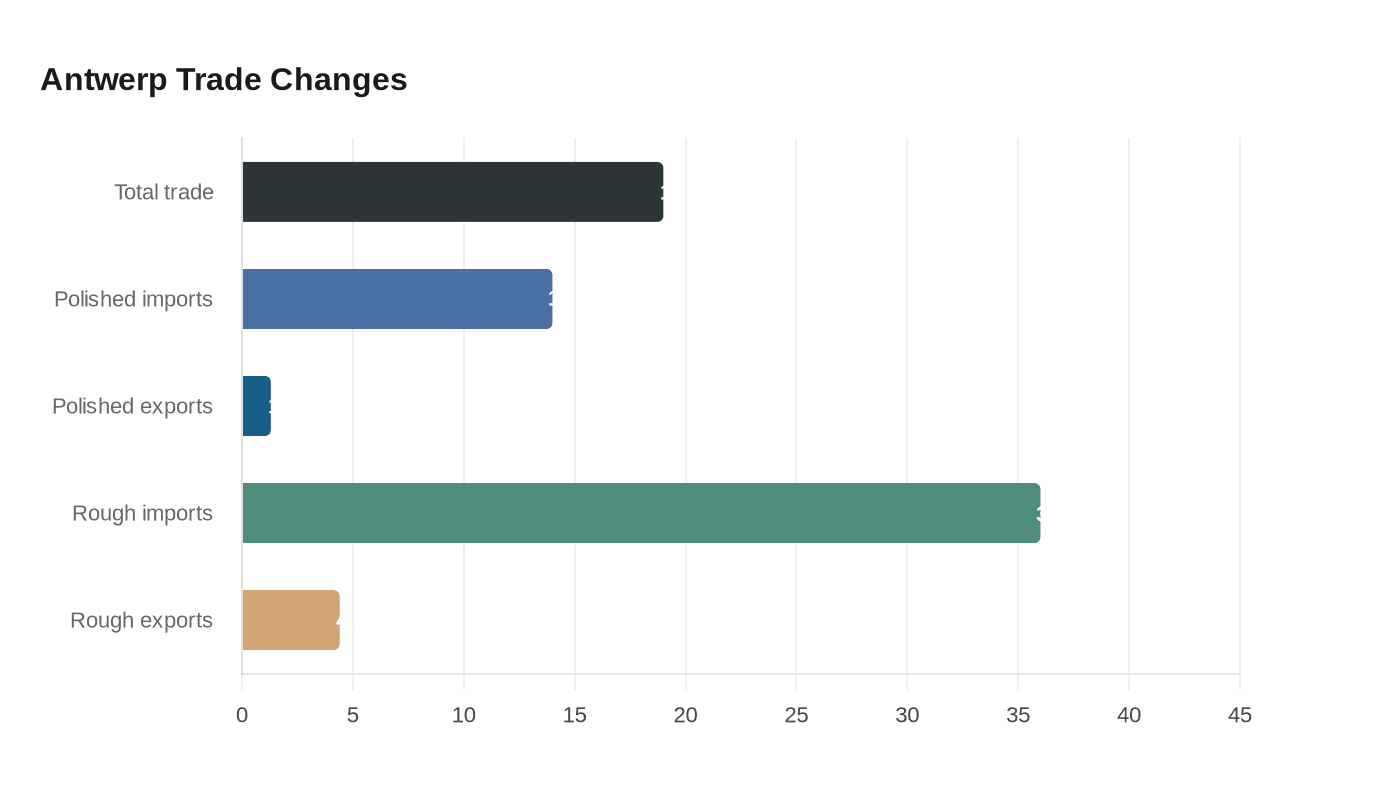
The sector’s 2024 collapse made any recovery worth watching. Antwerp diamond trade fell to 23.7 billion euros last year, about 25% below 2023, according to VRT reporting based on AWDC figures. Against that backdrop, a 19% rise in first-quarter trade is not just a statistical uptick; it is a test of whether Antwerp can defend its place as a global trading hub.
AWDC also credited policy changes it said it helped push through last year, including a more efficient visa policy for temporary residence, the recognition of diamond cutters and sorters as shortage occupations, and simplified Belgian procedures for hiring specialized foreign workers. The measure allowing foreign workers to fill those shortage roles took effect on 1 January 2026. At the same time, geopolitical tensions in the Middle East have pushed more traders to consider Antwerp for greater flexibility, giving the city a second tailwind beyond domestic policy.
What to watch next is whether the polished-price recovery spreads to the rough market, or whether the gap widens further as dealers favor better-made stones and tighter inventories. If polished prices keep rising while rough remains under pressure, Antwerp will be signaling a cautious, selective recovery rather than a full-blown expansion.
This article was produced by Prism’s automated news system from verified source data, official records, and press releases, then run through automated quality and moderation checks before publishing. The system is built and supervised by the people who set the standards it runs under. Read our full AI policy.
Did this article answer your question?