Best Diamond Push Presents for 2026
The right push present survives daily diaper changes and newborn photos alike. Here's a decision framework covering settings, stones, and every budget.
Picture the moment: your partner is holding a newborn, wearing yesterday's hospital bracelet and approximately zero patience for a ring that catches on a muslin swaddle. That is the real context for a push present. Not a velvet-lined display case. Not a special-occasion shelf. A piece that gets worn every single day, through hand-washing, nursing, midnight diaper changes, and the inevitable parade of newborn photo sessions where every detail ends up immortalized in a 12x18 print. Get the piece right and it becomes one of the most-worn objects she owns. Get it wrong and it sits in a box until the baby starts kindergarten.
Before the budget conversation, the setting conversation comes first.
The Non-Negotiables: Setting and Metal
Any diamond piece gifted to a new parent needs to pass two tests. First, will it snag? High-prong solitaire rings and elaborate pave details catch on knits, muslin, and fine baby hair with surprising regularity. The two settings that survive new-parent life best are the bezel (where a rim of metal fully encircles the stone, locking it in place and eliminating all raised edges) and the low-profile prong (where four or six minimal claws sit flush to the crown of the stone rather than extending above it). Bezel settings are especially forgiving: they protect the diamond against the constant bumps of carrying an infant and keep the silhouette clean whether worn with a hospital gown or a going-out dress.
Second, can the metal handle constant hand-washing? The answer is 14k or 18k gold in any color, or platinum. Eighteen-karat gold offers a richer color but is slightly softer; 14k is the more durable workhorse for pieces worn daily. Platinum is the most durable option of all, hypoallergenic, and particularly well-suited for white-metal lovers who want a setting that will not require rhodium replating over time. Sterling silver and gold vermeil are not appropriate for a commemorative fine jewelry gift meant to last decades.
The Lab-Grown vs. Natural Decision
This is where most partners stall, and the math is actually simple. According to BriteCo's industry report, by 2025 a natural 1-carat diamond averaged around $4,200, while a lab-grown 1-carat diamond averaged $1,000 or less. Lab-grown and natural diamonds are chemically, optically, and physically identical; the difference is origin. For a push present, where the emotional weight is enormous and the piece will be worn rather than stored as an investment, lab-grown stones offer a compelling trade: dramatically more carat weight, higher color and clarity grades, for the same dollar figure. The data bears this out. Between 2019 and 2025, the average center stone in a lab-grown engagement ring grew from 1.31 carats to 2.45 carats as buyers redirected their savings into size and quality rather than origin.
The counterargument for natural diamonds is meaningful: natural stones carry a geological provenance that lab-grown stones cannot replicate, and for some buyers the rarity is precisely the point of a commemorative gift. Neither choice is wrong. The framework is simply this: if size and brilliance-per-dollar are the priority, lab-grown wins decisively. If provenance and the sense of something irreplaceable from the earth matters to your partner, budget up for natural.
Now, the ranked picks.
1. Bezel-Set Diamond Stud Earrings
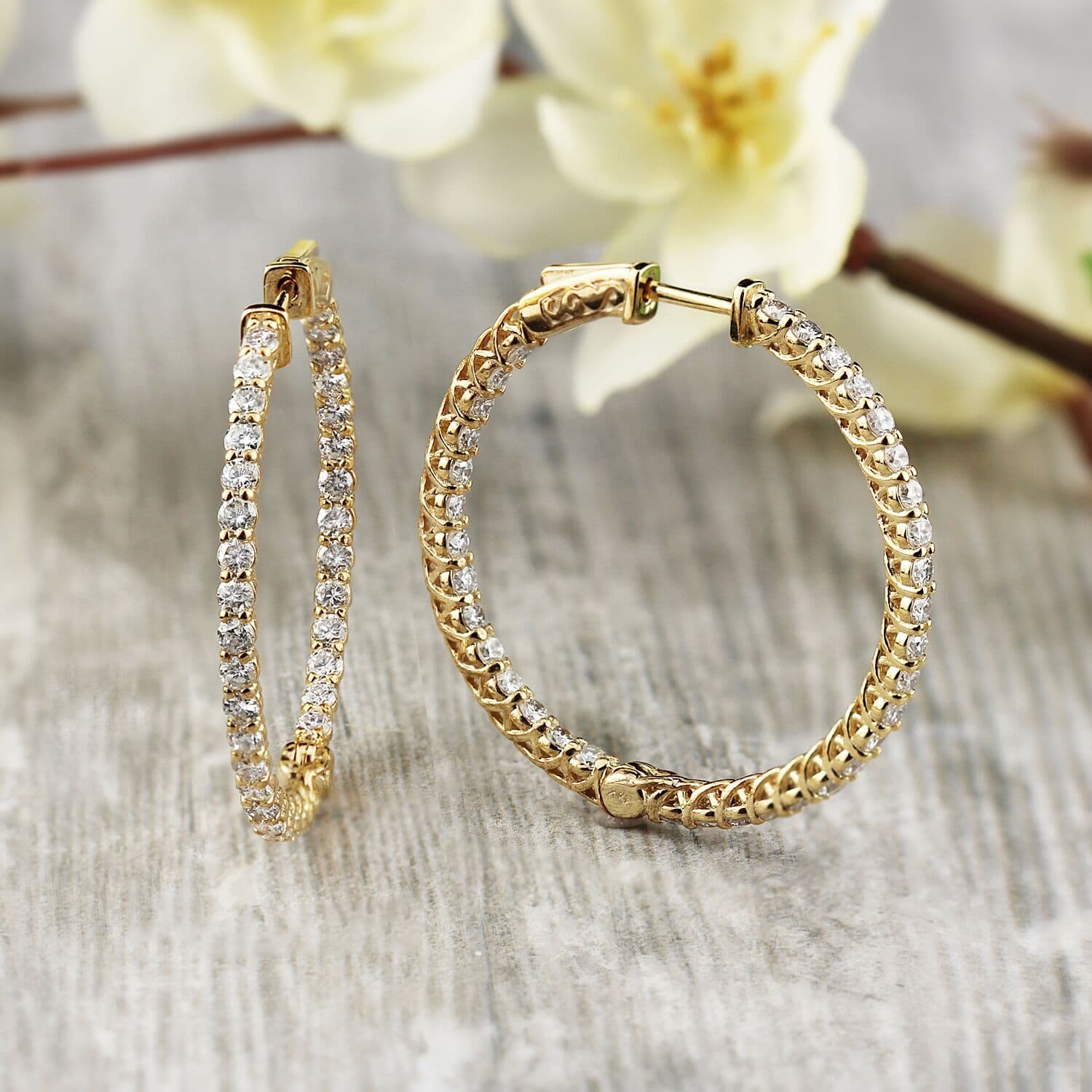
The single most practical push present in diamonds. Studs sit flush against the ear with no dangling hardware to catch on a baby's fingers, no backs to lose in a hospital room, and no visual weight that feels excessive for a Tuesday morning. In lab-grown, a pair of 0.50-total-carat round brilliants in a bezel setting in 14k white gold starts well under $500. In natural diamonds at the same specification, expect to pay $800 to $1,200 depending on color and clarity grades. These are the pieces new mothers actually reach for every morning.
2. Diamond Solitaire Pendant Necklace
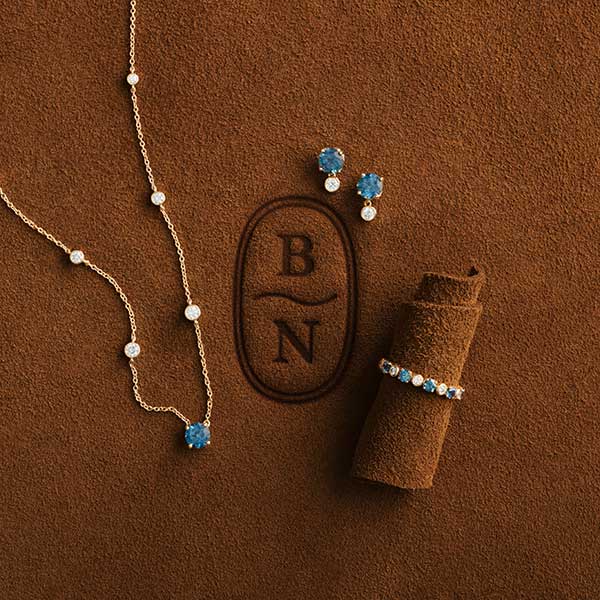
A delicate pendant necklace is the piece that photographs. It sits at the collarbone in every newborn photo, every hospital-room selfie, every first-week-at-home snapshot. A single round brilliant on a fine chain, 0.25 to 0.50 carats, in a bezel or four-prong low-profile setting keeps the silhouette refined without competing with the moment. The chain length matters: a 16-inch chain sits high and is visible over a hospital gown; an 18-inch chain is the everyday standard. For lab-grown, a 0.30-carat pendant in 14k gold can be found in the $300 to $600 range. For a natural stone with a GIA or IGI report at the same weight, budget $700 to $1,200.
3. Slim Lab-Grown Diamond Eternity Band
For partners who want to add to an existing wedding set, a slim eternity band is the most elegant solution. It stacks flush against a solitaire engagement ring without competing for visual dominance, and it can be worn alone on the right hand if preferred. Lab-grown stones make this category dramatically more accessible: a full-carat total weight eternity band in lab-grown rounds, bezel-set in 14k yellow gold, is achievable around $800 to $1,500. The equivalent in natural diamonds would run $3,000 or more. One practical note: eternity bands cannot be resized after purchase, because the stones run the full circumference of the band. Order in the current ring size and plan for a second fitting if postpartum finger swelling is still resolving.
4. Natural Diamond Studs in 14k Gold (The Heirloom Buy)
For buyers who want a push present with long-term sentimental weight and the geological narrative of a natural stone, classic four-prong studs in 14k gold with GIA-graded diamonds are the appropriate target. A pair of 0.50-total-carat natural round brilliants in G-H color, SI1-SI2 clarity will fall in the $1,000 to $1,500 range from a reputable independent retailer or established fine jewelry brand. At this size and quality, the difference between a natural and lab-grown stone is invisible to the naked eye; what you are paying for is origin. Request the grading report for every loose stone and confirm the GIA or IGI report number is laser-inscribed on the girdle of each diamond. That inscription is an irreplaceable form of identification for a commemorative piece, and a requirement for accurate insurance appraisal.
5. Low-Profile Diamond Solitaire Ring in Platinum
For the splurge buy, a bezel-set round brilliant solitaire ring in platinum delivers maximum durability, a refined minimal aesthetic, and a profile low enough to survive active daily wear without the paranoia of a traditional high-set cathedral mount. In lab-grown, a 1.0-carat round brilliant in a platinum bezel setting from a quality independent jeweler falls roughly in the $2,500 to $3,500 range. The same specification in natural diamond would push into the $6,000-plus range. Platinum's density means the setting will not flex or wear thin the way gold can over years of continuous wear, which matters for a piece intended to become a permanent fixture on a finger.
6. Personalized Diamond Bar Necklace with Laser Inscription
For the sentimentalist who wants the piece to tell a specific story, a horizontal bar pendant in 14k gold with a bezel-set diamond accent and hand-engraved detail (the baby's name, birth date, or a coordinate) adds a layer of meaning that a plain solitaire cannot match. The gold cable-link chains typically used in bar necklaces are durable and appropriate for everyday wear. Request that any loose diamond accent used in the piece carry its own laser-inscribed lab report number; even a small stone benefits from traceable certification on a piece that carries this much personal weight. Budget $400 to $1,000 depending on diamond size, engraving complexity, and metal choice.
The Certification and Insurance Layer
Whatever piece you choose, two final steps matter. First, require a diamond grading report from GIA or IGI for any loose stone. Both labs clearly identify natural or lab-grown origin, document the 4Cs, and provide an unbiased assessment that no retailer's in-house grade can match. Second, insure the piece immediately. A jewelry floater added to a homeowner's or renter's policy typically runs $1 to $2 per $100 of value annually, and it covers loss, theft, and damage: the three things most likely to happen to jewelry worn daily by someone operating on three hours of sleep. The appraisal document, the lab report, and the laser inscription together form a recovery chain that makes the piece fully protectable.
A push present earned in a delivery room deserves to last a lifetime. The right setting, the right metal, and the right paperwork make that possible.
This article was produced by Prism’s automated news system from verified source data, official records, and press releases, then run through automated quality and moderation checks before publishing. The system is built and supervised by the people who set the standards it runs under. Read our full AI policy.
Did this article answer your question?