BHC Diamonds leans on trust, ethics and agility amid market volatility
BHC Diamonds is betting that discipline beats disruption: Bangkok precision, Gujarat-linked networks and strict sourcing rules keep natural diamonds moving.
What resilience looks like in a volatile diamond market
The clearest test of a diamond supplier right now is not glamour, it is continuity. B.H.C. Diamonds (Thai) Co. Ltd. is leaning on a mix of precision manufacturing, long-standing client trust and tightly managed sourcing to keep natural diamonds flowing while demand remains uneven and the market keeps shifting underfoot.

That matters because BHC is not selling a vague promise of sustainability. It says its natural polished diamonds and melee have been part of an Earth-minded approach since 1970, and its Bangkok operation has built itself around repeat business, small-size stones and dependable delivery. In a trade where retailers and manufacturers are asking which suppliers can absorb pressure without compromising ethics, that combination is becoming the real differentiator.
A Bangkok base built for continuity
BHC’s modern Thai company traces back to 1996, when Bhavesh Gandhi left India to establish B. H. C. Diamonds (Thai) Co. Ltd. in Bangkok. The company profile gives a specific incorporation date, May 10, 1996, which marks the point when the business became a Thai manufacturer rather than just a trading name attached to broader family expertise.
The move to Bangkok was not just geographical. It placed the company inside one of Southeast Asia’s key jewelry hubs, close to the trade routes, showrooms and manufacturing ecosystems that keep orders moving. BHC’s presence in the Bangkok Gem & Jewellery Tower on Surawongse Road in Bang Rak puts it squarely in the commercial heart of the city, where access and responsiveness matter as much as product.
Small stones, disciplined output
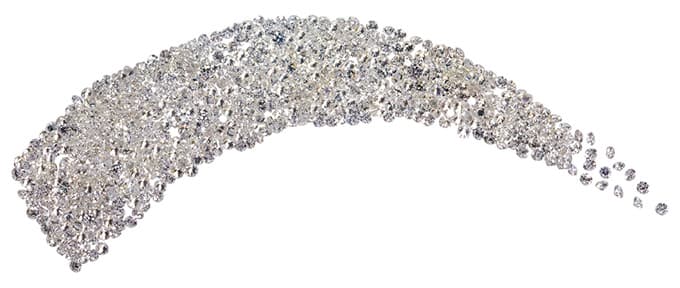
BHC’s trade-fair and supplier listings describe a focused specialization: small-size diamonds in white, brown and black, with shapes including round, pear and marquise cuts. That detail tells you a lot about the company’s place in the market. Small stones are the backbone of many jewelry lines, from pavé settings to accent work in rings, bracelets and earrings, and consistency is more important than drama.

The company’s product mix, natural polished diamonds and melee, also signals a business built around precision manufacturing rather than one-off spectacle. In practical terms, that means matching sizes, calibrating cut quality and keeping parcels sorted so designers and manufacturers can rely on repeatable results. For buyers, that kind of operational discipline often matters more than a glossy origin story.
Ethics as operating system, not afterthought
BHC’s own supply-chain policy is unusually explicit about what it will not tolerate. It commits the company to respect for human rights, avoidance of conflict financing, compliance with all relevant UN sanctions, and adherence to the Kimberley Process Certification Scheme. It also requires annual supplier and customer due diligence, which is the sort of recurring check that separates a serious compliance framework from a marketing slogan.
The policy goes further, prohibiting bribery, corruption, money laundering, child labour, forced labour and human trafficking. In a market where ethical language is often broad and untested, those are concrete claims with operational consequences. If BHC is living up to them, then its ethics are not just a brand value, they are part of how orders are screened, partners are chosen and relationships are maintained.
The company’s membership in the Responsible Jewellery Council adds another layer of context. The RJC says it counts more than 2,000 member companies across 74 countries, which places BHC inside a wider network of suppliers and brands that are expected to align with recognized standards rather than self-defined assurances. For retailers, that affiliation can be a useful signal, though it should never replace scrutiny of the supplier’s own practices.
Why long-term client trust matters now
BHC’s recent positioning makes clear that the company sees trust as an asset in a volatile market. A 2024 JewelleryNet feature described the business as pursuing fresh opportunities by staying agile, innovative and customer-centric, while serving jewelry brands, independent designers and manufacturers with standard sizes, specially selected collections and custom orders. That is less a slogan than a survival strategy.
In a period when rough and polished markets can move quickly and buyers are increasingly sensitive to provenance, a supplier that can offer both standard inventory and custom work has an edge. It can keep core production moving while adapting to specific briefs, which reduces the friction that often stalls orders when markets turn uncertain. For retailers, that flexibility can be the difference between a supplier that waits for the market to stabilize and one that keeps delivering through the turbulence.

A global network with Thai roots
HKTDC Sourcing’s supplier profile says BHC services customers worldwide through group offices in India and affiliate offices in New York. That international setup helps explain how a Bangkok-based manufacturer can stay close to both production and sales channels, especially when customers expect responsiveness across time zones and markets.
The company’s broader network also connects back to western India, including Surat and Navsari in Gujarat, names that remain central to the global diamond trade. That regional linkage matters because it suggests BHC is not operating as an isolated Thai outpost, but as part of a transnational supply chain shaped by cutting, sorting, trading and client servicing across multiple hubs.
What buyers should read into the model
For retailers and jewelry manufacturers, BHC’s playbook points to three things worth watching in any supplier right now:
- whether the company can document ethical sourcing beyond vague language
- whether it has the operational systems to handle small, repetitive orders without quality drift
- whether it has enough client depth and geographic reach to keep delivery steady when markets tighten
BHC’s mix of natural stones, traceable policies, Bangkok manufacturing and international service points suggests a supplier designed for endurance rather than flash. In a market where volatility can expose weak links fast, that kind of structure is the clearest luxury of all: a supply chain that still works when conditions stop being comfortable.
This article was produced by Prism’s automated news system from verified source data, official records, and press releases, then run through automated quality and moderation checks before publishing. The system is built and supervised by the people who set the standards it runs under. Read our full AI policy.
Did this article answer your question?