Botswana and Angola join WFDB, broadening diamond trade representation
Botswana and Angola now sit inside WFDB, a move that could give two rough-diamond producers more say over pricing, traceability and natural-diamond storytelling.
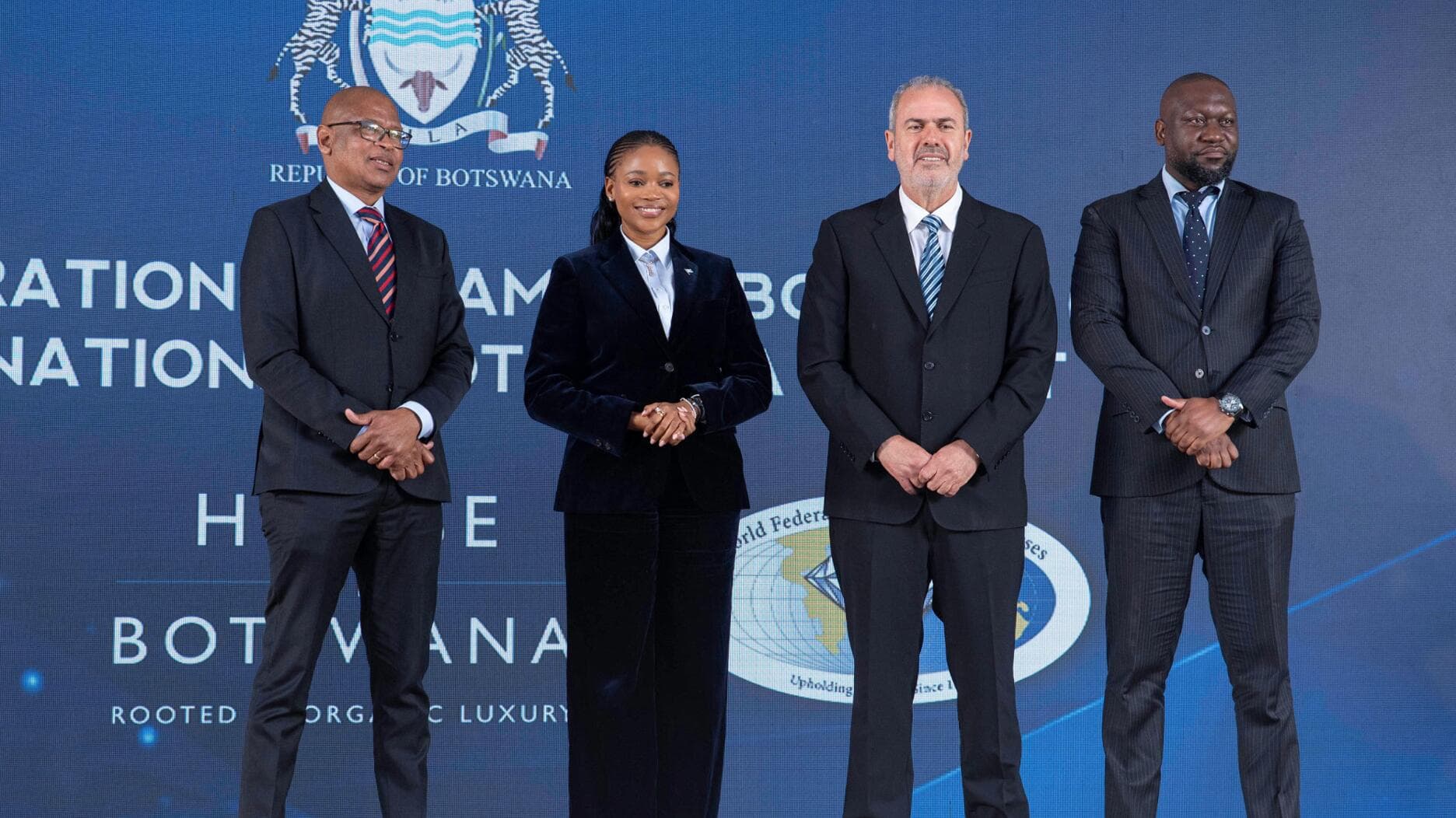
Botswana and Angola have moved from the margins of the trade conversation to its center. At the World Federation of Diamond Bourses summit in Gaborone, the two African producer nations were confirmed as nation-affiliated members, a development that gives them a seat inside the body that shapes common trading practices for rough and polished diamonds.
The timing matters. The summit ran May 18-19 at Orapa House in Gaborone, was hosted with Botswana’s Ministry of Minerals and Energy, and carried the theme “Nation-Building and the Future of Responsible Luxury.” Botswana hosted a WFDB summit for the first time, and the setting made the symbolism hard to miss: one of the world’s most important diamond countries was no longer just a supplier, but a participant in the room where the language of the trade is written.
For the jewelry business, this is more than federation housekeeping. WFDB has spent the past year stressing unity across the sector and warning that lab-grown diamonds have become a major challenge to the value and future of natural diamonds. Bringing Botswana and Angola closer to the federation’s core gives producer countries more visibility in arguments that increasingly shape rough pricing, traceability standards and the way brands narrate origin. In an industry where provenance has become part of the luxury pitch, that can matter as much as carats.
Botswana’s leverage is obvious. Its diamond sector is widely reported to account for about 80% of export earnings and roughly a quarter of GDP, which makes any change in its influence over trade bodies far more than ceremonial. Angola also arrives with momentum of its own, after 2025 production was reported at 15.19 million carats, above target. Angolan officials said the accession marks a new stage of international cooperation and a push toward downstream value creation, a phrase that points to the long-running ambition to move beyond exporting rough stones alone.
The two countries had already telegraphed their intentions at WFDB’s 2025 Presidents’ Meeting in New York, where both publicly said they wanted to join the federation. Their formal entry now sets up a more consequential test ahead of the World Diamond Congress 2026 in Singapore, scheduled for July 12-15, where both countries will participate as WFDB members.
The practical question for the trade is no longer whether Botswana and Angola will be heard, but how much their new status will alter access, negotiating leverage and the origin stories that follow diamonds from mine to mounting. In a market balancing producer power, responsible sourcing and pressure from lab-grown rivals, that shift could prove as important as any single summit declaration.
Know something we missed? Have a correction or additional information?
Submit a Tip