Chanel elevates Watches and Wonders with diamond-heavy high-jewelry timepieces
Chanel's newest diamond watches turn timekeeping into concealment art, with snow-set rings, secret necklaces and scarce pieces limited to five.
Why Chanel’s diamond watches matter now
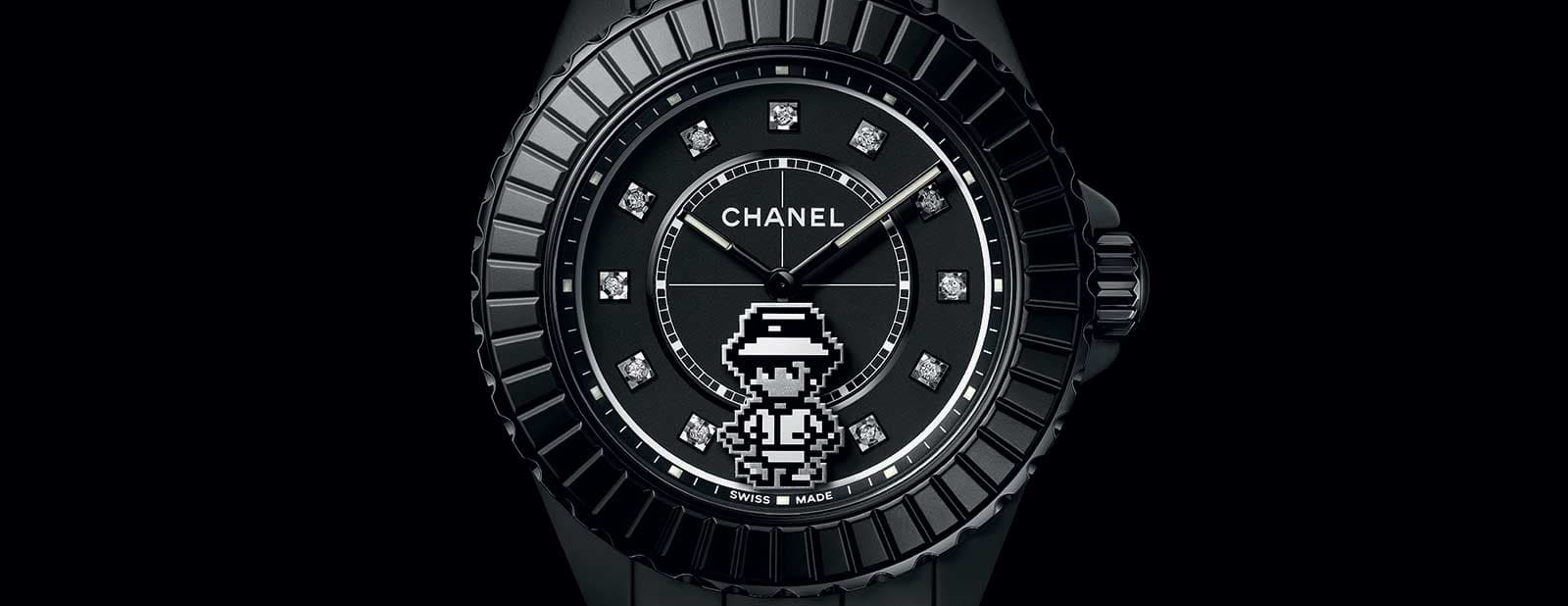
The most interesting thing about Chanel’s latest high-jewelry watches is not that they sparkle. It is that they hide. At Watches and Wonders, the maison pushed its watch-jewel language further than ever, presenting wristwatches, secret long necklaces and a secret ring that treat time as something to be revealed, not simply read.
That shift matters to buyers and collectors because it moves Chanel’s watches out of the realm of accessory and into a far narrower category: wearable sculpture with horological intent. The value proposition is no longer just diamond weight or brand cachet. It is how the stones are set, how the mechanism is concealed, how the design performs Chanel’s codes, and how few pieces exist in the world.
The strongest pieces are built like puzzles
Chanel’s own description of the collection makes the point plainly: “the game continues” with graphic designs that follow their own rules. Those rules include a pixelated pattern recalling arcade games, hand-sculpted Mademoiselle figures in 18K gold, and bold settings that recreate the house’s signature tweed. The language is playful, but the execution is serious. These are not decorative watches with a few extra diamonds. They are jewel objects in which the movement of time is staged through concealment, revelation and touch.
The design intelligence sits in the tension between couture and engineering. A tweed-inspired setting is not merely a motif; it gives the diamond surface texture, a sense of fabric translated into metal and light. The pixelated treatment brings a modern, almost digital edge, while the hand-sculpted Mademoiselle figures anchor the pieces in Chanel’s mythology. This is exactly where the maison is most persuasive: it makes high jewelry feel narrative, but never flimsy.
Mademoiselle the Queen is the clearest signal
Among the standout pieces, Mademoiselle the Queen is the one that most clearly explains why Chanel is leaning harder into diamond-heavy watchmaking. JCK describes it as being set with 6.27 carats of diamonds, and the tweed-like treatment gives the watch surface a richly textile effect rather than a flat sheet of stones. That matters because a watch of this type is judged not only by carat count, but by how the stones sit on the body of the piece.
A well-set diamond timepiece should never read like a simple pavé exercise. The best ones, including this Chanel design, use setting to create movement, shadow and depth. When the jewelry architecture is this considered, the watch becomes more than a branded bauble. It becomes a small-scale object of craft, one that can justify attention from collectors who care as much about workmanship as they do about sparkle.
The secret-watch format is Chanel’s real edge
Chanel has been developing secret watches and jewelry-watches for years, and the 2026 presentation feels like an escalation rather than an experiment. That lineage gives the current collection credibility. It is not a one-season marketing gesture. It is a sustained design territory, now sharpened by stronger watchmaking ambitions and a more assertive jewelry voice.
The secret-watch format is especially compelling because it asks the wearer to participate. A concealed dial turns the act of checking time into a private gesture, almost a performance. In luxury terms, that is far more distinctive than an obvious oversized watch head. The most desirable secret watches do not just tell time. They dramatize the moment of telling it.
Coco Game: where scarcity becomes part of the story
The Coco Game capsule collection pushes that idea into a more collectible register. National Jeweler reports that the Première Coco Game ring watch is limited to five pieces and contains 6.21 carats of diamonds, set in 18-karat white gold and snow-set for maximum brilliance. Five pieces is not a marketing flourish. It is a meaningful scarcity level that immediately places the watch in the orbit of true connoisseur objects.
The matching necklace is equally instructive. It shows Coco Chanel in an iconic pose and is also limited to five pieces. That combination of iconography and microscopic availability is how Chanel is building desirability here. The pieces are not valuable simply because they are diamond-heavy. They are valuable because the house is packaging its codes, its history and its technical playfulness into objects that almost no one can own.
For collectors, this is where status investing enters the conversation. Scarcity, recognizable house motifs and a coherent design story can all support long-term desirability. But the real test is whether the object feels resolved as jewelry first. Chanel’s strongest pieces do, because the diamonds are integrated into the form rather than pasted onto it.
The lion, the button and the concealed dial
If Coco Game is Chanel at its most playful, the Mademoiselle Privé Bouton Lion line is Chanel at its most theatrical. Galerie Magazine describes it as composed of a ring and a secret necklace, with a dial concealed by a meticulously crafted lion’s head. WatchTime adds another layer, noting that the Bouton Lion secret watches hide time beneath a Chanel button motif carved in yellow gold and mounted on an onyx plate.
That combination of lion, button and onyx is classic Chanel in spirit: decorative, symbolic and slightly sly. The lion has presence, the button recalls couture, and the onyx darkens the composition so the gold and diamonds read with sharper contrast. For the buyer, this kind of object offers more than ornament. It offers a narrative device, one that makes the act of wearing the piece feel intimate and coded.
The broader strategy is bigger than one jewelry capsule
Revolution Watch places these high-jewelry pieces within a larger rise in Chanel’s watchmaking under Frédéric Grangié’s leadership and Arnaud Chastaingt’s creative vision. That context matters because it separates this moment from a simple jewelry detour. Chanel’s 2026 lineup also includes the Coco Game capsule collection, the permanent J12 Bleu and the Noeud de Camelia line, which together show a brand widening its watch vocabulary rather than narrowing into a single novelty.
The result is a more convincing luxury strategy. Chanel is not asking the market to view these pieces as isolated trophies. It is building a watch universe in which high jewelry, technical watchmaking and couture symbolism reinforce one another. That is how a brand turns one-off spectacle into a recognizably collectible language.
What a collector should actually look for
When evaluating Chanel’s diamond timepieces, the first question is not how many stones are on the surface. It is how the piece is made to work.
- Look at the setting: snow-setting, tweed-like textures and structured pavé do more than add brilliance. They shape the character of the jewel.
- Look at concealment: a hidden dial, as in the Bouton Lion and the secret necklaces, adds mechanical and conceptual value.
- Look at scarcity: editions limited to five pieces immediately change the collecting equation.
- Look at iconography: the bow, the camellia, Coco Chanel, the lion and the button are not decoration alone. They are the house’s visual shorthand.
In the end, Chanel’s diamond-heavy watches are persuasive because they understand the difference between flash and finish. They are wearable art when the construction is as thoughtful as the storytelling, collectible assets when scarcity and signature codes align, and branding only when the jewelry is not strong enough to stand apart. Here, the maison has done enough to make the pieces worth a second look, and in a category crowded with glitter, that is the rarest luxury of all.
This article was produced by Prism’s automated news system from verified source data, official records, and press releases, then run through automated quality and moderation checks before publishing. The system is built and supervised by the people who set the standards it runs under. Read our full AI policy.
Did this article answer your question?