Chanel's Signes & Symboles turns icons into colorful diamond high jewelry
Chanel's Signes & Symboles makes Gabrielle Chanel's motifs modular, colorful and diamond-heavy, with transformable pieces and rare cuts recasting house icons for 2026.
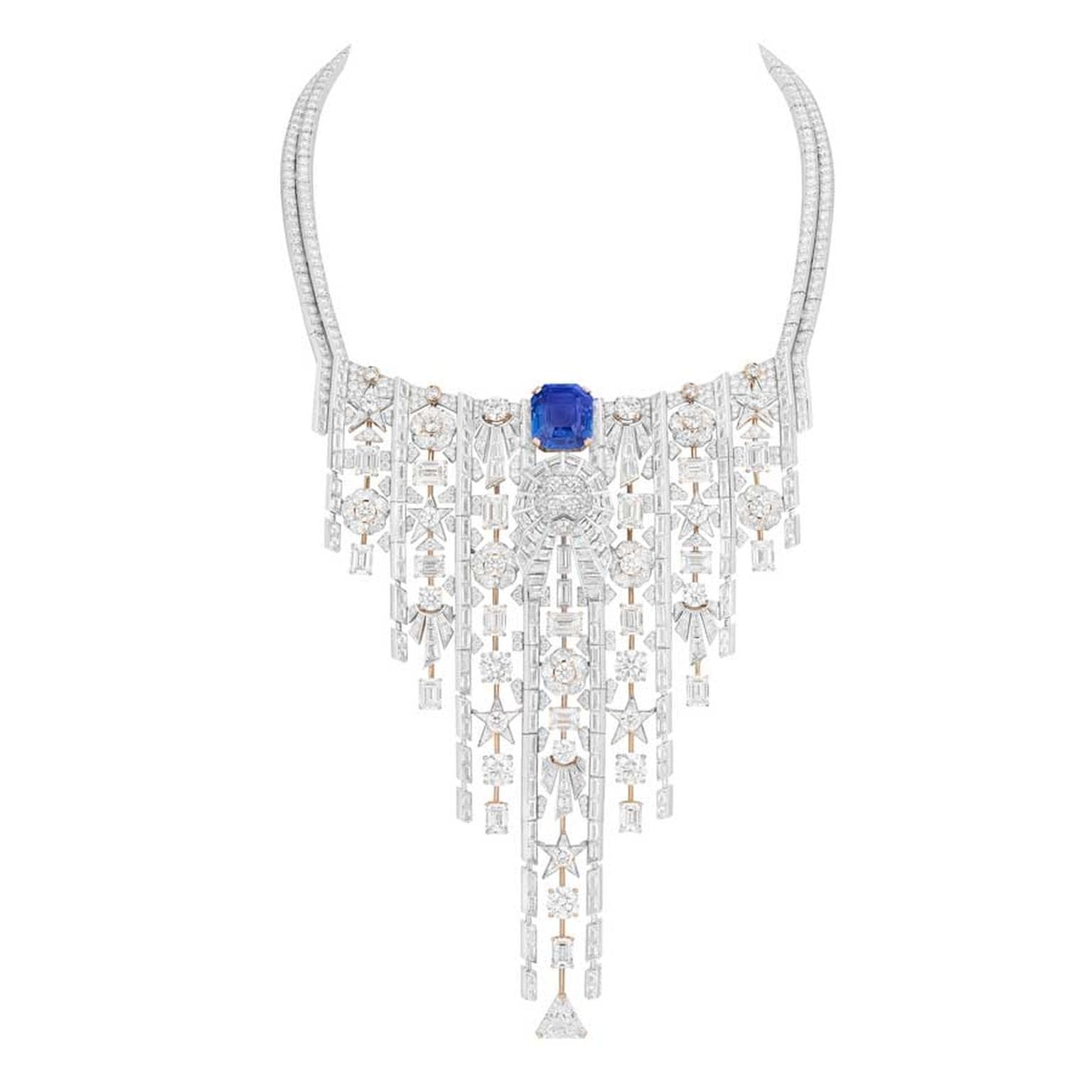
Chanel has turned its clearest house symbols into a sharper, more colorful high-jewelry language. Signes & Symboles gathers 85 pieces around the star, comet, camellia and lion, then pushes them into diamond-rich, transformable forms with a palette that reaches far beyond the house’s usual black-and-white register. That shift matters because Chanel is not just repeating motifs, it is recoding them for collectors who now expect movement, color and technique to sit inside the emblem itself.
La Pausa gives the launch its memory
The collection gains much of its force from where Chanel chose to show it. La Pausa, in Roquebrune-Cap-Martin on the French Riviera, was built in 1928 and was the only house Gabrielle Chanel entirely imagined, according to Chanel. The villa is described by the maison as a true pause from her Paris life, a place where she entertained, relaxed and hosted artists, so presenting Signes & Symboles there folds the jewelry back into her own terrain of taste and memory.
A tighter symbol set, but a broader Chanel code
Signes & Symboles narrows Chanel’s focus to four of the founder’s most personal signs, yet it sits inside a wider house vocabulary. Chanel’s high-jewelry pages say the maison’s broader language rests on six emblems, the lion, the number 5, the comet, the ribbon, the feather and the camellia, while Bijoux de Diamants, created by Gabrielle Chanel in 1932, is presented as the world’s first high-jewelry collection. That lineage makes this launch read less like a seasonal statement than a new chapter in a code Chanel has been refining for decades.
Color is the biggest break from expectation
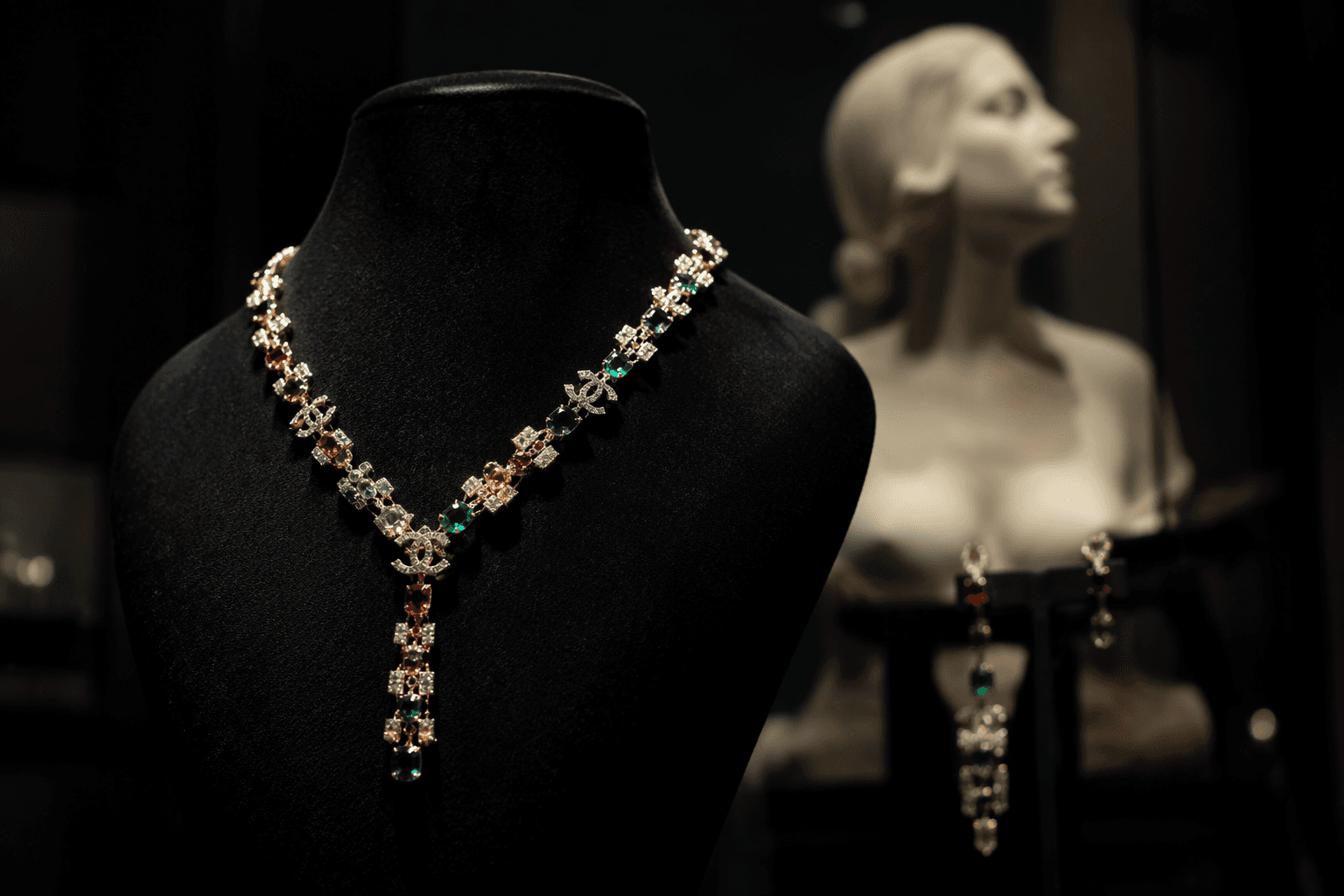
What immediately separates Signes & Symboles from Chanel’s more familiar high-jewelry register is its chromatic ambition. Coverage describes rubies, emeralds, sapphires, turquoise, chrysoprase, carnelian and yellow diamonds moving through the collection, and Frédéric Grangié called it the most colorful Chanel high-jewelry collection in a long time. Chanel’s team selected and harmonized more than 11,500 stones over roughly three years, which explains why the palette feels controlled rather than merely loud.
The craftsmanship is where the collection earns its price
The technical details are what keep this from becoming a simple logo exercise. The Jewellery Editor highlights hard stones, exotic diamond cuts and stone carving, and the pieces show that engineering in visible ways: the Symbole Camélia Rose brooch can be worn as a pendant, the Symbole Étoile necklace can be worn long or short with detached sections that become bracelets, and the Symbole Emblématique ring splits into two distinct rings. Those are not cosmetic tricks. They make the jewels modular, which is exactly the kind of practical luxury collectors notice when a house wants its icons to live beyond one styling moment.
The stone details are unusually specific too. The Symbole Étoile necklace centers on a 26.21-carat cushion-cut Imperial topaz, flanked by spessartite garnets, while the Symbole Camélia Rose brooch pairs diamonds with rock crystal and enamel, and its heart is a 1.58-carat round brilliant-cut diamond. The Symbole Emblématique ring combines yellow gold, white gold and platinum with diamonds, sapphires, turquoise and carnelian, crowned by a 5.05-carat cushion-cut diamond. Chanel is using gemological variety to make the motifs look newly drawn rather than merely repeated.
The pricing signal is part of the story
One trade breakdown places 41 of the 85 pieces above $1 million, and identifies the collection as the final creative work linked to Patrice Leguéreau, who died in November 2024. That scale of pricing makes the launch more than a branding exercise, because it places Chanel squarely in the segment where rarity, labor and storytelling have to justify every leap in value. The timing matters too: the high-jewelry market is still expanding, but it is also dealing with higher gold prices and fiercer competition for rare stones.
Why this collection lands with collectors
Chanel’s most effective move here is not the symbols themselves, which are instantly recognizable, but the way they are handled. The house has kept the lion, camellia, comet and star legible, then made them heavier in diamonds, richer in color and more technically flexible through transforms, hidden mechanisms and unusual cuts. For collectors watching how major maisons evolve their signatures, Signes & Symboles shows a clear commercial logic: preserve the myth, then make the workmanship rare enough to keep the myth buying power in 2026.
This article was produced by Prism’s automated news system from verified source data, official records, and press releases, then run through automated quality and moderation checks before publishing. The system is built and supervised by the people who set the standards it runs under. Read our full AI policy.
Did this article answer your question?