Cleaning, Storing and Protecting Diamond Jewelry: Essential Care Steps
Keep diamonds sparkling and secure: gentle soap-and-water cleans, separate cool storage, avoid bleach or pools, and book a jeweler visit every 6–12 months.
Diamonds are famously hard, but sparkle and security depend on routine care. This guide gives step‑by‑step, source‑rooted instructions for cleaning at home, when to seek professional service, how to store and travel with pieces, and the daily do’s and don’ts that actually prevent stone loss and dulling.
1. At‑home cleaning: soap, soak, brush, rinse, dry
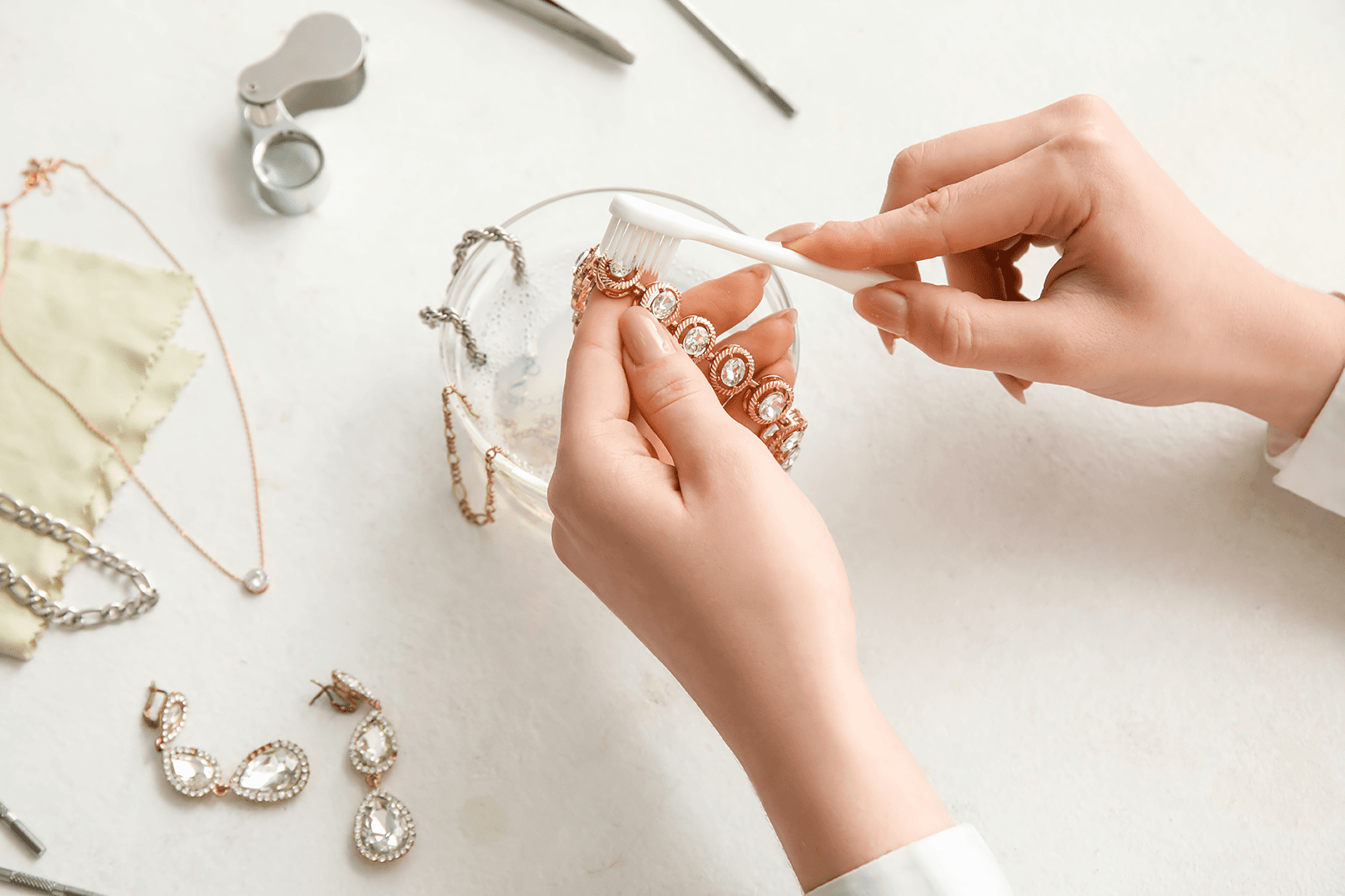
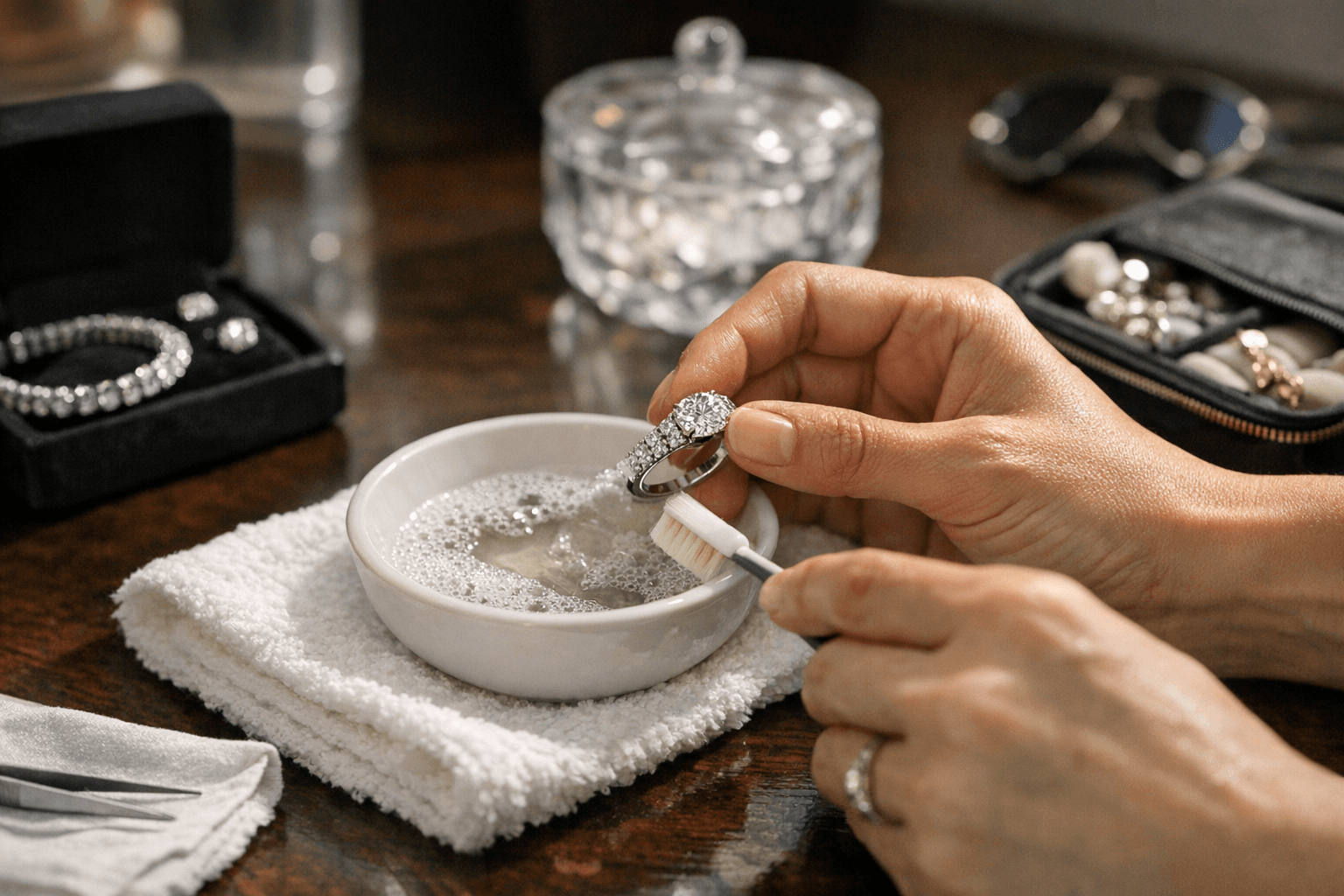
Use a mild dish soap mixed with warm or lukewarm water as your baseline cleaning solution. YITM’s sequence captures the consensus: “Use mild dish soap and warm water. … Soak the piece briefly before gently scrubbing it with a soft brush. Rinse well and dry with a soft polishing cloth.” Henridaussi offers the more specific timing many jewellers use: “Soak the diamond for about 15–20 minutes to loosen dirt and oils,” then “gently scrub the diamond using a soft‑bristle toothbrush,” rinse under warm running water, and “pat dry with a soft, lint‑free cloth.” The variants reconcile to this practical routine: soak (briefly to 15–20 minutes depending on grime), soft‑bristle brush for crowns and under‑stone areas, thorough rinse, and dry with a lint‑free polishing cloth.
2. Cleaning frequency and professional service intervals
How often depends on how often you wear the piece. Fascinatingdiamonds recommends that “diamond jewelry worn daily, like engagement rings, should be cleaned every one to two weeks,” and that “Professional cleaning is recommended once or twice a year to remove buildup that home cleaning may miss.” Henridaussi aligns on inspections with a clear service cadence: “Visit a jeweler every 6‑12 months to ensure the prongs or setting are secure. Loose settings can lead to stone loss.” Treat home cleaning as frequent maintenance and a jeweller visit every 6–12 months (or once/twice yearly) as preventive care.
3. Storage basics: separate, dry, and cushioned
Store diamonds where they’re cool, dry, and out of direct sunlight when you’re not wearing them. YITM instructs: “To avoid damaging your jewelry, store it in a cool, dry place out of direct sunlight… Keeping the jewelry separated and not rubbing together will be important and diamonds can scratch other softer gemstones.” Use a fabric‑lined jewelry box or pouch, separate compartments, or soft cloth pouches so diamonds don’t rub other pieces. Avoid plastic bags, YITM warns they “can trap moisture and cause tarnishing.” MilaSilver adds an extra layer of protection for transit or high‑value pieces: “The most important thing is that the storage is airtight and has a hard shell that protects the diamond and the jewelry.”
4. Do’s and don’ts while wearing: remove for tasks and sleep
Make removing diamond jewelry part of routine tasks: put rings off before cleaning, washing dishes, applying makeup, exercising, or heavy work. MilaSilver is unequivocal: “So get into the habit of always taking off (especially diamond rings) when you put on make‑up, exercise, wash dishes and clean. Never swim in the sea or pool with your diamond jewelry.” Diamondstuds adds behavioral cautions as safety practice: “DON’T: Wear Your Diamond Jewelry to Sleep or Take it Off Over a Sink,” because those moments commonly cause loss or damage.
5. Chemicals, pools and cosmetics to avoid
Harsh chemicals and chlorinated water are repeatedly flagged. Henridaussi warns “No Bleach or Abrasive Cleaners: These chemicals can damage the setting or any non‑diamond stones in the jewelry.” MilaSilver lists specific culprits: “Detergents, chemical liquids, hair spray make‑up, chlorinated water and the like destroy your diamond jewellery. Greasy creams and make‑up settle like a film on the diamond and corrosive liquids destroy the diamond's luster.” Remove pieces before swimming, cleaning, or applying cosmetics; apply lotions and perfumes before you put jewelry on to reduce film‑forming residue.
6. Impact, temperature and metal‑wear concerns
Diamonds resist scratching, but settings and other stones do not. Fascinatingdiamonds reminds readers that “the gold or platinum holding them in place is much softer and more vulnerable to daily wear,” and that “Diamonds don’t wear out, but metal does.” Henridaussi cautions about thermal stress: “Extreme Temperatures: While diamonds themselves are durable, metals like gold or platinum may expand or contract, potentially loosening the diamond.” Avoid heavy impact activities, gardening, weightlifting, contact sports, and don’t leave pieces in prolonged direct sun in very hot climates.
7. Special care for inlay stones versus diamonds
Treat inlay jewelry as a distinct category. YITM states plainly: “Stone inlay jewelry requires special care, as the inlay stones used in YITM jewelry are what make it so special.” Inlay stones “can change color with exposure to lotions, hand sanitizers, or household cleaning products” and “High temperatures can crack inlay stones, so never leave your jewelry in direct sunlight for extended periods if you live in a hot environment.” YITM also notes “Inlay stones can often crack if they are hit or make heavy contact. Remove jewelry when weight lifting or playing sports.” Keep these rules separate from general diamond guidance, many inlay materials are softer and more chemically sensitive.
8. Separation, scratches and delicate companions
Because diamonds are so hard, they can scratch softer gems and even precious metals in mixed storage. Diamondstuds advises: “we caution you against storing diamond jewelry next to pearl and opal jewelry, since these gemstones are quite delicate.” Store pearls, opals and other soft gemstones in their own compartments or soft pouches, and keep diamond pieces isolated to avoid contact damage.
9. Travel, security and insurance
Travel raises risk; adapt what you wear and how you carry it. Fascinatingdiamonds’ travel checklist is practical: “Use a compact jewelry travel case,” “Avoid wearing high‑value pieces daily,” “Never pack jewelry in checked luggage,” “Insure expensive diamond jewelry,” and “Less is more when traveling.” YITM similarly recommends considering secure storage for high‑value pieces and to “Insure your valuable jewelry on your renter's or homeowner's policy.” For transit, a hard‑shell, airtight container with interior padding combines MilaSilver’s and YITM’s protections.
10. Long‑term maintenance and lifecycle care
Think generations, not months: regular upkeep preserves both function and heirloom value. Fascinatingdiamonds notes, “Diamonds don’t wear out, but metal does. Over decades, rings may need re‑tipping, re‑polishing, or resetting.” Schedule routine professional inspections and deep cleanings to catch worn prongs early, Henridaussi stresses that “Loose settings can lead to stone loss.” With consistent cleaning, safe storage, and 6–12 month professional checks, diamond jewelry “can last generations without losing beauty or function.”
- Home cleaning: mild dish soap + warm water; soak (briefly or about 15–20 minutes), soft‑bristle toothbrush, rinse, dry with a lint‑free cloth (Henridaussi; YITM).
- Storage: cool, dry, separated pieces; fabric‑lined box or pouches; avoid plastic bags; consider airtight hard‑shell box for travel (YITM; MilaSilver).
- Don’t: bleach or abrasive cleaners; chlorinated pools or sea; sleep in diamonds; take pieces off over a sink (Henridaussi; MilaSilver; Diamondstuds).
- Professional: inspect/clean every 6–12 months or once/twice a year; insure high‑value pieces; use compact travel cases and never pack jewelry in checked luggage (Henridaussi; Fascinatingdiamonds; YITM).
11. Quick maintenance checklist (practical takeaways)
Final thought Diamond jewelry is often described as “forever,” but its longevity depends on how well it’s cared for. Gentle cleaning, mindful wearing habits, separate cushioned storage, and periodic professional inspections protect both sparkle and security, practical stewardship that keeps a diamond shining for generations.
This article was produced by Prism’s automated news system from verified source data, official records, and press releases, then run through automated quality and moderation checks before publishing. The system is built and supervised by the people who set the standards it runs under. Read our full AI policy.
Did this article answer your question?