De Beers Echo collection spotlights traceable GemFair diamonds from Sierra Leone
De Beers is turning traceability into a high-jewelry sales pitch, using GemFair diamonds from Sierra Leone to sell provenance as part of luxury. The question is whether Echo is a real model or a polished halo.

De Beers is trying to make provenance feel like a luxury material in its own right. Through the Echo high-jewelry collection, the company is putting GemFair diamonds from Sierra Leone at the center of a commercial story built on traceability, artisanal sourcing, and the promise that ethical claims can travel all the way from mine site to showcase.
Traceability as the new luxury language
Echo matters because it is not being presented as a side project or a corporate social responsibility footnote. It is a high-jewelry line using GemFair stones to show that origin can become part of the product’s value proposition, especially in a market where buyers are increasingly asked to care not only about carat and cut, but about who mined the stone and under what conditions.
That is the commercial wager here: if De Beers can prove that a diamond from a small-scale mine in Sierra Leone can be separated, tracked, and marketed with the same seriousness as a traditional luxury stone, then provenance itself becomes a premium feature. It is a powerful idea, but also an exacting one, because any gap between the narrative and the chain of custody weakens the entire pitch.
What GemFair is meant to do
De Beers launched GemFair in 2018 in Sierra Leone’s Kono region with a clear mandate: help formalize the artisanal and small-scale diamond mining sector while raising standards from the mine onward. The company says the program now includes more than 500 mine sites and supports about 7,000 direct livelihoods, with many more indirect beneficiaries tied to the trade.
The mechanics are central to the claim. De Beers says GemFair offers fair-value purchasing, practical training, safety equipment, land restoration, and community development support. It also says the diamonds are kept separate and directly traceable to individual miners, a detail that matters because provenance claims in jewelry are only as credible as the system that protects them.
That structure gives GemFair a sharper edge than vague ethical branding. Instead of simply promising better sourcing, the program ties its legitimacy to process: who mined the stone, how it moved, and whether it remained identifiable throughout the supply chain.
Echo turns a supply-chain program into a showroom story
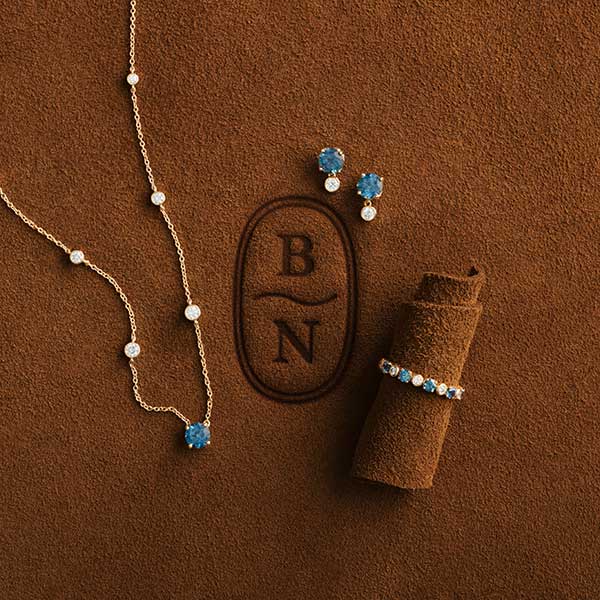
The January 23, 2026 collaboration between GemFair and De Beers London was positioned as the first time GemFair’s ethically sourced artisanal diamonds were featured in jewelry for consumers. Rapaport described that launch as a 12-piece capsule combining rough and polished GemFair diamonds, with the polished stones handcrafted for the line and the rough diamonds left as nature intended.
That distinction is important. In high jewelry, rough stones are often used to suggest rarity, authenticity, or a more organic aesthetic, while polished stones carry the language of precision and refinement. By pairing the two, De Beers created a narrative that links artisanal mining to both origin story and finished beauty, which is exactly the kind of dual appeal luxury brands use when they want ethics to feel collectible rather than merely responsible.
The Echo collection extends that idea by placing traceable Sierra Leonean diamonds in a context usually reserved for exceptional stones with clear pedigree. It is a deliberate move to make the route to market part of the allure, not just a back-office assurance.
Why the 10,000-diamond milestone matters
The scale question is where the story becomes more than branding. In October 2024, De Beers said GemFair had purchased its 10,000th diamond since launch and that purchases were up 68% year to date. Those numbers suggest the program is not static, and they help explain why De Beers is confident enough to move from sourcing into consumer-facing jewelry.
Still, volume alone does not settle the bigger question. Ten thousand purchases over years of operation is meaningful for a formalization project, but it is still small relative to the broader global diamond trade. That makes Echo look less like a mass-market pivot and more like a carefully staged proof of concept, one designed to show investors, retailers, and luxury clients that traceable artisanal sourcing can be commercially legible.
The reputational upside, and the limits of the halo
For De Beers, the upside is obvious. GemFair strengthens the company’s broader Building Forever sustainability strategy while reinforcing its provenance messaging at a time when the jewelry sector faces tougher scrutiny over opacity, labor conditions, and mining impacts. If the narrative lands, De Beers can claim not only ethical sourcing, but leadership in making that sourcing visible to consumers.
The risk is that Echo becomes a halo project, impressive in presentation but limited in reach. A capsule collection can prove taste and intent, but it does not automatically prove systemic change. The real test is whether GemFair can scale beyond a handful of showcase pieces and remain a durable supply-chain model rather than a reputational emblem.
De Beers has said it wants GemFair to expand beyond Sierra Leone to Angola, a sign that it sees the model as portable. That ambition will be watched closely, because any expansion would test whether the program’s traceability, pricing discipline, and community benefits can survive outside its original context.
What to look for next
The most useful way to read Echo is as a statement of strategy, not just style. De Beers is arguing that traceable artisanal diamonds can command attention in high jewelry because they carry more than sparkle: they carry a documented route, named origin, and a social backstory that luxury shoppers are increasingly prepared to pay for.
Whether that becomes a durable business model depends on scale, transparency, and consistency. For now, Echo is a smart, tightly framed answer to a bigger industry problem: if luxury wants to sell conscience, it has to prove that the conscience is built into the supply chain, not attached to it at the end.
This article was produced by Prism’s automated news system from verified source data, official records, and press releases, then run through automated quality and moderation checks before publishing. The system is built and supervised by the people who set the standards it runs under. Read our full AI policy.
Did this article answer your question?