De Beers Slashes Sightholder Roster by One-Third Ahead of July Cycle
De Beers quietly sent letters to more than 20 buyers on March 20, cutting roughly a third of its sightholder roster before new contracts begin July 1.
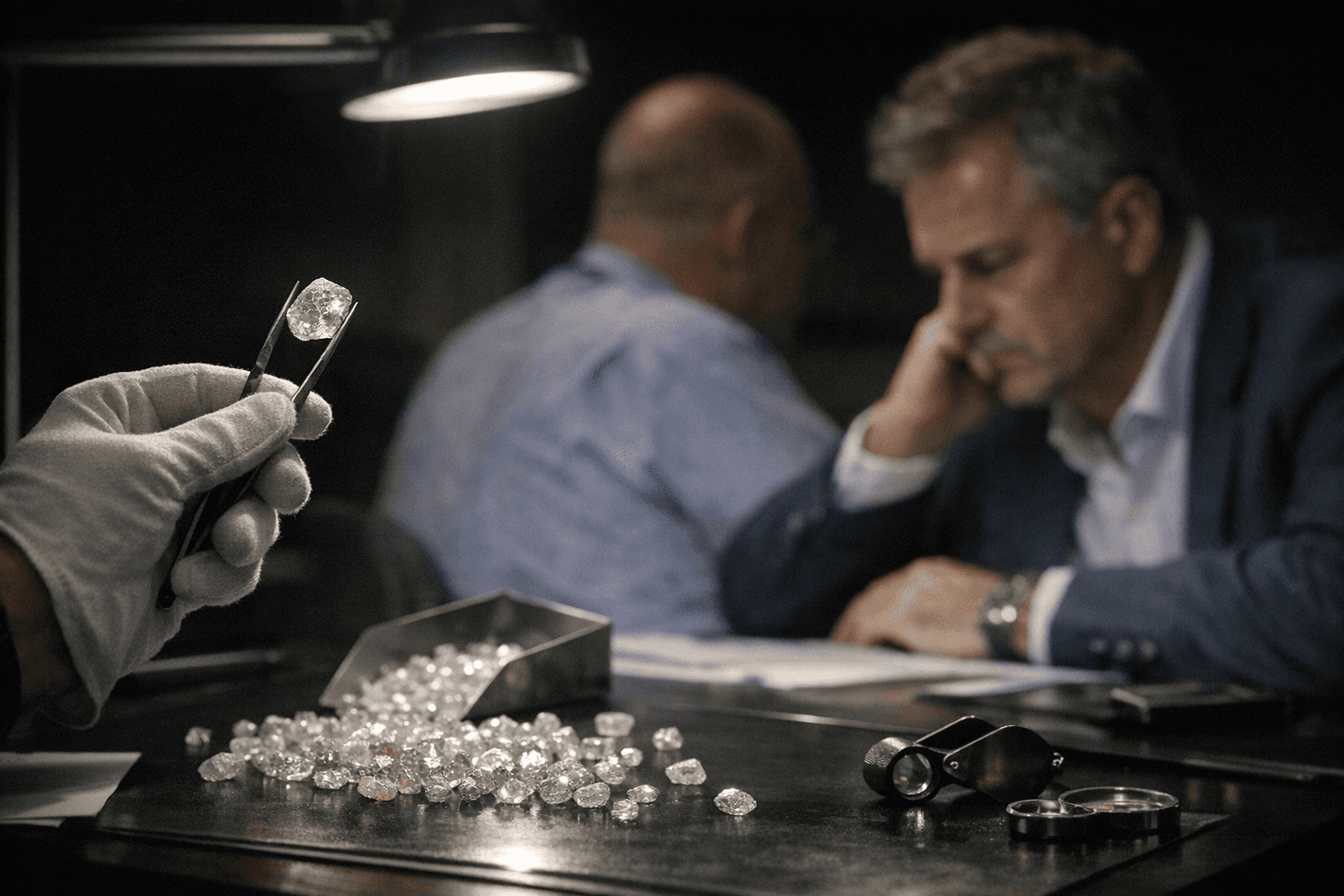
On the morning of Friday, March 20, letters arrived at the offices of more than 20 diamond companies around the world. The message was terse and consequential: their De Beers sightholder contracts would not be renewed. The company informed its customers on Friday whether they'd kept that status in a series of letters and follow-up calls, with people asking not to be identified discussing confidential information.
De Beers cut the number of buyers to between 45 and 50 from around 70. De Beers declined to comment. The scale surprised the trade. It is the second biggest cut, in percentage terms, since sights were launched back in 1934.
The current sightholders had been working under agreements originally signed in 2021. Last year, De Beers extended those contracts through June 2026, repeatedly deferring a decision as the market deteriorated. The storied diamond miner had been mulling the changes for some time but deferred a decision on multiple occasions as the sector battled a series of market shocks. Central to its thinking is a determination to funnel more goods to what it sees as the strongest clients at a time when it's producing fewer diamonds.
The cuts landed unevenly across the trade. Buyers of smaller diamonds, a part of the market where De Beers wields less control and prices have fallen the most, have been hit especially hard. Beyond the numbers, the reshuffle also indicates a shift in geographic representation. Traditional trading hubs such as New York and Israel are believed to see reduced participation, while India appears to be gaining ground, with at least one new entrant reportedly joining the list.
De Beers' relationship with its customers, which range from Indian and Israeli family businesses to units of jewelers such as Tiffany & Co., has always been complex. The company sells its gems through ten sales each year and the sightholders must accept the price and quantities they're offered. Rejecting goods can lead to being offered less in the future or losing access altogether. That leverage has grown thornier as the market unraveled. Through much of 2024 and 2025, the company's official prices stood well above those in the secondary market. Reluctant to reduce benchmark prices, De Beers began offering discreet side-deals, granting favored customers discounts of as much as 20%, a break from tradition.
The company eventually broke with that approach in January. The January reduction marked the company's first official price cut since December 2024, following months of quietly offering discounts while maintaining official list prices above prevailing market levels. At the first regular sight of the year, De Beers implemented price reductions on rough stones larger than three-quarters of a carat. The exact scale of the price cuts remains unclear, as De Beers has adjusted its billing structure and altered the composition of its diamond boxes, making direct comparisons difficult.
Production tells a parallel story of retreat. De Beers produced fewer than 22 million carats last year, down from almost 35 million carats in 2022, in a bid to support prices. The $80 billion industry is under severe strain. What started as a post-pandemic slump worsened amid a pullback in Chinese luxury spending and the rising popularity of synthetic stones. India, where the pressure concentrates most visibly, cuts and polishes roughly 90% of the world's diamonds by volume, with the US accounting for roughly one third to nearly half of its diamond and jewelry exports. US tariffs on Indian imports, escalated under President Trump and ultimately lifted to 50% on affected goods, landed on an industry already running on thin margins.
The sightholder cuts arrive as De Beers' future ownership remains unresolved. Anglo American, which owns 85 percent of De Beers, took a $2.3 billion impairment on De Beers after writing down the value of the business by $2.9 billion in 2024 and $1.6 billion in 2023. Anglo American CEO Duncan Wanblad is hopeful that the sale of De Beers will be completed by the end of this year. De Beers had warned current sightholders back in October 2024 that it would be terminating some supply agreements, by way of what it called an objective selection and allocation process.
De Beers has not confirmed the exact composition of the new list or identified affected companies. A spokesperson said the updated roster will be published when the new contracts take effect in July. Whoever controls the company by then will inherit a significantly tighter circle of buyers, one built for survival rather than scale.
This article was produced by Prism’s automated news system from verified source data, official records, and press releases, then run through automated quality and moderation checks before publishing. The system is built and supervised by the people who set the standards it runs under. Read our full AI policy.
Did this article answer your question?