Diamond Engagement Ring Deals to Shop Before National Proposal Day
National Proposal Day falls on March 20, and jewelers are cutting prices on lab-grown and natural diamond rings worth knowing about before you buy.
The calendar has a way of concentrating the mind. March 20 is National Proposal Day, and whether you treat the occasion as a genuine deadline or simply a useful prompt, the timing coincides with a notable cluster of promotions from both mainstream and online jewelers. If you have been waiting for the right moment to commit, the week ahead offers a practical window to act with intention rather than impulse.
Before diving into what is available, it is worth understanding what you are actually shopping. The engagement ring market in 2026 is genuinely bifurcated between natural and lab-grown diamonds, and that distinction carries real consequences for price, resale value, and the story the ring tells. Lab-grown diamonds are chemically and optically identical to mined stones; they share the same crystal structure, the same hardness on the Mohs scale, the same fire and brilliance. What separates them is origin and, increasingly, cost. A lab-grown stone can run 50 to 80 percent less than a comparable natural diamond by carat weight, which means that the current round of promotions stacks on top of an already-lower baseline price. For buyers prioritizing size and sparkle within a fixed budget, lab-grown is a compelling argument. For buyers who place weight on geological provenance or long-term value retention, natural diamonds remain the more considered choice.
What to Look for in a Deal
Not every discount is created equal, and the engagement ring category is one where promotional language can obscure more than it reveals. A "40% off" headline is only meaningful if you know the starting price, the quality of the stone, and the integrity of the setting. When evaluating any promotion this week, keep the following in mind:
- Verify the stone's grading report. Any diamond worth purchasing should come with certification from GIA, IGI, or AGS. Lab-grown stones are increasingly certified by IGI, which provides detailed grading on cut, color, clarity, and carat weight. Without a certificate, a listed discount is essentially unverifiable.
- Assess the setting quality independently of the stone. A deeply discounted ring with a poorly executed prong setting, thin shank, or low-karat gold is not a bargain. Prong settings, which lift the stone and maximize light exposure, require precise craftsmanship to hold a diamond securely over years of wear. Bezel settings, which encircle the girdle of the stone in a metal collar, offer more protection and a cleaner silhouette but demand equally precise metalwork. Either approach, done well, adds to the ring's longevity and wearability.
- Understand the return and resize policy. Online jewelers in particular vary widely here. A ring purchased under promotional pricing that cannot be resized or returned represents a different kind of risk than one with a generous post-purchase service window.
- Compare the total cost of ownership. Some mainstream jewelers bundle lifetime warranties, complimentary cleanings, and prong re-tipping into the purchase price. Online competitors may offer steeper initial discounts but charge separately for these services. The math shifts depending on how you weight ongoing maintenance.
The Lab-Grown Landscape Right Now
The proliferation of lab-grown diamond engagement rings has reshaped what is accessible at the $1,000 to $3,000 price point. What would have been a quarter-carat natural diamond in a modest solitaire setting a decade ago is now, at that same budget, potentially a one-carat lab-grown stone in a well-crafted four-prong or six-prong platinum setting. Several online jewelers have built their entire business model around this arbitrage, offering configurators that let buyers select stone shape, carat weight, color grade, and clarity grade independently before pairing with a chosen setting.

The shapes driving the most interest right now are the oval and the elongated cushion, both of which create the optical illusion of a larger stone relative to their actual carat weight. The round brilliant remains the most popular cut globally, and for good reason: its 57 or 58 facets are specifically engineered to maximize the return of white light. Princess cuts, which are square with pointed corners, offer a more contemporary geometric look but require careful prong placement to protect the vulnerable corners from chipping.
For buyers considering lab-grown stones under current promotions, color and clarity grades in the G-to-I range for color and VS2-to-SI1 range for clarity represent strong value without visible compromise to the naked eye. Going below SI1 into I1 territory introduces inclusions that may be visible without magnification, which is worth avoiding regardless of the discount.
Natural Diamonds and Where Promotions Apply
Natural diamond promotions from mainstream jewelers tend to concentrate on settings and total package pricing rather than the stones themselves, which hold value in ways that make deep discounting less common. What you are more likely to find at national jewelry chains is a reduction on the setting cost, a promotional financing rate, or a trade-in or upgrade credit. These can be genuinely useful, particularly if you are buying a natural diamond and anticipate trading up in a future anniversary year.
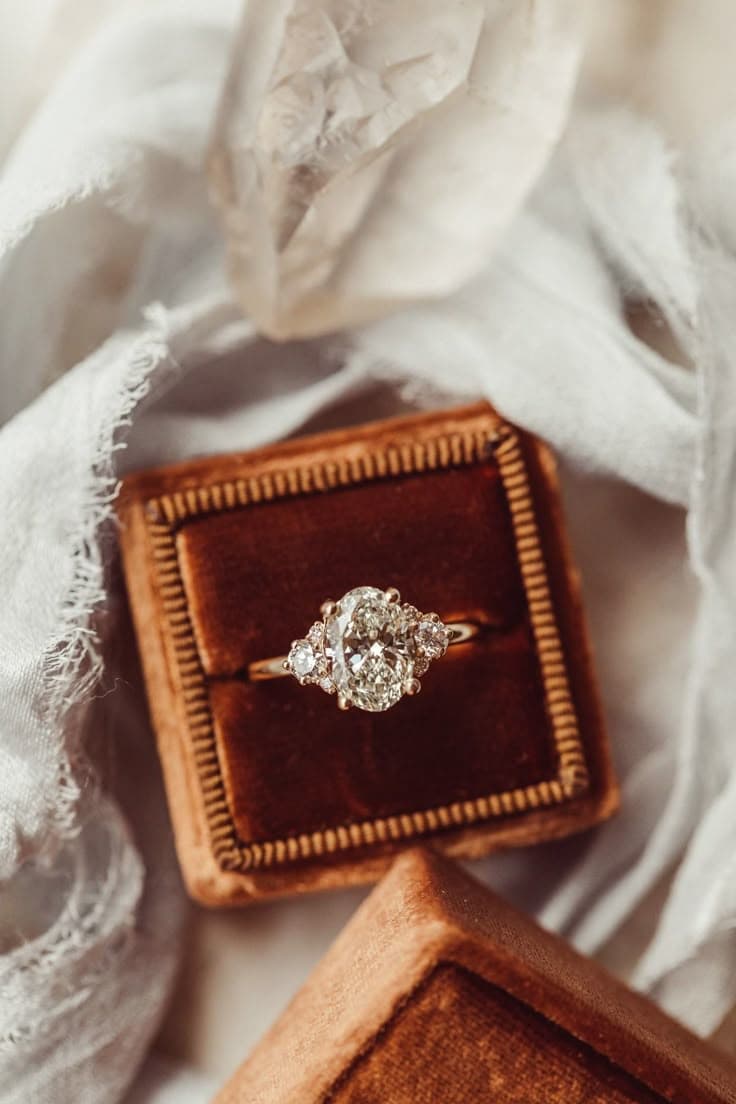
The categories where natural diamond deals surface most visibly are in three-stone rings and halo settings, where the center stone is flanked or surrounded by smaller accent diamonds. Because the accent stones are typically lower in individual carat weight, the overall price point is more flexible. A round brilliant center stone in a pavé halo, for example, can appear substantially larger and more brilliant than its carat weight alone would suggest, making it a smart structural choice for buyers working within a defined budget.
A Note on Timing
The convergence of National Proposal Day with the current promotional cycle is not accidental. Jewelers time these windows deliberately, and the marketing pressure is designed to compress decision-making. That pressure is worth resisting just enough to ensure the ring you choose is one you have actually researched, not simply the first discounted option that appeared in a targeted advertisement.
That said, the promotions active this week from both online and mainstream jewelers are real, and the window before March 20 is a reasonable one in which to move if you have already done your homework on stone quality, setting style, and budget. A certified lab-grown or natural diamond in a well-executed setting from a reputable jeweler, acquired at a meaningful discount, is simply a better use of the same money than waiting until the promotional cycle resets. The ring will be worn every day for decades; the price paid for it is a one-time event worth getting right.
This article was produced by Prism’s automated news system from verified source data, official records, and press releases, then run through automated quality and moderation checks before publishing. The system is built and supervised by the people who set the standards it runs under. Read our full AI policy.
Did this article answer your question?