Diamond jewelry demand splits between budget buyers and higher spenders
The diamond market is cleaving in two: buyers under $1,500 are pulling back, while higher-ticket shoppers keep leaning into bridal and natural stones.
The market splits at $1,500
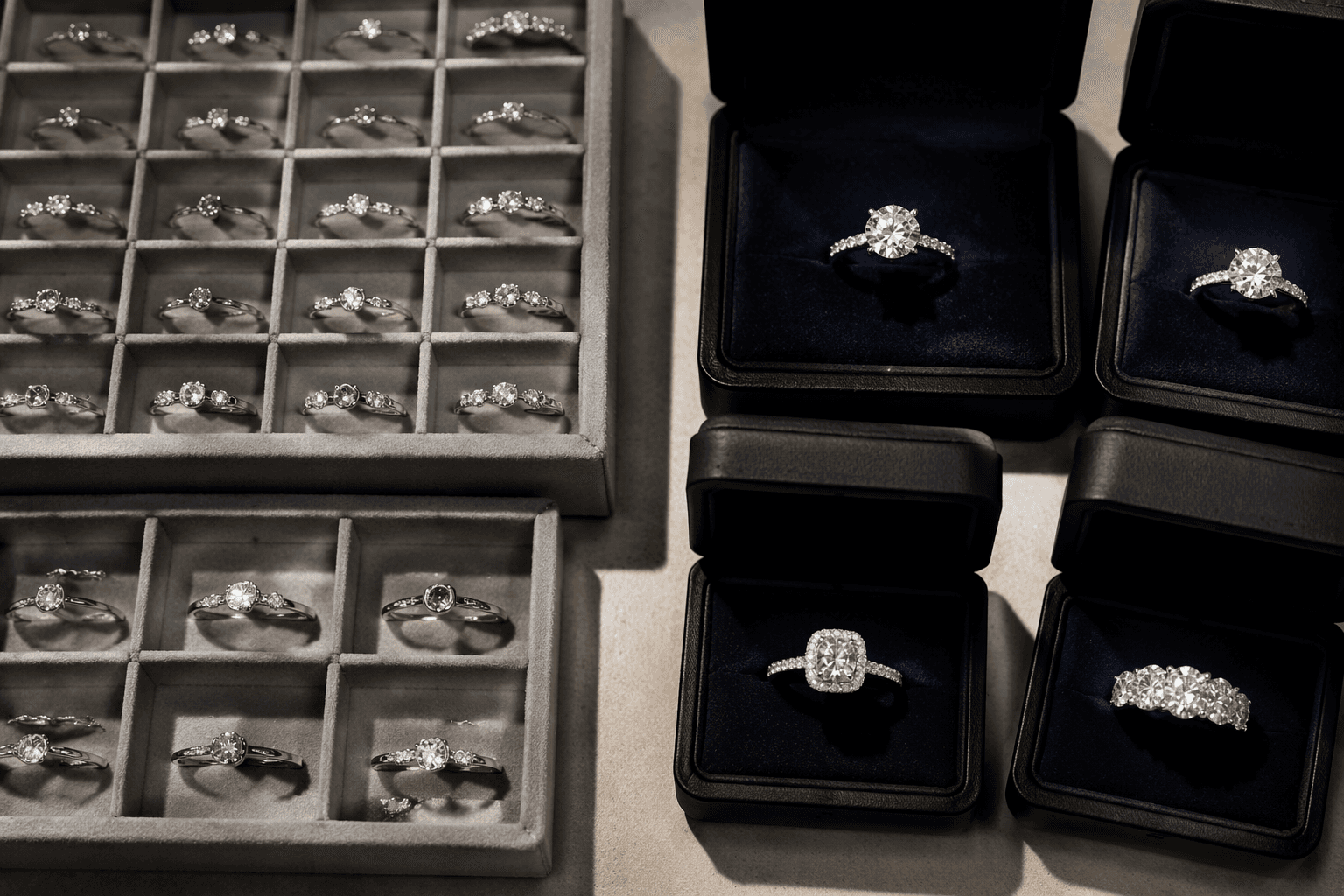
Fine jewelry is no longer behaving like one market. One customer is hunting below $1,500 and becoming more selective by the month; the other is still willing to spend above that line, especially on bridal rings, diamond stud earrings, and tennis bracelets built around natural stones. That split is the clearest signal in diamond jewelry right now, and it matters because it changes what belongs in the case, what belongs in the window, and what deserves precious shelf space.
Tenoris’ numbers show how the divide took shape. U.S. jewelry sales rose 1.4% in 2024 even as unit sales slipped 1.4%, which is a classic sign of fewer transactions carrying more dollars. The average specialty-jewelry ticket climbed 4.5% to $1,090, the highest level in five years, while lab-grown diamonds reached a 14% share of the U.S. jewelry market. In other words, shoppers were not flooding back in greater volume. They were spending more per item, and they were doing it unevenly.
Why the middle is thinning out
The biggest pressure point is the center of the market. By mid-2025, Tenoris said finished diamond jewelry demand was converging into a narrower band starting around $2,500 and running upward, with especially strong activity between $7,500 and $10,000. That leaves less oxygen for the middle tier, where pieces are expensive enough to require confidence but not expensive enough to feel truly special.
April 2025 made the pattern even sharper. Natural diamond sales in the United States fell 5.6% year over year, driven largely by a 9% drop in unit sales, even as total U.S. jewelry sales rose 3.3%. The message for jewelers is blunt: the category is not collapsing, but the mix is changing. Fewer natural diamond pieces are moving, and the ones that do move are getting backed by stronger pricing and a more decisive customer.
What is selling in the stronger tier
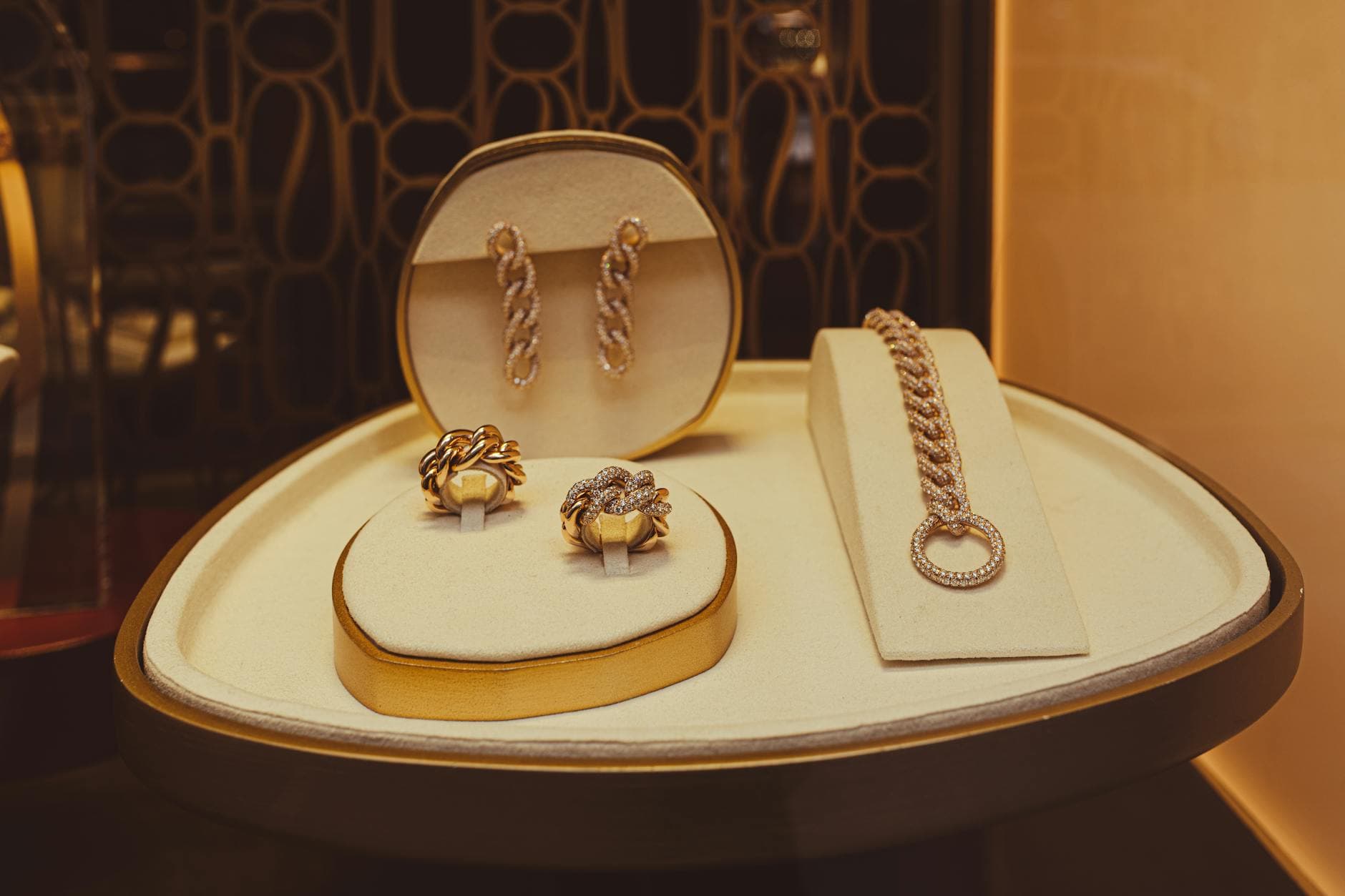
The upper tier is not buying everything. It is buying specific things. Bridal jewelry remains the anchor, and so do diamond studs and tennis bracelets, all categories that carry an easy value proposition and translate well in natural diamond. Those pieces work because they are legible. A customer can see the size of the center stone, the rhythm of the side stones, the weight of the bracelet, and understand why the piece costs what it does.
That clarity is especially important when lab-grown demand is concentrating in simpler, lower-priced items. Lab-grown stones have become the low-cost option in the mind of many shoppers, which has pushed the category toward straightforward, accessible designs rather than the larger, more emotionally loaded purchases that tend to support natural diamonds. For retailers, the merchandising lesson is simple: the two categories no longer compete for exactly the same sale. They compete for different wallets, and often for different occasions.
Natural diamonds still have momentum, but the mix is changing
The Natural Diamond Council’s 2025 Overview adds another layer to the picture. Based on more than four million transactions from 2,500 U.S. specialty jewelers, it found that specialty-jeweler sales of natural diamonds grew 2.1% in 2025 and the average price of natural diamond jewelry rose 10%. That is not the story of a category losing its footing. It is the story of a category becoming more concentrated in higher-value purchases.
Seasonality still matters, too. Valentine’s Day and Mother’s Day together accounted for 16% of annual natural diamond sales, which reinforces how gift moments continue to drive the business. The best assortments for those periods are not vague trend edits. They are tightly edited cases with clear stories: a round brilliant solitaire for the proposal buyer, a pair of classic studs for a milestone gift, a tennis bracelet for the customer who wants one piece that looks substantial without feeling formal.
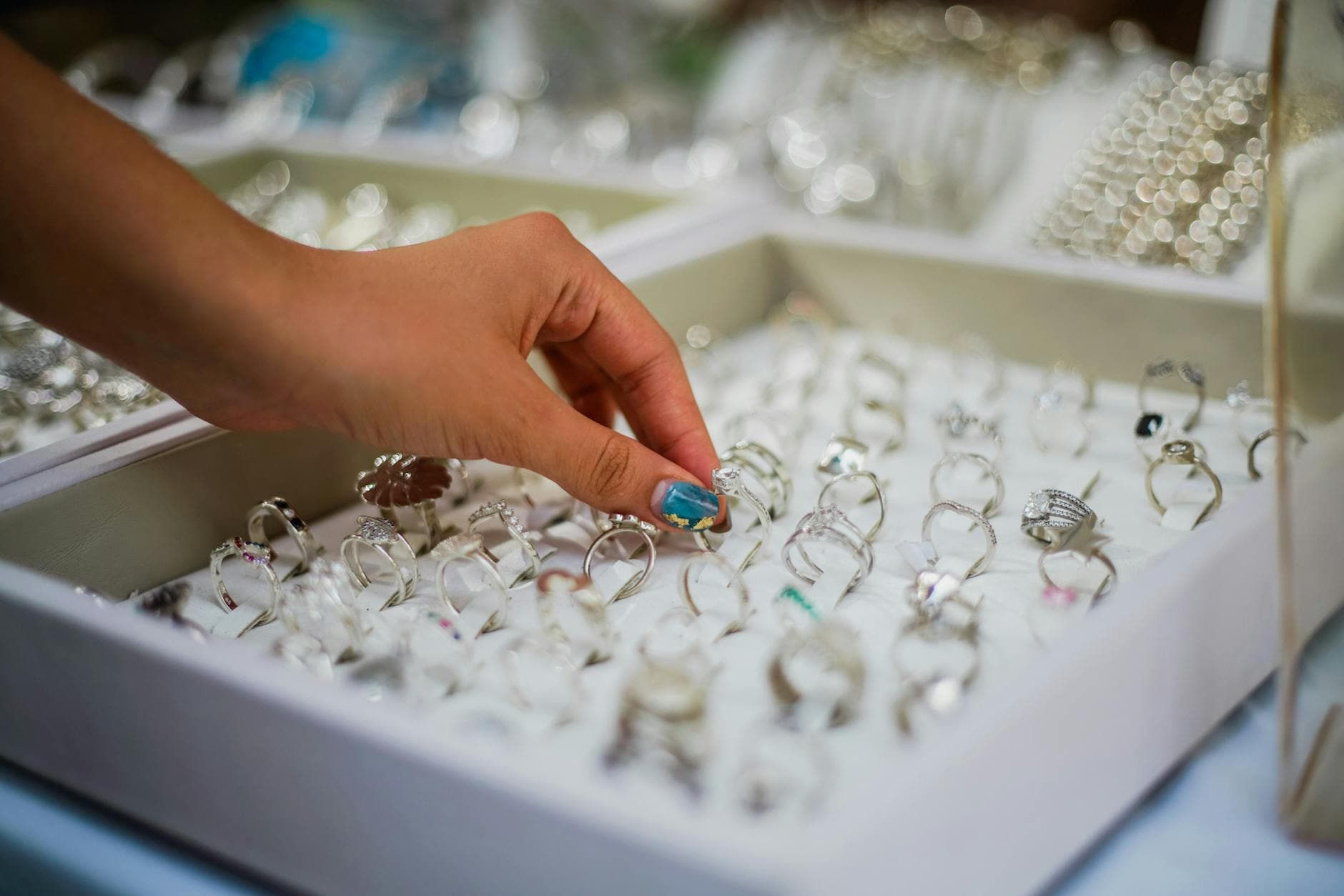
The shape data is just as useful. Round brilliant diamonds led engagement-ring sales at 62%, but marquise shapes grew 12% year over year, a sign that buyers still want recognizability with a little more character. The report also showed 2.00- to 2.24-carat center stones growing 9% in 2025 after 18% growth in 2024. That is a strong cue for bridal buying: the market still rewards scale, but it wants that scale presented with precision.
What jewelers should change on the floor
The merchandising implication is not abstract. It is immediate.
- Below $1,500, keep the offer clean and easy to understand. Smaller lab-grown pieces, streamlined studs, delicate pendants, and pared-back gold settings make sense here because the customer is price-sensitive and wants a clear entry point.
- From $2,500 upward, make bridal and classic diamond jewelry the visual center. Natural-diamond engagement rings, tennis bracelets, and matched stud collections belong in the strongest sightlines because that is where Tenoris sees demand converging.
- In the $7,500 to $10,000 range, present true upgrades, not just larger versions of the same thing. Larger center stones, better cut quality, and more deliberate settings give the customer a reason to trade up.
Gold matters in this equation as well. Higher gold prices make metal weight a harder sell, so the smartest cases will use gold to frame the diamond rather than overwhelm it. Lightweight but well-proportioned mountings, crisp prong work, and designs that let the stone carry the emotional and visual load will feel more relevant than heavy-handed settings that inflate price without adding much distinction.
A market that has become two markets
The broadest reading of the data is that fine jewelry is splitting into two separate economies. One is value-conscious, lower-priced, and increasingly comfortable with lab-grown stones in simple formats. The other is still buying up, especially in natural-diamond bridal and classic gift categories, and is willing to pay more for size, shape, and provenance that feels meaningful.
That is not a temporary wobble. It is a structural realignment that has followed the post-COVID demand surge, and it is reshaping assortment strategy from the case to the buying office. The middle is getting squeezed, the top end is holding, and the smartest jewelers are already treating diamond jewelry as a business of distinct price bands rather than one continuous market.
Know something we missed? Have a correction or additional information?
Submit a Tip