Diamond Jewelry Takes a Collectible Turn as Spring Favorites Shine
Spring’s strongest diamond pieces are fewer, rarer, and easier to resell: natural stones, sharp craftsmanship, and standout provenance now matter most.

The new diamond mindset
A great diamond no longer reads like an accessory added at the end. It is the accessory. WWD’s spring roundup makes a persuasive case for buying one memorable jewel, the kind that feels more permanent than the season and more personal than a trend, whether that means a bracelet, a ring, or a necklace with enough presence to anchor everything around it.
That shift is not happening in a vacuum. WWD’s spring 2026 fashion-week coverage framed jewelry through heirlooms, statement pieces, and self-expression, while buyers described the strongest accessories as defined by craftsmanship, textural richness, and colorblocking. In other words, spring is not asking for more sparkle. It is asking for better judgment.
What actually carries collectible weight
Diamond bracelets, rings, and necklaces are not equal bets
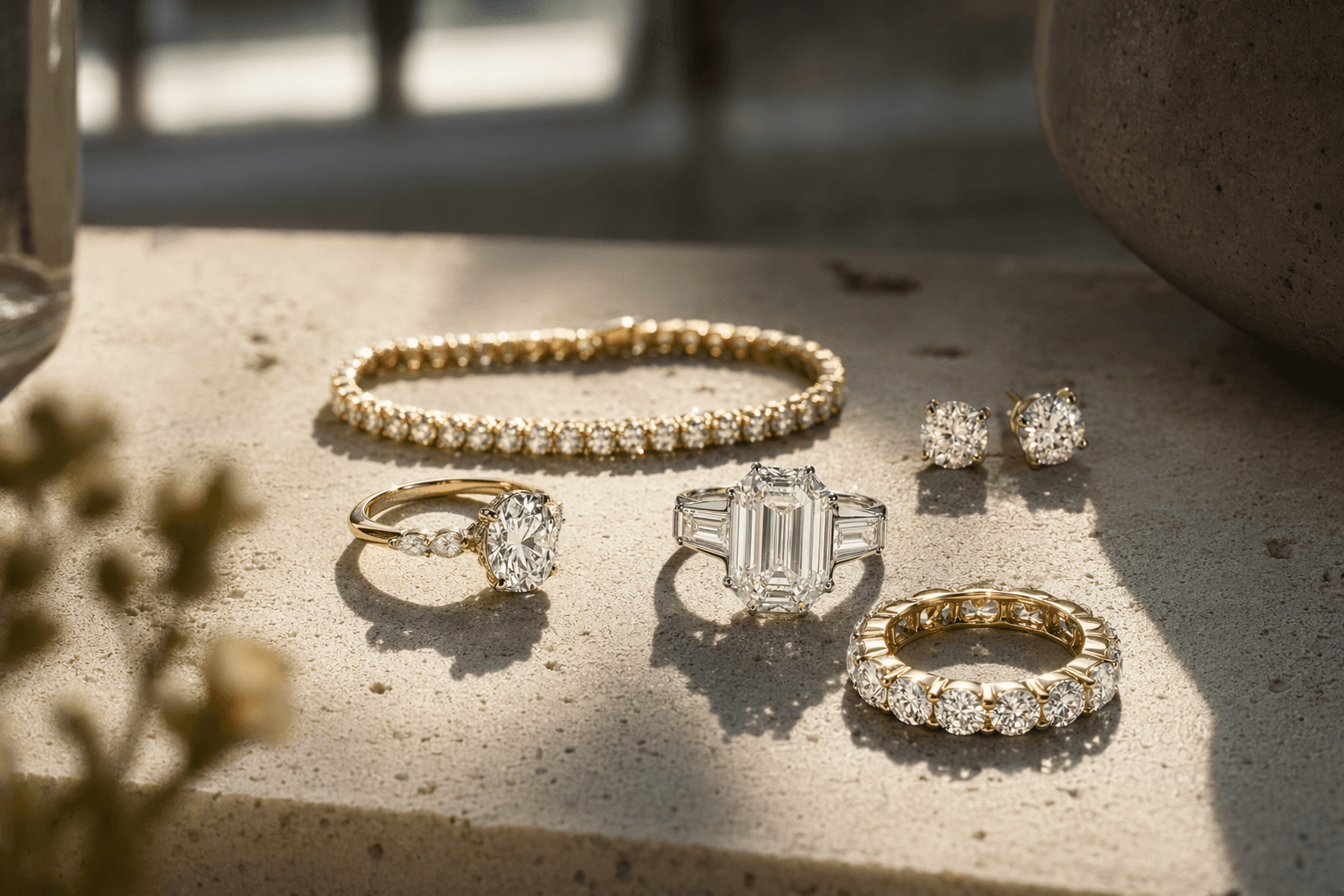
Diamond bracelets have the easiest day-to-night utility, which gives them long wear life if the workmanship is excellent. Look for crisp stone setting, clean symmetry, and enough design restraint that the piece can be layered without looking trapped in one trend cycle. A bracelet with balanced proportions and a strong clasp is more likely to remain in rotation than one that depends on a passing motif.
Diamond rings, especially those built around a notable center stone, tend to have the clearest collectible pull. Stone quality matters most here because the eye goes straight to the diamond’s shape, color, and liveliness. If the ring also has a distinctive setting, such as a thoughtful bezel that frames the stone with modernity or a prong setting that lifts the diamond for maximum light, the design can feel more enduring because it serves the stone rather than competing with it.
Standout necklaces are the sleeper investment pieces of the category. A single excellent pendant or collar can be surprisingly versatile, especially when the silhouette is strong enough to read as evening jewelry but precise enough to wear with a crisp shirt or a plain knit. The necklaces most likely to hold appeal are the ones that look intentional from every angle, with construction that feels refined rather than merely large.
The markers that separate value from hype
Rarity is only the beginning
If a diamond piece has long-term appeal, it usually checks four boxes: rarity, designer provenance, stone quality, and versatility. Rarity is the easiest to spot in the extreme end of the market, like Sotheby’s Geneva High Jewelry sale on May 12, 2026, which is led by a 6.03-carat Internally Flawless Fancy Vivid Blue diamond and includes 125 lots. A stone like that is not just beautiful; it is scarce enough to function as a benchmark.
Designer provenance matters because a recognizably strong point of view can protect a jewel from looking dated. The most collectible diamond pieces tend to show discipline in proportion and detail. They are not overworked. They have a clear line, a confident silhouette, and enough originality that the piece feels authored rather than assembled.
Stone quality remains the most objective signal. Clarity, color, and cut still do the heavy lifting, especially when the piece is meant to live beyond one wardrobe season. A diamond with superior light performance will look fresh longer than a larger stone that lacks life. That is why collectors gravitate toward pieces where the diamond itself is the story, not just the carat weight.
Versatility is the practical test. A collectible jewel should feel exceptional, but it should also be wearable in more than one setting. If a piece only works with a single neckline or a single dress code, it is fashion. If it can move between weekday, event, and heirloom drawer, it has staying power.
- A strong clasp, solid construction, and even stone alignment signal durability.
- Clean lines and balanced proportions age better than overtly thematic motifs.
- Pieces that frame, rather than fight, the diamond tend to feel more timeless.
Why natural diamonds still command the collector eye
The numbers help explain why editors are leaning into this more selective approach. Natural Diamond Council data, based on more than four million jewelry transactions from 2,500 U.S. specialty jewelers through Tenoris, showed natural diamond jewelry sales rising 2.1% in 2025. The average price of natural diamond jewelry increased 10% year over year, and holiday jewelry sales at specialty jewelers rose by more than 6% to close the year on a high.
That is a meaningful signal in a market still absorbing tariffs, inflation, and higher gold prices. Consumers have not abandoned diamond jewelry; they have become more discriminating about what earns a place in the box. The same report says buyers continue to value authenticity, deep-Earth origin, and heirloom potential in natural diamonds, which helps explain why one well-chosen jewel now feels smarter than a scatter of interchangeable buys.
The distinction between natural and lab-grown diamonds is also sharper than it was a year ago. GIA introduced updated laboratory-grown diamond services that use descriptive terms rather than the natural-diamond 4Cs framework, a shift that underscores how the trade is increasingly separating the two categories. For anyone thinking about resale or legacy value, that distinction matters. Natural diamonds still carry the strongest collector narrative because they are scarce, finite, and historically understood as objects to be passed down.
What the market is saying beneath the sparkle
The spring story is about fewer, better purchases
Tenoris’ broader view of the U.S. jewelry market adds another useful clue: average spending per item in diamond jewelry rose by more than 10% to $2,739 in 2025. That is not the behavior of a consumer chasing throwaway sparkle. It is the behavior of someone trading quantity for conviction.
Seen together, the runway language, the sales data, and the auction market point in the same direction. Spring’s diamond jewelry is becoming more collectible because it is becoming more considered. The pieces with the best long-term prospects are not the loudest ones in the room. They are the ones with a clear point of view, an exceptional stone, and enough design intelligence to survive long after the season’s color story has faded.
This article was produced by Prism’s automated news system from verified source data, official records, and press releases, then run through automated quality and moderation checks before publishing. The system is built and supervised by the people who set the standards it runs under. Read our full AI policy.
Did this article answer your question?