GIA's Lab-Grown Diamond Report Explains Testing, Grading, and Origin Verification
Before you spend a dollar on a lab-grown diamond, the GIA Quality Assessment tells you exactly what you're holding — and what you're not.
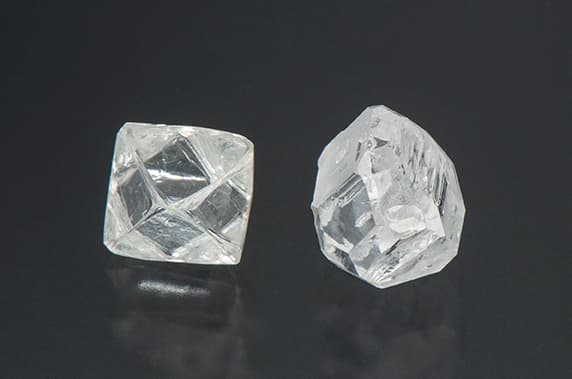
Before you spend a single dollar on a lab-grown diamond, whether it's set in a pair of 1-carat studs, a tennis bracelet, or an engagement ring centerpiece, one document changes everything you can verify about the stone in front of you: the GIA Laboratory-Grown Diamond Quality Assessment. As of October 1, 2025, the Gemological Institute of America fundamentally rewrote how it evaluates and communicates the quality of man-made diamonds, replacing its previous digital-only grading report with a printed document built on new language, new categories, and a sharper scientific line between laboratory-grown and natural stones. Understanding what this assessment says, and what it deliberately no longer says, is now essential knowledge for any serious buyer.
What the GIA Assessment Actually Is
The GIA Laboratory-Grown Diamond Quality Assessment is not a grading report in the traditional sense. GIA has been deliberate about that distinction: the document is officially an "assessment," not a report, and the difference is meaningful. Where the Institute's natural diamond reports use the internationally recognized 4Cs system (Color, Clarity, Cut, and Carat Weight) developed by GIA itself in the 1940s, the new lab-grown assessment replaces individual letter grades and clarity scales with two plain-English descriptors: "Premium" or "Standard." A stone that fails to meet even the minimum threshold for Standard receives no assessment at all from GIA.
The reasoning behind this shift is rooted in market data. As GIA's then-executive vice president and chief laboratory and research officer Tom Moses put it: "More than 95% of laboratory-grown diamonds entering the market fall into a very narrow range of color and clarity. Because of that, it is no longer relevant for GIA to describe man-made diamonds using the nomenclature created for the continuum of color and clarity of natural diamonds." GIA president and CEO Pritesh Patel reinforced that position when the October launch was announced: "GIA will no longer use the nomenclature created for natural diamonds to describe what is a manufactured product."
Premium vs. Standard: The Exact Criteria
These are not fuzzy marketing terms. GIA has published precise, measurable thresholds for each category, and knowing them protects you from retailers who use "Premium" loosely.
To qualify as Premium, a laboratory-grown diamond must meet all of the following:
- Clarity of Very, Very Slightly Included (VVS) or higher
- D color (the absolute top of the color scale)
- Excellent polish and symmetry
- For round brilliant cuts only: an Excellent cut grade
To qualify as Standard, a stone must meet these minimum criteria (and may combine any of the Premium metrics above):
- Color in the E-to-J range
- VS (Very Slightly Included) clarity
- Very Good polish
- Very Good symmetry (Good symmetry is accepted for fancy shapes)
- For round brilliant cuts only: a Very Good cut grade
Any stone that falls short of the Standard floor, meaning J-or-below color, clarity worse than VS, or subpar finish grades, receives no designation and is charged only a US$5 evaluation fee rather than the standard US$15-per-carat fee (with a minimum of $15). The minimum submission size is 0.15 carats. For a retailer to show you a GIA-assessed lab-grown diamond, it must already have cleared that floor.
How GIA Proves a Diamond Was Grown in a Lab
This is where GIA's science becomes the consumer's strongest shield. The assessment only means something if GIA can definitively confirm the stone is laboratory-grown rather than natural, and that confirmation relies on a battery of physical and spectroscopic tests that no visual inspection alone could replicate.
Laboratory-grown diamonds carry tell-tale internal signatures depending on how they were made. There are two production methods: High Pressure, High Temperature (HPHT) and Chemical Vapor Deposition (CVD). HPHT diamonds are grown under conditions that mimic the Earth's mantle using metal flux chambers, and they frequently contain dark flux-metal inclusions, including nickel, embedded during growth. The presence of these metallic inclusions, combined with an absence of the natural graining patterns found in mined stones, is a strong indicator. HPHT stones can also exhibit phosphorescence, continuing to glow after a UV light source is switched off, a characteristic that is rare in natural diamonds.

CVD diamonds grow through an entirely different process: carbon-rich gas is ionized into plasma and deposited onto a seed crystal layer by layer. Under deep-UV illumination, this stacked growth structure becomes visible in a pattern GIA scientists have described as resembling a stack of pancakes, a growth architecture that simply does not occur in natural diamonds. Photoluminescence spectroscopy on CVD stones can also reveal the presence of silicon, a common byproduct of the CVD growth environment, providing a further chemical fingerprint. Color zoning and graining patterns visible under magnification offer additional clues at the microscopic level.
The Laser Inscription: Your Physical Proof of Origin
Once a stone passes GIA's scientific identification and quality assessment, its girdle, the narrow band around the widest part of the diamond, is laser inscribed with two things: the word "LABORATORY-GROWN" and the stone's unique GIA quality assessment number. This inscription is permanent, microscopic, and invisible to the naked eye without magnification, but it is verifiable with a jeweler's loupe or at any GIA-authorized laboratory. When you're shopping, ask to see the girdle inscription under magnification before you buy. If a retailer cannot show it to you, or if the inscription number does not match the document in your hand, treat that as a red flag.
What the Assessment Does and Does Not Tell You
The GIA Laboratory-Grown Diamond Quality Assessment confirms:
- That the stone is laboratory-grown (not natural)
- Its quality tier (Premium or Standard)
- Whether it was grown by CVD or HPHT
- Whether post-growth color treatments were detected or could not be determined
- A QR code linking to GIA's educational page on lab-grown diamond identification
What it no longer provides is a specific color letter grade (D, E, F, and so on) or a specific clarity grade (VS1, VS2, VVS1, and so on) using the scale designed for natural diamonds. For some buyers, that specificity matters, particularly if they are comparing lab-grown stones across retailers or evaluating a stone for resale. The previous digital-only LGDR format did provide those grades; stones that went through GIA before September 30, 2025 may still carry those older reports, which remain valid documents.
The Questions to Ask Your Retailer
GIA confirmed this shift applies specifically to D-to-Z laboratory-grown diamonds, and older reports from before October 2025 remain legitimate. That means the lab-grown diamond market now contains two generations of GIA documentation. Before any purchase, push for clear answers on these points:
- Does this stone have a GIA quality assessment issued after October 1, 2025, or an older LGDR? Both are legitimate, but they use different languages and you should know which you're reading.
- What is the growth method listed on the document: CVD or HPHT?
- Can you show me the girdle inscription under magnification, and does it match the assessment number?
- Was any post-growth color treatment detected?
- If the stone carries a "Standard" designation, what specific color and clarity data exists from any prior grading?
Why This Shift Matters for Price Clarity
The transition from precise 4Cs grades to broad Premium/Standard categories has a direct effect on how lab-grown diamonds are priced and compared. A stone graded D/VVS1 under the old system carried a specific market value that buyers and traders could benchmark. A "Premium" stone under the new system confirms that the stone met D-color and VVS-or-better thresholds, but it does not distinguish between, say, a D/VVS1 and a D/VVS2. For buyers purchasing a lab-grown stone as a beautiful, wearable gem with no secondary-market concerns, the simplified language is sufficient. For anyone who wants granular grading data, a second opinion from another gemological laboratory may be worth the investment.
The underlying science hasn't changed: GIA's spectroscopic testing, UV analysis, and microscopic examination remain among the most rigorous in gemology. What has changed is how that science is communicated on paper. The GIA Laboratory-Grown Diamond Quality Assessment is, at its core, an origin verification document first and a quality summary second. Know the difference, and you'll shop with a level of clarity that most buyers never reach.
This article was produced by Prism’s automated news system from verified source data, official records, and press releases, then run through automated quality and moderation checks before publishing. The system is built and supervised by the people who set the standards it runs under. Read our full AI policy.
Did this article answer your question?