How diamond settings protect everyday wear, from prongs to bezels
The safest everyday diamond setting is the one that matches the stone and the life it lives in. Six prongs add security, while bezels guard the girdle best.
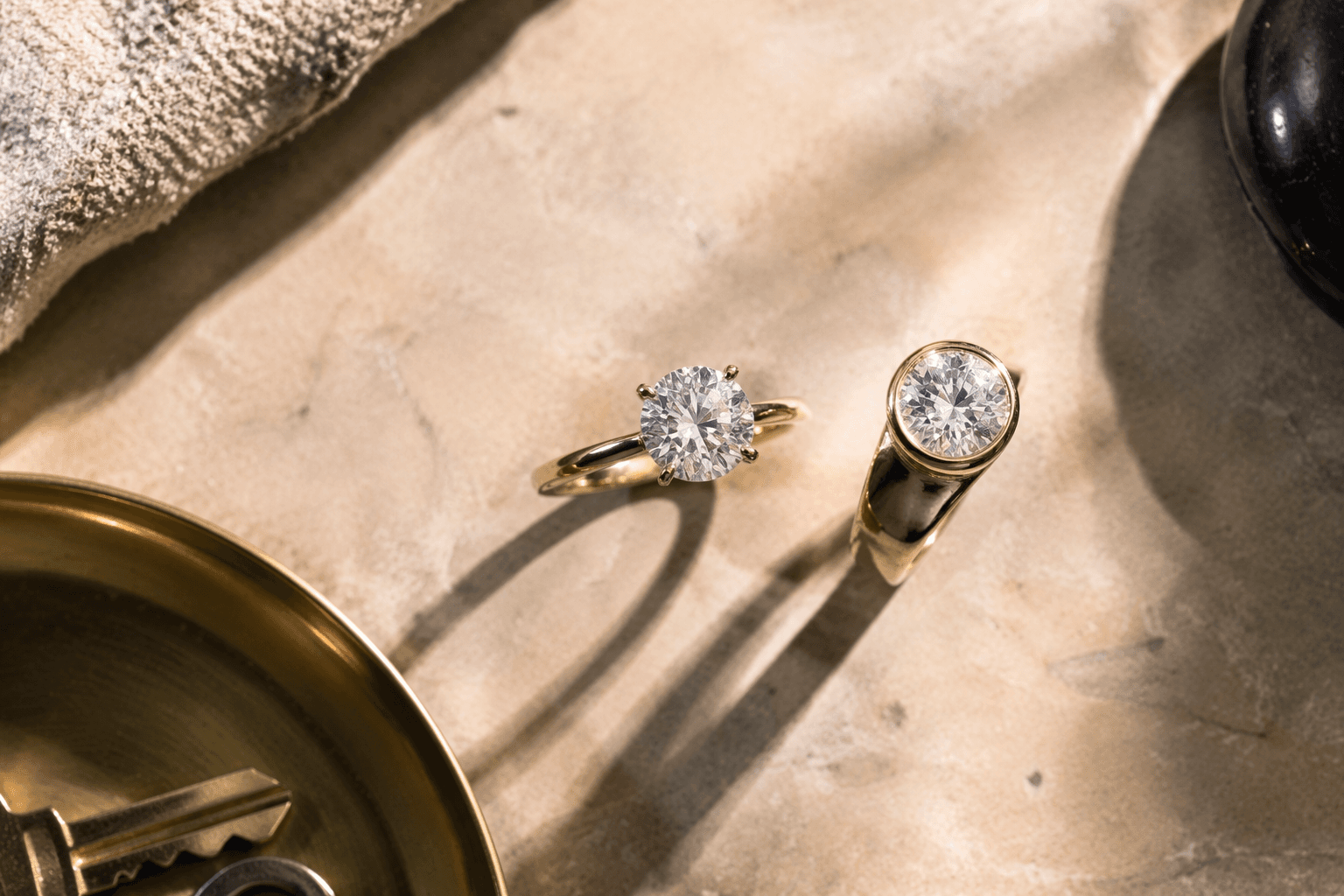
Typing, lifting, commuting, and constant handwashing test a ring’s setting more than its sparkle. A setting has two jobs: keep the stone in place and protect it from damage, and those jobs become more important when the ring is worn every day. The tradeoffs run from six-prong security to the girdle-covering protection of a bezel.
How the setting protects the stone
The girdle is the narrow middle section where the crown and pavilion meet, and it acts as the diamond’s setting edge. That makes the mount not just decoration, but part of the stone’s durability strategy. Very thin girdles raise the risk of damage, and inclusions that reach the girdle can make a cut diamond more vulnerable to chipping.
That is why the diamond and the mounting have to be chosen together. A stone with a delicate girdle needs more protection from the setting than a sturdier stone with a thicker edge, and a vulnerable inclusion map can matter as much as the style of the ring itself. In practical terms, the safest-looking design is not always the safest stone choice, and the safest stone is not always the best match for an open, airy mounting.
Why prongs still dominate, and when six is better than four
Prong settings remain the classic answer because they expose the diamond to light. Prongs are slim metal arms that cradle the diamond at the girdle, and Tiffany & Co.'s six-prong Tiffany® Setting has more than 130 years of design history. That open look has enduring appeal, but it comes with more exposure than a bezel.
A six-prong setting is more secure than a four-prong setting. If one prong breaks, the extra prongs help keep the stone in place, and they also give the girdle a bit more protection in daily wear. Four prongs can look lighter and more minimal, but six prongs offer a stronger margin of safety for a ring that is going to be worn hard and often.
Stone shape changes the risk
Not every diamond is asking for the same kind of protection. Princess cuts are especially vulnerable because their corners sit close to cleavage planes, which makes them more prone to chipping. Emerald cuts, triangular shapes, radiants, and princess cuts all need adequate girdle thickness to reduce that risk.
That is where V-shaped prongs become useful. They are recommended for vulnerable corners because they protect the point instead of leaving it exposed. In a square or pointed shape, the setting is guarding the places where damage is most likely to start.
Inclusions matter here too. A diamond with inclusions near the girdle or points is more likely to chip or break, and deep feathers that extend significantly into the stone create their own durability concerns. For everyday wear, the safest choice is often a combination of a stronger girdle, a shape that can tolerate the mounting, and prongs designed to shield the parts that need the most help.
When a bezel makes the most sense
A bezel is the most protection-first choice in the setting conversation. It is more secure than prongs and protects the diamond’s girdle. The tradeoff is that a bezel allows the stone to catch less light than a prong setting.
That is the central design decision for active wear. If the ring needs maximum security, the bezel is the practical answer because it surrounds the edge of the diamond instead of leaving it exposed. If the goal is a more open look with maximum light return, prongs usually win. The same logic appears in other jewelry categories too, including tennis bracelets, where prongs are favored for light and bezels for maximum protection.
Maintenance is part of the setting choice
Daily wear is not only about what happens on the hand. It is also about what happens at the jeweler’s bench. Ultrasonic and steam cleaners can loosen gemstones in their settings, which is why jewelry professionals inspect pieces for loose stones before using those devices. Ultrasonic cleaners can also shake loose stones from their mountings or chip the girdles of diamonds set next to each other.
Even the most secure setting should be checked for movement before deep cleaning, and a ring that gets regular wear deserves regular attention. GIA lists professional ultrasonic cleaners at $150 or less, a useful reminder that proper care is a modest investment compared with replacing a stone that has shifted or been damaged.
For a ring worn every day, the safest routine is steady and simple: look for movement, check the prongs or bezel for wear, and avoid assuming that shine means security.
Choosing with real life in mind
The best setting is the one that matches the shape of the stone, the amount of exposure you want, and the way the piece will actually be worn. A six-prong ring gives more security than four prongs; a bezel gives even more protection than prongs; and V-shaped prongs make sense when corners need shielding. Thin girdles, exposed points, and surface-reaching inclusions all push the decision toward stronger coverage.
- For maximum security on an active hand, a bezel is the most practical option.
- For a classic look with better protection than four prongs, six prongs are the safer prong choice.
- For princess cuts and other pointed shapes, V-shaped prongs help shield the vulnerable corners.
- For stones with thin girdles or inclusions near the edge, the setting should add protection rather than leave the girdle exposed.
This article was produced by Prism’s automated news system from verified source data, official records, and press releases, then run through automated quality and moderation checks before publishing. The system is built and supervised by the people who set the standards it runs under. Read our full AI policy.
Did this article answer your question?