How to buy diamond jewelry online, GIA and market trends guide shoppers
A diamond bought online now lives or dies by its paperwork: GIA grading, return terms, and an 83% plunge in 1.5-carat lab-grown value.
The market signal hiding inside the price tag
A 1.5-carat laboratory-grown diamond has lost 83% of its value over nine years, and that single number explains why online diamond buying now demands discipline. The screen may flatten everything into sparkle, but the market has moved into a far more selective phase, where two stones that look similar can carry very different economics.
That split is widening even as natural diamonds remain resilient. The Natural Diamond Council says consumer demand for natural diamonds held up in 2025 despite tariffs, inflation and higher gold prices, and holiday jewelry sales at specialty jewelers rose more than 6% to close out the year. Its overview is built on Tenoris data from more than four million jewelry transactions across 2,500 U.S. specialty jewelers, which gives the trend real weight rather than showroom hype.
Why the certificate matters more than the carousel photo
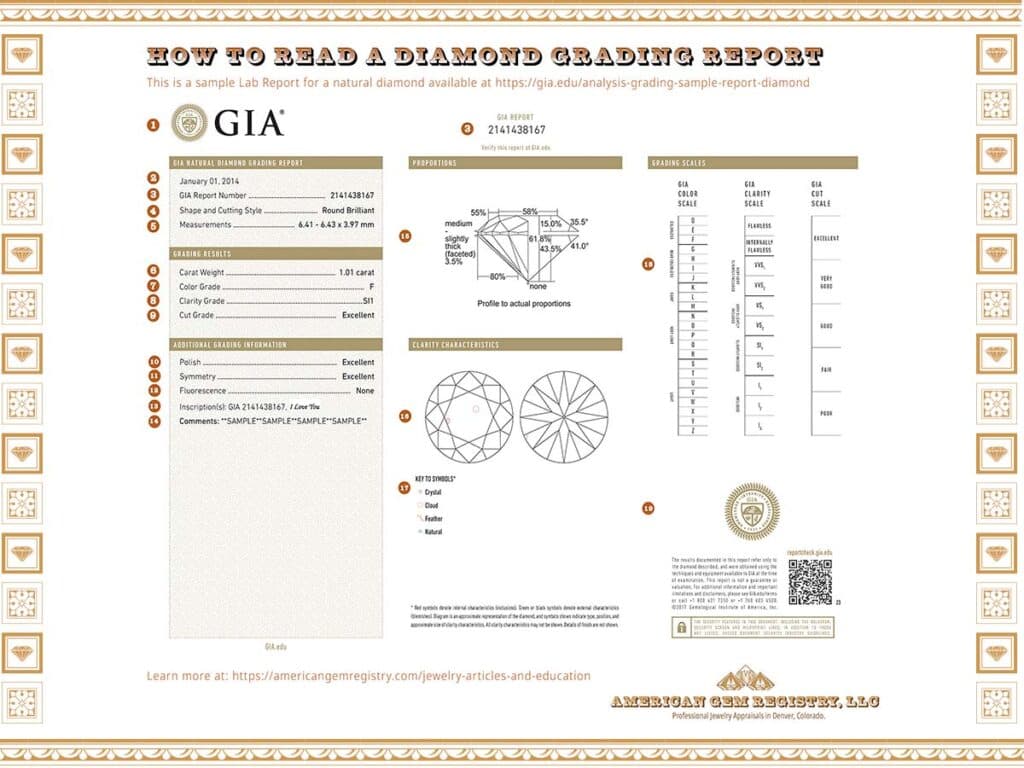
GIA’s advice is blunt and correct: start with accurate information. A GIA diamond grading report tells you exactly what you are buying, and that matters because the differences in diamond quality can be subtle enough that even trained jewelers may not spot them without lab verification.
That is why GIA reports have remained the benchmark since the 1950s. A stone without that paper trail is not necessarily a bad stone, but it is a stone asking you to trust the seller instead of the evidence. Before purchase, GIA also recommends appraising and insuring the diamond, a step that turns a beautiful object into a properly protected asset.
There is one more quiet safeguard online: the grading report should match the archived report database before you commit. That check is the digital equivalent of holding a loupe to a mount, and it is one of the simplest ways to avoid paying for certainty that does not exist.
How online retailers really differ
Forbes Vetted’s buying guide is useful because it does not treat every retailer as interchangeable. The meaningful differences are selection, customization, shipping, returns and warranty, and those details matter more online than they do in a boutique because you cannot inspect the finished piece in your hand before checkout.
Selection is not just about quantity. A retailer with a broad inventory may still be a poor fit if you want a specific shape, a particular setting style or the option to build a ring around a matched stone. Customization is where many online jewelers separate themselves: some are comfortable turning a loose diamond into a made-to-order piece, while others present a more fixed assortment that favors convenience over personal detail.
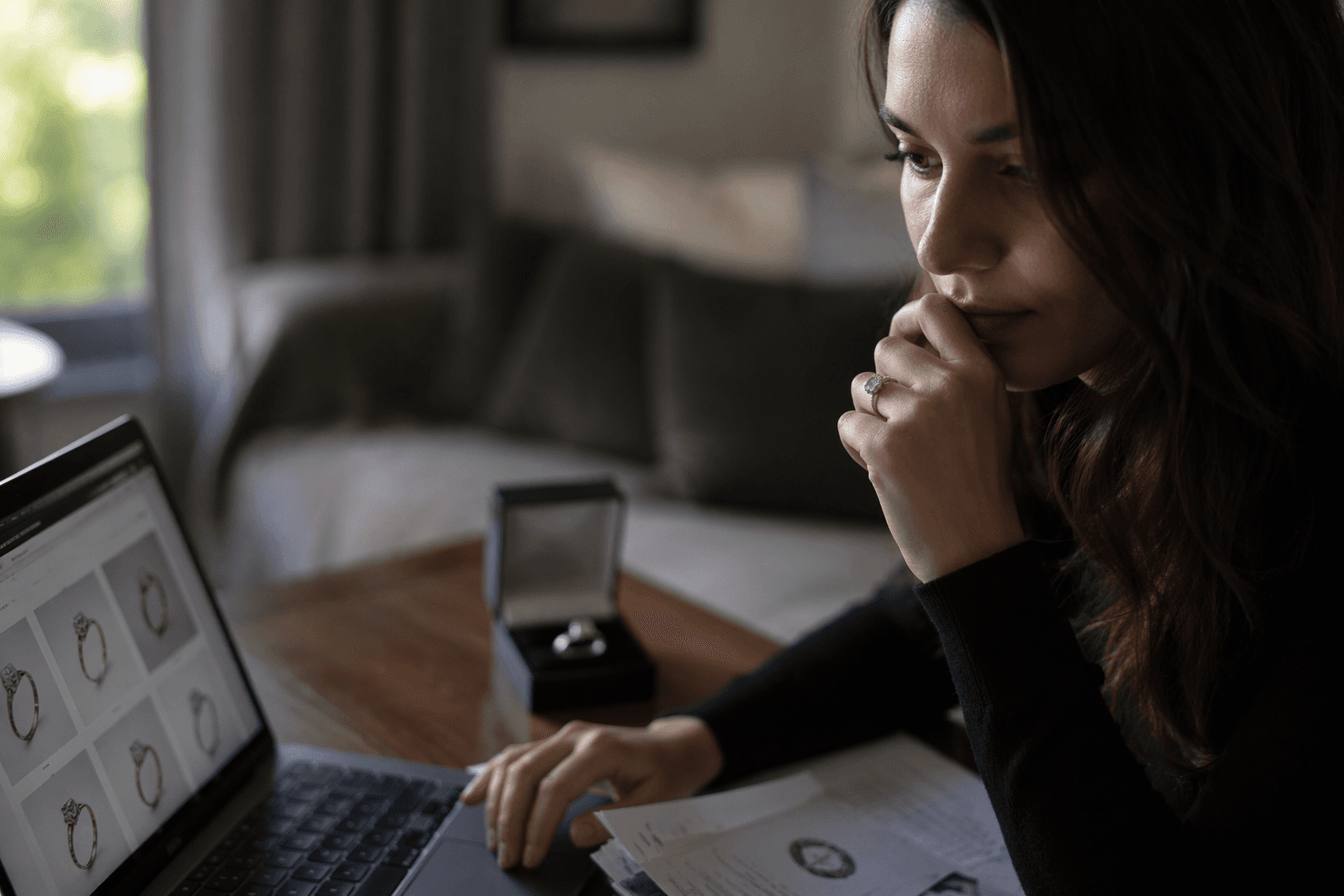
Returns and warranty are the less glamorous but often more expensive parts of the decision. A generous return window can buy peace of mind for a first-time buyer, while a solid warranty becomes essential if you are investing in a piece meant to be worn often. If an upgrade path matters to you, read that policy with the same care you give the grading report, because the right retailer should feel flexible, not locked-in.
How to compare stones without being seduced by sparkle
Matched-stone price checks are where online shopping becomes genuinely revealing. The only fair comparison is like for like: same carat weight, shape, color, clarity, cut and certification. Anything less can make a stone seem cheaper simply because it is smaller, weaker on cut or less precisely documented.
This is especially important now that natural and lab-grown diamonds occupy very different value lanes. The Natural Diamond Council’s 83% decline in the value of a 1.5-carat lab-grown diamond over nine years explains why the lowest visible sticker price is no longer the same as the best long-term value. A buyer focused on initial spend may find laboratory-grown pieces compelling; a buyer focused on rarity, market context and a more established grading tradition may lean natural.
Shape also matters more than many shoppers realize. The council says 2025 saw growth in long fancy shapes and a continued move toward larger, higher-quality diamonds, which means elongated ovals, pears, emerald cuts and marquise stones are not just fashion statements. They can also change how a diamond wears on the hand, how large it appears and how a retailer prices the setting around it.
Natural versus lab-grown, and what the market is telling you
The smartest online buyer is not choosing between “good” and “bad” diamonds. You are choosing between two different purchase logics. Natural diamonds are being buoyed by resilient demand and a market that still values scarcity, while lab-grown stones are moving through a dramatic reset in pricing that makes them attractive for size and immediate value.
Natural Diamond Council’s own consumer-facing work reflects how central transparency has become. It works with governments, local communities, analysts and researchers to provide clear insights for consumers, industry professionals and the press, and its reports on laboratory-grown diamonds focus on terminology, sustainability claims, pricing and the distinctions between natural and laboratory-grown material. That emphasis is telling: the online diamond shopper is no longer just buying a gem, but also choosing which story of value to believe.
The best online purchase, then, is the one that survives scrutiny on every front. A GIA report, a verified database match, a clear return policy and a retailer willing to customize intelligently are worth more than a glossy homepage, because in diamond jewelry the prettiest offer is not always the most durable one.
This article was produced by Prism’s automated news system from verified source data, official records, and press releases, then run through automated quality and moderation checks before publishing. The system is built and supervised by the people who set the standards it runs under. Read our full AI policy.
Did this article answer your question?