IIT Madras Lab-Grown Diamond Center Eyes Quantum and Jewelry Applications
A Rs. 242 crore government lab at IIT Madras aims to grow gem-quality diamonds domestically, with indigenous growth machines targeting production by end of 2026.
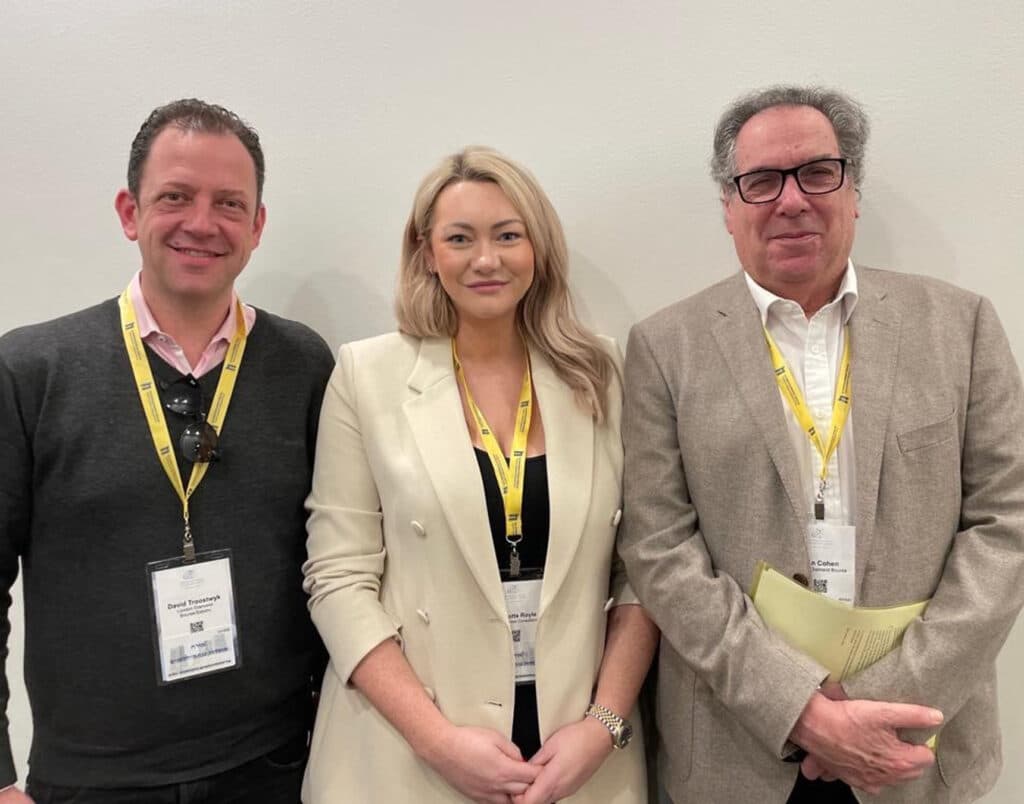
The three-day International Conference on Diamond and Emergent Materials that closed at IIT Madras on March 13 was not primarily a jewelry event, but what unfolded in those sessions has direct implications for anyone buying, selling, or setting lab-grown stones.
India's government-backed India Centre for Lab Grown Diamond (InCent-LGD) used iCDEM 2026, organized in collaboration with the University of Arizona and the Gem and Jewellery Export Promotion Council, to map out an ambitious program: build indigenous diamond growth facilities, train a specialized technical workforce, and capture export value that currently flows overseas. The Rs. 242.96 crore, five-year mandate from the Ministry of Commerce and Industry is not research for its own sake.
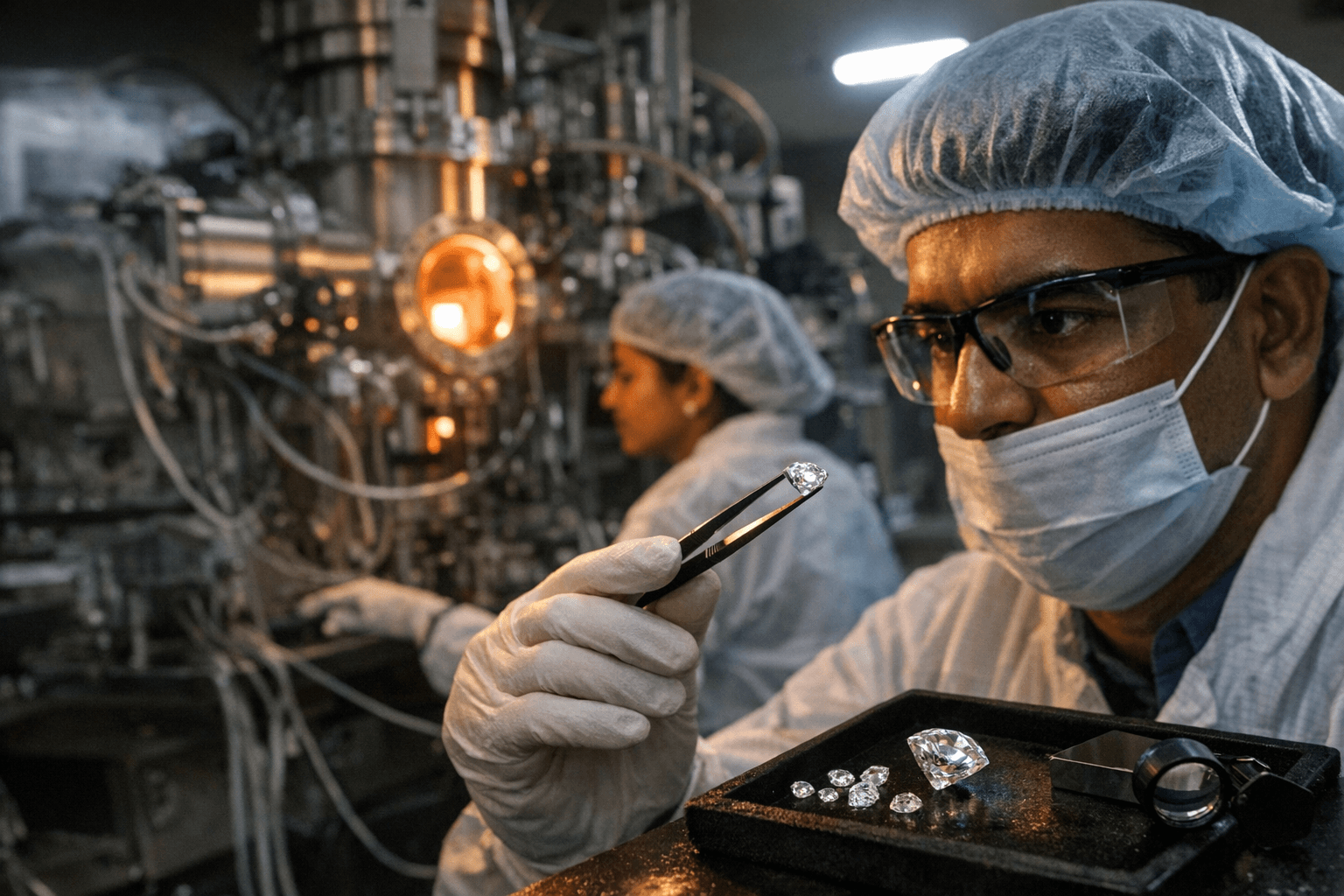
The center's most consequential near-term goal is eliminating India's dependence on imported diamond seeds. India is already the world's second-largest lab-grown diamond producer after China, with thousands of microwave plasma chemical vapor deposition machines operating out of Surat's cutting centers. Yet almost every seed crystal used in that production is Chinese-made. InCent-LGD is developing domestic CVD and high-pressure high-temperature systems, known internally as Vajratara and Vajrakaya respectively, targeting 2-square-centimetre single-crystal diamond seeds and wafers by end of 2026. Larger, purer seeds are not merely a supply chain story: they directly enable the growth of larger, more optically consistent gem-quality crystals, which in turn affects what a cutter in Surat has to work with when producing stones destined for fine jewelry.
On color and defect control, the picture is nuanced. InCent-LGD's research into nitrogen-vacancy centers, the atomic-scale impurities that make diamond viable for quantum sensing and precision magnetometry, is at its core the science of controlling a crystal's internal structure with extraordinary exactness. That work casts a long shadow over gem quality. Mastering nitrogen distribution in a CVD reactor is the same fundamental problem whether the goal is building a quantum sensor or growing a consistently colorless D-grade stone. Better process control means fewer post-growth treatments to bleach out unwanted yellow tint, and more predictable grading outcomes when those stones reach a gemological lab.
Where quantum hype deserves scrutiny is in its application to the jewelry counter. Nitrogen-vacancy-based devices are genuinely compelling for precision sensing, next-generation 5G and 6G communications infrastructure, power electronics, and photonics applications where diamond's ultra-wide band-gap properties outperform silicon carbide and gallium nitride. InCent-LGD's work across all three of these research areas positions India seriously in the semiconductor and quantum device race. But these are laboratory and industrial outcomes. A stone does not become more valuable as a solitaire because the same institute is researching quantum magnetometry down the hall.
The practical checklist for buyers and jewelers as this research transitions to commercial material: ask whether a certificate documents the specific growth method, CVD or HPHT, and the origin of the seed crystal. Watch for color grading consistency as Indian-grown stones begin entering the export market. Scrutinize any origin-based premium claims until independent gemological labs establish clear standards for verifying domestic production provenance. The Gem and Jewellery Export Promotion Council's presence at iCDEM signals the trade is tracking this closely. The science is credible and the funding is real; the timeline to market-quality material at meaningful scale is measured in years, not seasons.
This article was produced by Prism’s automated news system from verified source data, official records, and press releases, then run through automated quality and moderation checks before publishing. The system is built and supervised by the people who set the standards it runs under. Read our full AI policy.
Did this article answer your question?