Jessica McCormack brings heirloom diamonds to everyday wear in New York
Jessica McCormack’s New York debut turns antique-minded diamonds into an all-day uniform, with a townhouse flagship built to match the brand’s cult following.

Jessica McCormack has made a case for diamonds that do not wait for nightfall. The London jeweler’s New York opening turns that idea into a physical world, with a townhouse-like flagship on Madison Avenue designed to make heirloom-style pieces feel as natural with a shirt cuff as they do with a black dress.
A diamond wardrobe built for real life
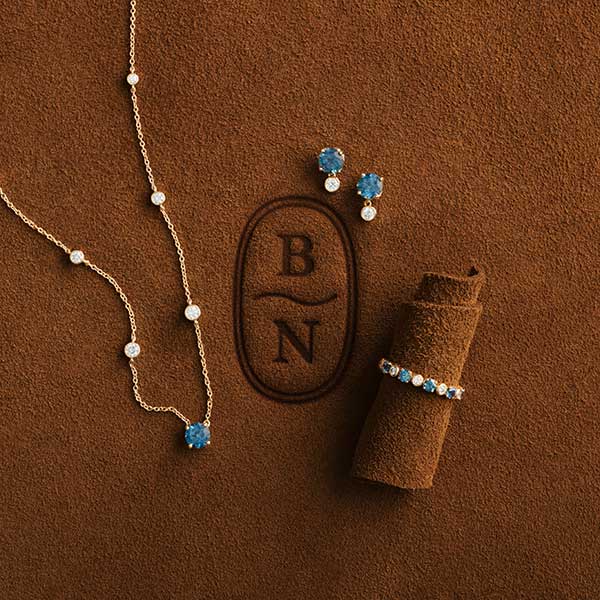
McCormack’s formula is deceptively simple: take the language of heirloom jewelry, then strip away the pressure to reserve it for ceremonies. Her brand’s own position is blunt about the point, insisting that diamonds are too precious to be saved for special occasions and that the designs are meant to be layered with existing heirlooms and worn from day to night.
That stance follows directly from McCormack’s own background. She is New Zealand-born and London-based, and she began in Sotheby’s jewelry department, where antique styles and traditional techniques shaped her eye. When she launched her brand in 2008, the mission was to breathe new life into heirloom designs, not to imitate them piece for piece. The result is a vocabulary of “day diamonds” and one-of-a-kind pieces that feel polished but not precious in the guarded, untouchable sense.
The appeal lies in the balance. The jewelry reads as collected, not costume-y; special, but not so delicate that it disappears into a safe. For affluent buyers who want fewer, better pieces to work hard across a week, that is the point of the exercise: a diamond can be a uniform, not an event.
Why New York matters to the brand
The Madison Avenue opening gives McCormack her first store outside London and her first U.S. flagship, a milestone that matters because the brand already had a small but established group of American clients. Rather than testing the market with a modest outpost, she went straight to a 3,200-square-foot space at 743 Madison Avenue, spread across two floors with plans for a third-floor apartment.
The building itself does part of the storytelling. Dating to 1879, it is a Beaux-Arts structure in Manhattan, and the renovation retained original features including the walnut parquet floor. That preservation work is not decorative trivia. It mirrors the brand’s own aesthetic logic: keep the bones, refresh the energy, and make something historic feel alive in the present.
The timing also sharpened the message. The store opened in May 2025, adding New York to a retail footprint that already included Mayfair and Knightsbridge in London. In other words, the brand did not simply arrive in America; it exported a very London way of selling diamonds, where the room matters almost as much as the ring.

Townhouse retail as theater
McCormack’s retail approach depends on atmosphere as much as inventory. A townhouse setting lets the jewelry be framed less like product in a case and more like personal possession in a lived-in interior, which suits the brand’s emphasis on layering and everyday wear. The Madison Avenue flagship extends that idea into Manhattan, where the building’s age and scale give the diamonds a sense of inheritance before they are even tried on.
That is a smart commercial move because the product itself is built around intimacy. One-of-a-kind pieces and signature day diamonds are easier to understand when they are shown in a space that feels private, edited and residential rather than glossy and anonymous. The planned third-floor apartment adds another layer to that logic, suggesting a store that is meant to unfold like a home, not a sales floor.
The effect is especially potent in a city where luxury retail often competes on spectacle. McCormack’s version of theater is quieter: a renovated 1879 building, original parquet underfoot, a Madison Avenue address and a jewelry line that presents itself as something a woman might actually live in.
Cult-client cachet and celebrity pull
Visibility has also been boosted by names that carry serious fashion weight. Zendaya and Zoë Kravitz have helped amplify the label’s profile, and that matters because McCormack’s jewelry is not designed to shout. It sells a sharper, more controlled kind of allure, the sort that often travels best when worn by women whose style already feels edited and self-assured.
That celebrity halo helps explain why the brand has developed a cult following without losing its specific point of view. The jewelry remains anchored in antique references and traditional techniques, but the messaging is modern in a way that feels commercially astute: wear it daily, layer it with what you already own, and let it move from morning to evening without a costume change.
For diamond jewelry now, that is a persuasive proposition. McCormack has turned the heirloom into a uniform, and by placing it inside a townhouse flagship on Madison Avenue, she has given that idea a setting equal to the product.
This article was produced by Prism’s automated news system from verified source data, official records, and press releases, then run through automated quality and moderation checks before publishing. The system is built and supervised by the people who set the standards it runs under. Read our full AI policy.
Did this article answer your question?